What happened
A simulation of Crescendo, the multi-turn jailbreak by Russinovich, Salem and Eldan published at USENIX Security 2025, scored 0% single-turn success but reached 84.7% with 10-turn, 4-backtrack settings; server-side refusal records and whole-conversation inspection cut it to 56.9% and then 8.0%.
Why it matters
The simulation suggests a model can look robust purely because the evaluation let it answer only one prompt, and that the defense effect depends on limits the body lists — turns, backtracks, refusal caps and inspection recall, not model quality.
Summaries like this, in your inbox every morning.
The evaluation setup itself is treated as the vulnerability. Crescendo, per the body's summary, starts from questions that are harmless on their own, cites the model's earlier answers to step slightly further, and backtracks when refused; the final request, such as asking to summarize it into an article, contains almost none of the problematic wording. That structure is why the body separates three reasons single-turn evaluation falls short: each utterance looks benign in isolation, results shift with turn and backtrack limits and with the choice of attacker, and client-held history erases the record of refusals so an attacker can retry indefinitely.
The evidence cited spans from the original research to later measurement work. The body notes that PAIR and GCG query the target without conversation history or optimize a single input, and that Scale AI's MHJ dataset (537 conversations, 2,912 prompts) measured 51.7% and 75.4% success for human multi-turn attacks against 8.3% (RR) and 10.0% (LAT) for automated single-turn attacks on a defended Llama-3-8B-Instruct. It also points to a 2026 systematization paper finding that staged escalation, not just repeated queries, drove success.
The defense section follows the same logic. Microsoft's security blog, as described, widened the context given to existing input filters rather than replacing the detectors, and added a separate AI Watchdog detector. The implementation advice covers inspection scope, including assistant responses, and timing; server-side session state; and account-level monitoring for attacks split across separate conversations, a layer the body likens to abuse detection. The closing guidance on multi-turn evaluation stresses recording turn and backtrack limits alongside results and replaying found conversations in full, since the last message alone does not reproduce the attack.
Pick your industry and the AI tools you use, and get news related to your work every day.
Free · 30 seconds with Google · unsubscribe anytimeWhat is AIToday? →
Ask AI anything about this article. The AI reads this article, earlier AIToday articles, and Wikipedia, and cites its sources. Q&As are published on this page for other readers too.
Researchers gave models 1,600 synthetic work logs, each with a hidden flaw
OpenAI presented a 166-page potential Navier-Stokes proof in early September, saying it followed the approach…

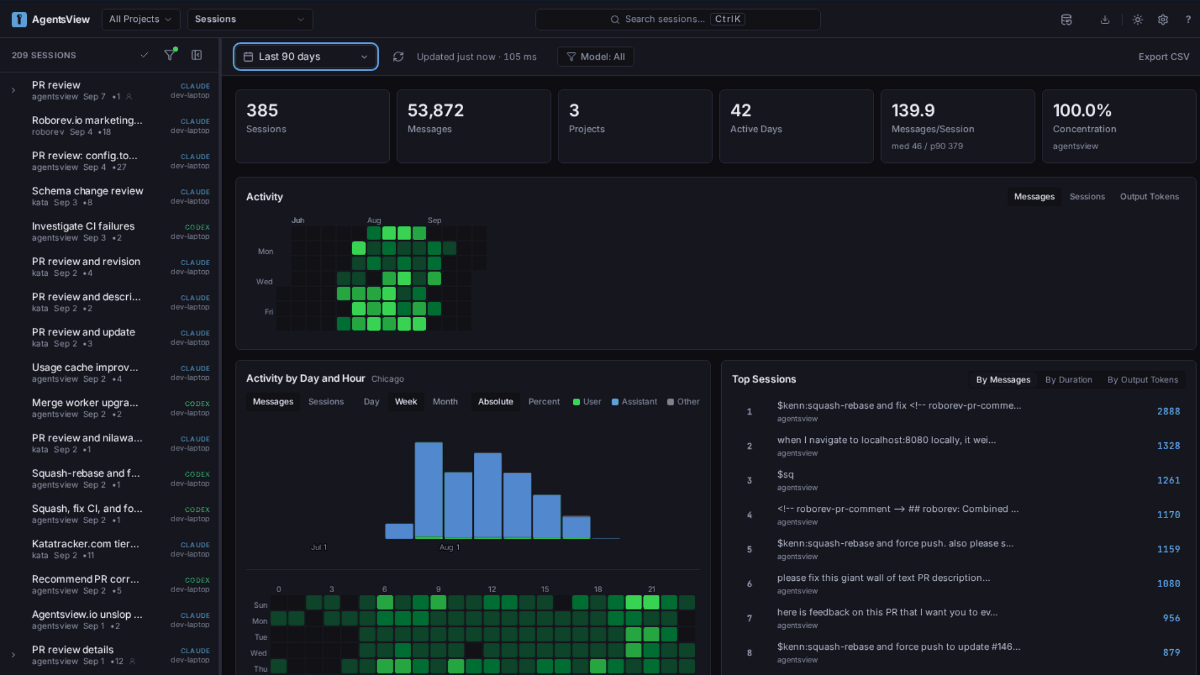
AgentsView automatically detects the local logs of Claude Code, Codex, Cursor, Copilot, Gemini and 60-plus oth…
Genomic foundation models like Evo 2, Genos and Google DeepMind's AlphaGenome learn correlations from DNA sequ…

Deutsche Bank Research predicts superintelligent AI could outperform human experts across virtually every cogn…

A LessWrong field note based on talks with Chinese-side researchers says Chinese AI startups and hyperscaler l…