What happened
AMD announced an agreement to acquire Taalas, a Toronto-based startup that designs chips optimized for running specific AI models through hardware customization rather than general-purpose processing. Taalas' accelerators promise output thousands of times faster than traditional GPUs for particular models, though at the cost of flexibility.
Why it matters
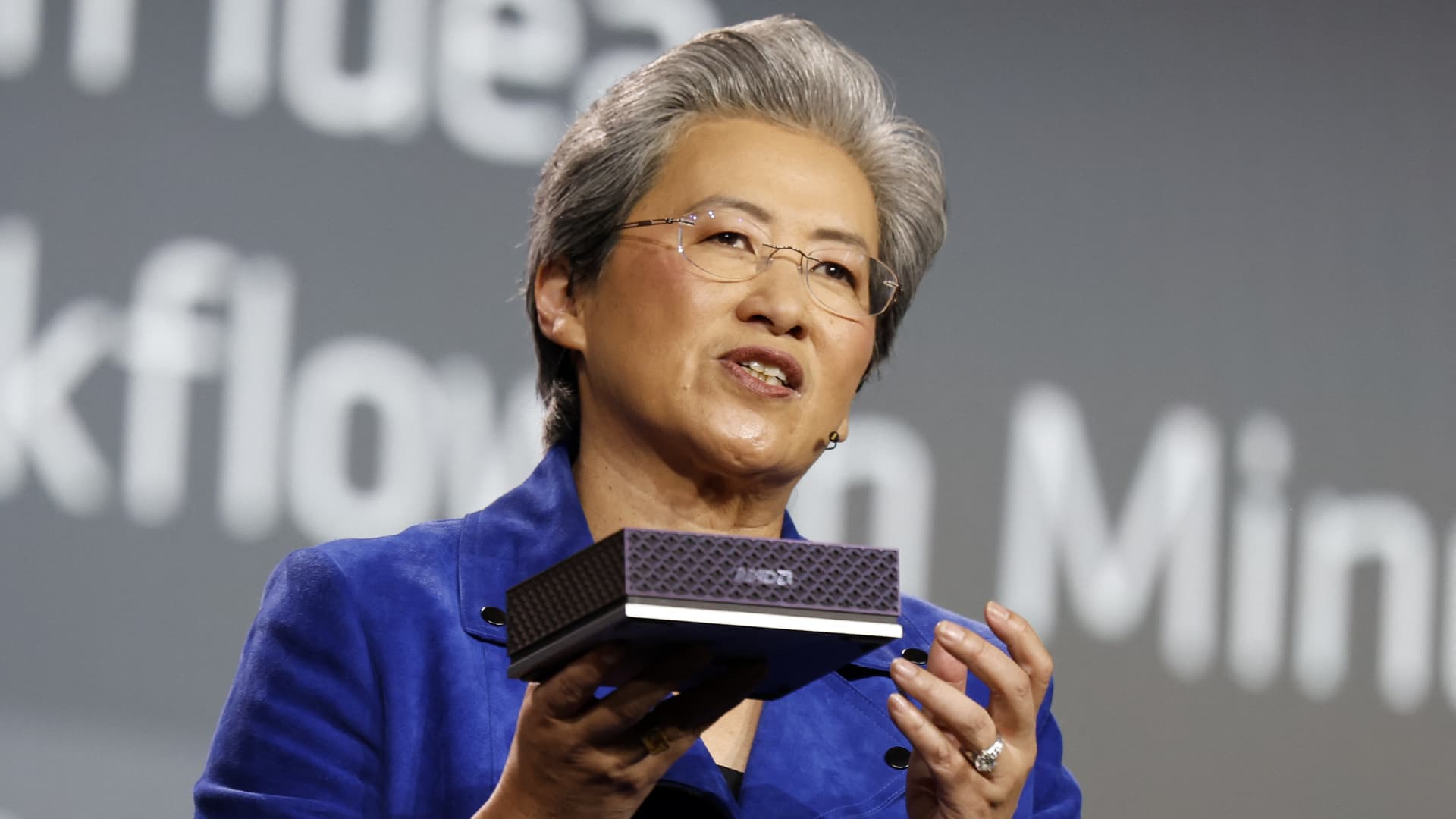
As GPU demand has made Nvidia the world's most valuable company with a market cap of over $5 trillion, AMD and other chipmakers are betting that specialized, hard-wired inference chips will capture a meaningful slice of the AI infrastructure market — particularly for low-latency applications where response speed matters most. AMD CEO Lisa Su acknowledged that "there's no one-size-fits-all as it comes to chips," signaling AMD's strategic pivot beyond GPU-only offerings.
What to watch
Taalas' current chip runs Meta's Llama 3.1 model and can realize new models in hardware in only two months, according to CEO Ljubisa Bajic. AMD plans to integrate Taalas technology into its Helios rack-scale systems alongside Instinct GPUs and central processors; Meta and Microsoft are already early customers of Helios, which began shipping in 2026.
Summaries like this, in your inbox every morning.
AMD's acquisition of Taalas marks the company's latest move to build out a diversified portfolio of AI chips and systems beyond general-purpose GPUs. The deal comes just over seven months after Nvidia spent $20 billion acquiring assets from Groq, another designer of high-performance AI chips, signaling an industry-wide trend toward consolidation in specialized inference hardware. AMD CEO Lisa Su's public statement that "there's no one-size-fits-all" for AI chips reflects the maturing market's recognition that GPUs, while flexible and dominant, cannot optimize for every workload — particularly low-latency applications where inference speed is critical.
Taalas' appeal lies in its ability to transform a single AI model into custom silicon in roughly two months, using older TSMC manufacturing processes and on-chip SRAM memory. This approach trades flexibility for performance and cost-efficiency, making it especially valuable for companies like Meta and Microsoft that deploy specific models at scale. AMD's integration of Taalas technology into its Helios rack-scale systems — which the company has already begun shipping to customers — reflects a strategic pivot toward offering complete, integrated data center solutions rather than individual processors. This bundled approach mirrors Nvidia's dominance in the market, where the company's strength lies not just in chips but in full-stack systems that cloud providers prefer to purchase as unified offerings.
For example, today's edition would include:
AI-summarized, only the topics you pick: one digest a day via Email, LINE, or Slack.
Free · 30 seconds with Google · unsubscribe anytimeWhat is AIToday? →
Ask AI anything about this article. The AI reads this article, earlier AIToday articles, and Wikipedia, and cites its sources. Q&As are published on this page for other readers too.
Daniel Roher's Netflix documentary 'The AI Doc: Or How I Became an Apocaloptimist' presents both AI safety exp…

NVIDIA announced the NVIDIA Open Agent Safety Platform, an open software platform and reference design to secu…

AMD said Monday it agreed to acquire World Labs, Fei-Fei Li's San Francisco AI lab, for about $8.2 billion in…
Bank of America announced Payments Insights, a new CashPro capability that analyzes payment efficiency, cross-…

NVIDIA announced its NVIDIA Open Agent Safety Platform, combining OpenShell open-source software for secure ag…
Dell's AI server backlog rose to $95 billion after a record $60.9 billion in AI server orders in fiscal Q2, wi…