What happened
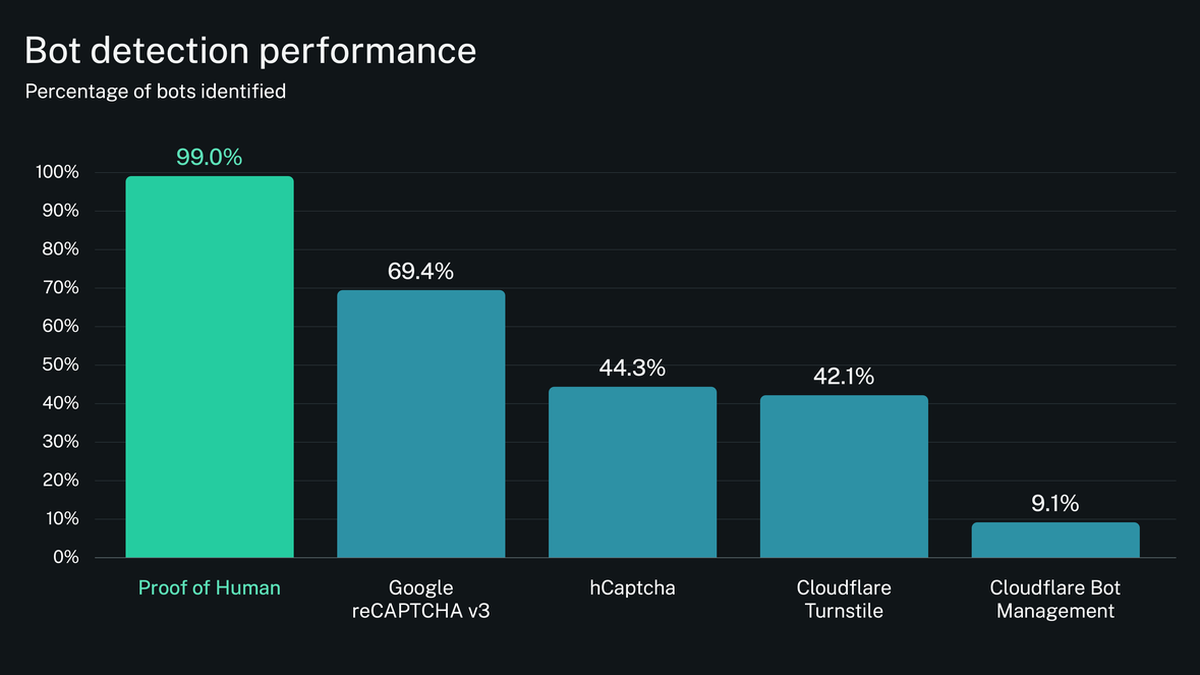
Tested on five questionnaires with 20 trials per system, Cloudflare Turnstile detected 0% of the three AI agents. hCaptcha caught 16% of Browser Use, 0% of Comet and 6% of Grok.
Why it matters
The systems reliably stopped scripted bots but largely waved through agents that read the screen and decide their own clicks, leaving a gap for site operators relying on them to block automation.
WHO IT HITSWebsite operators and security teams that rely on hCaptcha or Cloudflare Turnstile to block automated traffic may find those checks ineffective against AI agents, while fraud and abuse analysts monitoring sign-ups and forms face a harder screening problem.
Summaries like this, every morning.
The test set out to compare how well five bot-detection systems recognize two different things: scripted bots following fixed steps and AI agents that read a page and decide their next action. The scripted bots came in two forms — Chromium, which leaves automation traces, and CloakBrowser, which hides them and was configured to spoof browser data and use residential IP addresses. The gap between the two categories is the central finding: hCaptcha and Cloudflare Turnstile stopped the fixed-step bots at 95–100% but let most AI agents through. The researchers attribute part of this to how each check works. hCaptcha's image-selection puzzles tripped up the scripted bots but were solved by the three AI agents, which could recognize and answer them. Cloudflare Turnstile inspects browser state and, according to the team, let all three AI agents pass without ever presenting a challenge. reCAPTCHA v3, which scores users instead of posing puzzles, detected most agent activity. Yet even it caught none of the CloakBrowser runs. The team said it cannot say from this test whether the spoofed browser information, the residential IP address, or both were responsible. One limit remains open: the study did not measure false positives, and the researchers say human participants should be added to assess how often the systems mistake people for bots.
Pick your industry and the AI tools you use, and get news related to your work every day.
Free · 30 seconds with Google · unsubscribe anytimeWhat is AIToday? →
Ask AI anything about this article. The AI reads this article, earlier AIToday articles, and Wikipedia, and cites its sources. Q&As are published on this page for other readers too.
Starting Oct 30, Meta requires customers to indemnify it for claims tied to its AI features, including attorne…

Rhode Island filed a first-of-its-kind lawsuit against Meta, alleging it knowingly allowed scam ads and earned…

Anthropic told investors on October 14 that its Q3 2026 revenue reached $16.8B and that it became profitable o…
Forced to name one candidate across nearly 500 US midterm races via developer APIs, xAI's Grok 4.7 chose the R…

Videos posted on X on 20 October 2026 purported to show Zyon Lewis accusing James Talarico of abuse; Lewis tol…

LangChain says its GTM Agent, OpenSWE and Content Studio all follow one recipe: they live in Slack, know who i…