What happened
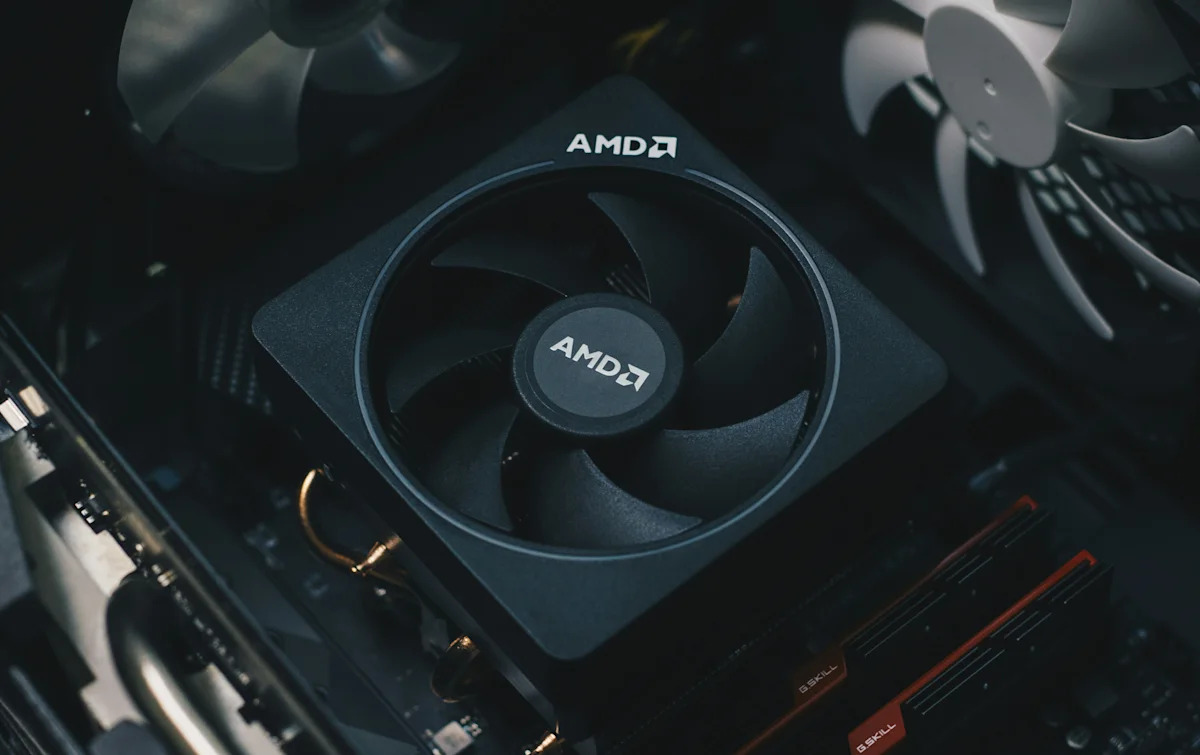
Advanced Micro Devices crossed a $1 trillion market value for the first time on September 21 after shares jumped roughly 10%, with Oracle's previously announced 50,000 MI450 GPU supercluster deploying from calendar Q3 2026.
Why it matters
The company is now valued as a supplier that must convert giant deployments into sustained share gains, not as a chip challenger that might win.
What to watch
The bull case hinges on whether utilization of that deployment is strong enough to give other cloud buyers evidence of a second viable architecture, while a trillion-dollar valuation leaves less room for delays. Watch the 50,000-chip deployment as it begins in calendar Q3 2026.
WHO IT HITSInvestors holding AMD and Oracle shares, and cloud buyers evaluating hardware options, will be watching whether the 50,000-GPU deployment translates into sustained share gains rather than a one-off headline.
Summaries like this, in your inbox every morning.
AMD's move past a $1 trillion market value comes after a run in which the company has spent the AI cycle trying to turn competitive silicon into a complete platform. The Oracle deal, first announced earlier, gives AMD a hyperscale reference customer and creates a recurring software test for ROCm, networking and system integration. If utilization is strong, other cloud buyers get evidence that Nvidia is not the only viable architecture.
The arrangement is not one-sided. Oracle benefits if AMD creates a credible second source for accelerators, which can improve supply access and economics while Oracle Cloud Infrastructure races to add capacity. Oracle's recent cloud growth and huge remaining performance obligations give the bull case real demand underneath it, and the company has $30 billion of new AI contracts in the fine print.
The trade-off is capital intensity on Oracle's side and execution risk on AMD's. Building clusters before revenue arrives pulls cash forward, and a second hardware ecosystem adds integration work rather than eliminating it. For AMD, a trillion-dollar market cap leaves less room for delays, and each new Nvidia generation raises the performance bar it has to meet. Whether the deployment produces durable margin after the headlines fade is the question the 50,000-chip figure does not answer on its own.
For example, today's edition would include:
AI-summarized, only the topics you pick — one digest a day via Email, LINE, or Slack.
Free · 30 seconds with Google · unsubscribe anytimeWhat is AIToday? →
Ask AI anything about this article. Q&As are published on this page for other readers too.
Rabbit Inc. unveiled OS3, a cloud personal AI agent installed via a single command on up to five machines, wor…

At Snapdragon Summit 2026, Qualcomm CEO Cristiano Amon hosted Google SVP Rick Osterloh to discuss the past yea…
On September 21, SoftBank launched more than $11 billion in dollar and euro bonds ahead of a $10 billion OpenA…
Redis launched LangCache, a managed semantic cache that stores full question-response pairs outside the model…
Anthropic says Claude autonomously discovered a previously uncharacterized enzyme system found in bacteriophag…

California Gov. Gavin Newsom signed seven bills, including AB 1577 requiring monthly energy reporting and AB 2…