
What happened
Toast reported higher Q2 revenue and net income than a year earlier, completed a $648.33 million share repurchase, and announced record customer growth. The company deepened Google integration—co-developing a Universal Commerce Protocol for Food—and secured BWH Hotels' endorsement of its POS platform across the U.S. and Canada.
Why it matters
Toast's expanded role in AI-driven restaurant ordering and hospitality ecosystems positions it closer to emerging ordering standards and AI tools like Toast IQ Grow. However, the company's profitability case still hinges on sustaining strong new location adds rather than any single partnership; elevated go-to-market and hardware spend must pay off to justify current margins.
What to watch
Toast's forecast projects $10.7 billion revenue and $986.9 million earnings by 2029, requiring 18.5% yearly revenue growth. The key risk: if competitors match Toast's AI capabilities, the expected uplift in software and fintech economics could fall short of bullish expectations.
Summaries like this, in your inbox every morning.
Toast's Q2 beat and $648.33 million share repurchase signal confidence in the company's cash generation despite elevated spending on go-to-market and hardware initiatives. The deepened Google partnership—specifically co-developing the Universal Commerce Protocol for Food—represents a material shift in Toast's strategic positioning: it moves the company from a peripheral player in restaurant tech to a more central participant in AI-driven ordering infrastructure. This aligns with existing Toast AI products (Toast IQ Grow, agentic ordering) and suggests the company believes these tools can drive meaningful unit economics uplift.
Yet the investment narrative rests on a narrower foundation than the headlines suggest. Record customer growth and the BWH Hotels endorsement matter, but investors are ultimately betting that Toast can convert new locations into profitable scale while maintaining software and fintech margins in a competitive market. The risk articulated in the body—that competitors may match or exceed Toast's AI capabilities—directly threatens the expected returns from tools like Toast IQ and Toast Advertising. If rivals commoditize these offerings, Toast's ability to reach $10.7 billion revenue and $986.9 million earnings by 2029 becomes substantially harder, even if the top-line growth targets hold.
For example, today's edition would include:
AI-summarized, only the topics you pick: one digest a day via Email, LINE, or Slack.
Free · 30 seconds with Google · unsubscribe anytimeWhat is AIToday? →
Ask AI anything about this article. The AI reads this article, earlier AIToday articles, and Wikipedia, and cites its sources. Q&As are published on this page for other readers too.
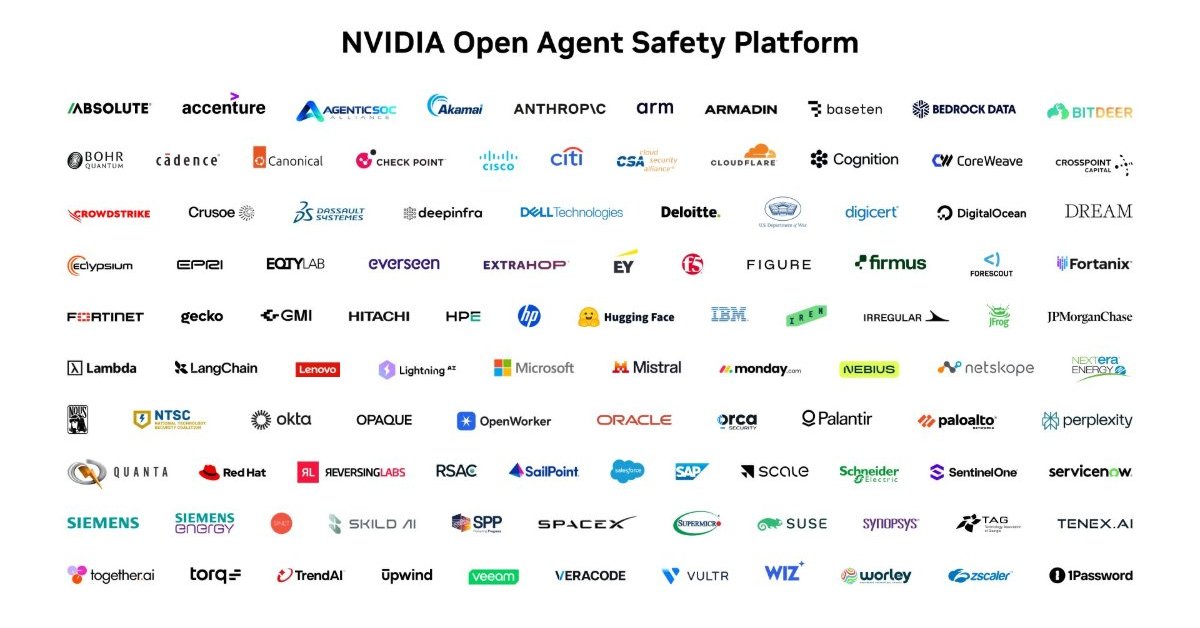
On September 28, Nvidia announced the NVIDIA Open Agent Safety Platform, built from the open-source OpenShell…
Anthropic released Claude Sonnet 5.5 on September 28, the second model in its Claude 5.5 family, calling it fa…

Nvidia launched a platform Monday that it says can monitor AI agents and quarantine suspicious ones, following…

Nvidia announced a record $150 billion stock buyback, and CEO Jensen Huang said its cash generation gives it t…
AMD is acquiring World Labs, the two-year-old physical AI startup cofounded by Fei-Fei Li, in an $8.2 billion…

Florida filed a motion seeking a court injunction to halt OpenAI's development, warning that an AI agent could…