What happened
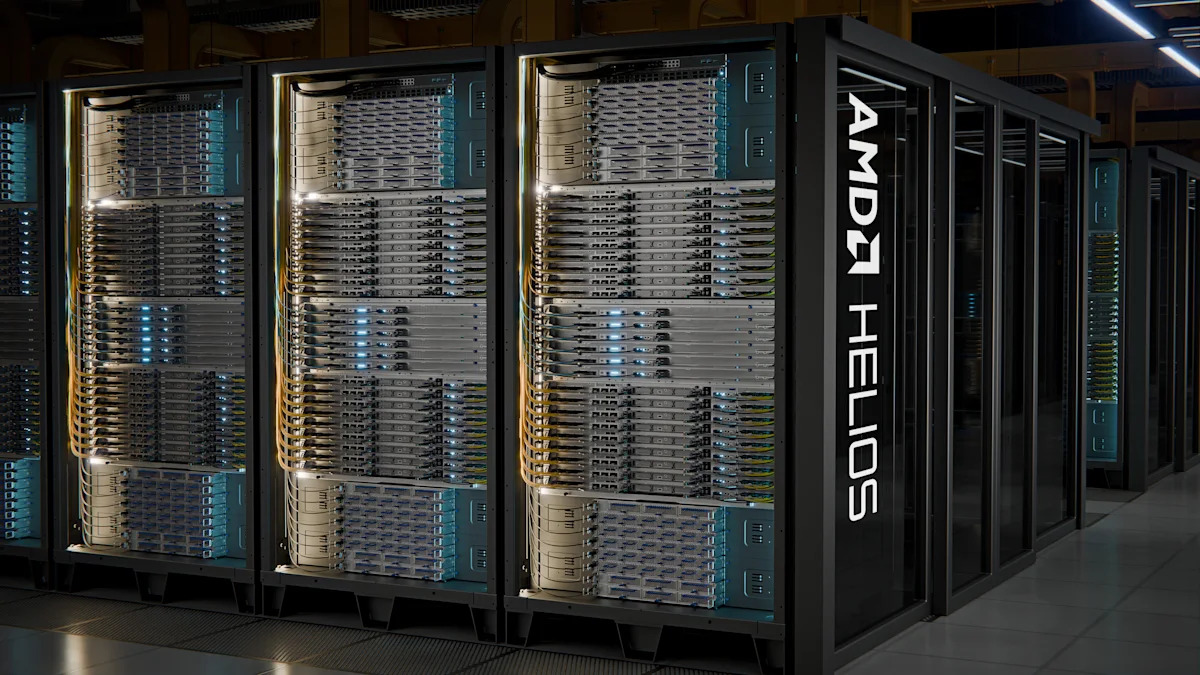
AMD CEO Lisa Su announced the official launch of Helios, a rackscale system combining 72 AMD Instinct MI455X GPUs and Epyc CPUs, during the company's Advancing AI event in San Francisco on Thursday. Su claimed the MI455X is the most powerful GPU in the industry and said Helios offers 15% better compute performance than Nvidia's Vera Rubin system, 50% more high-bandwidth memory capacity, and 30% more tokens per dollar than Nvidia's servers.
Why it matters
Nvidia controls an estimated 80% to 90% of the AI data center market, and Helios represents AMD's most direct challenge yet to that dominance. AMD also announced its Epyc 9006 series CPUs deliver 20% higher per-core performance than Nvidia's Vera CPU, and the company now projects its total addressable market will hit $2 trillion(約320兆円) in 2030.
What to watch
AMD has partnered with Cerebras to integrate that company's chip for improved inferencing speeds into its data center offerings, mirroring Nvidia's partnership with Groq. AMD stock slipped more than 2% during Su's keynote, though the company's shares have risen 222% over the last 12 months compared to Nvidia's 117% gain.
Summaries like this, in your inbox every morning.
AMD's launch of Helios marks a significant escalation in its challenge to Nvidia's near-monopoly in AI data center infrastructure. For years, Nvidia built an insurmountable lead by investing early in GPU technology for AI applications, becoming the default choice for data center operators. However, the Helios announcement suggests AMD has finally produced a competitive alternative at scale: the system combines its MI455X GPUs with Epyc CPUs in a rackscale form factor that directly mirrors Nvidia's own product architecture. The performance claims—15% better compute, 30% more tokens per dollar—are designed to show AMD can deliver not just parity but tangible advantages where customers care most: raw performance and cost-efficiency.
AMD's stated addressable market projection of $2 trillion(約320兆円) by 2030 reveals the scale of the opportunity both companies are pursuing. By bundling Helios with partnerships (Cerebras for inferencing) that echo Nvidia's Groq collaboration, AMD is also signaling that it understands the importance of a broader ecosystem, not just the GPU itself. The fact that AMD stock slipped during the announcement despite these strong claims may reflect investor caution about whether AMD can actually convert competitive specs into market capture from a competitor that has built deep customer relationships and software moats. The 12-month stock performance—AMD up 222% versus Nvidia's 117%—suggests the market has already begun rewarding AMD's AI efforts, though Nvidia's far larger scale means it retains substantial structural advantages.
For example, today's edition would include:
AI-summarized, only the topics you pick — one digest a day via Email, Slack, or Discord.
Free · 30 seconds with Google · unsubscribe anytimeWhat is AIToday? →
Ask AI anything about this article. Q&As are published on this page for other readers too.
At the China International Optoelectronic Expo (CIOE), German laser and plasma generator maker Trumpf presente…

According to the S&P 500's Shiller Price-to-Earnings (P/E) Ratio, this is the second-priciest stock market in…
Bloomberg reported that Crux AI, Blackstone and Alphabet's cloud venture, is set to receive $22 billion in chi…

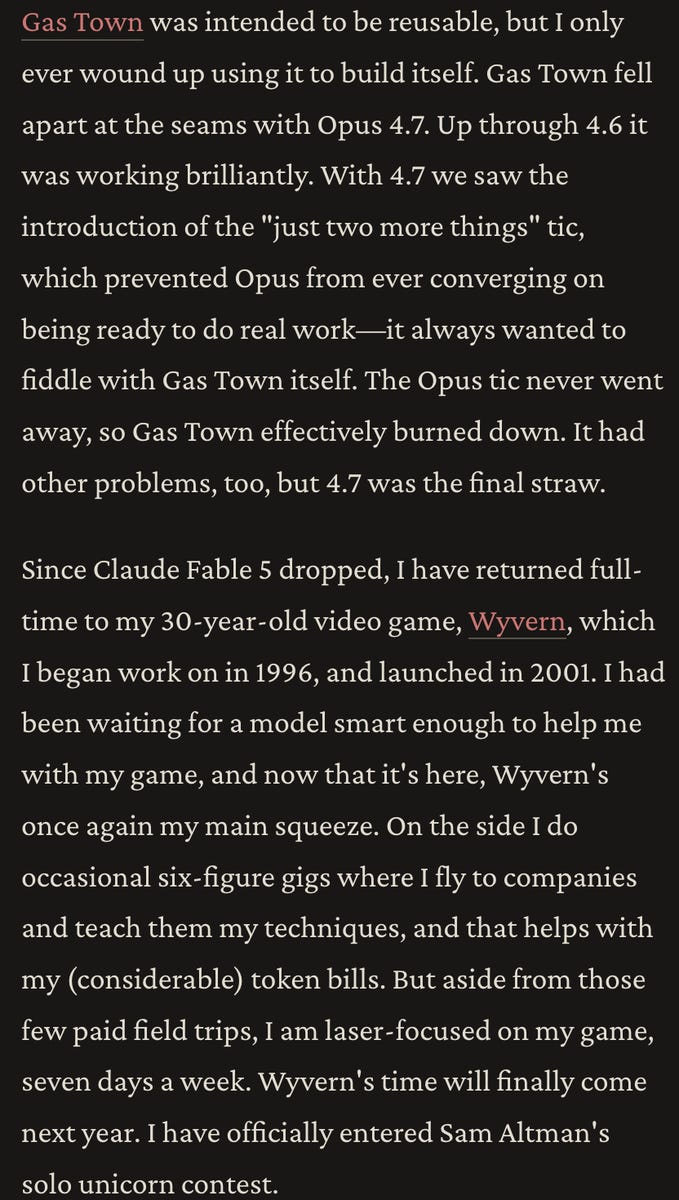
Steve Yegge shut down Gas Town and admitted he never successfully built anything with it, despite spending tho…
GM CEO Mary Barra said skilled trades may be more AI-proof than some white-collar paths, with technicians earn…

Fed Chair Kevin Warsh told reporters that hyperscalers 'out in the market raising funding' are part of why the…