What happened
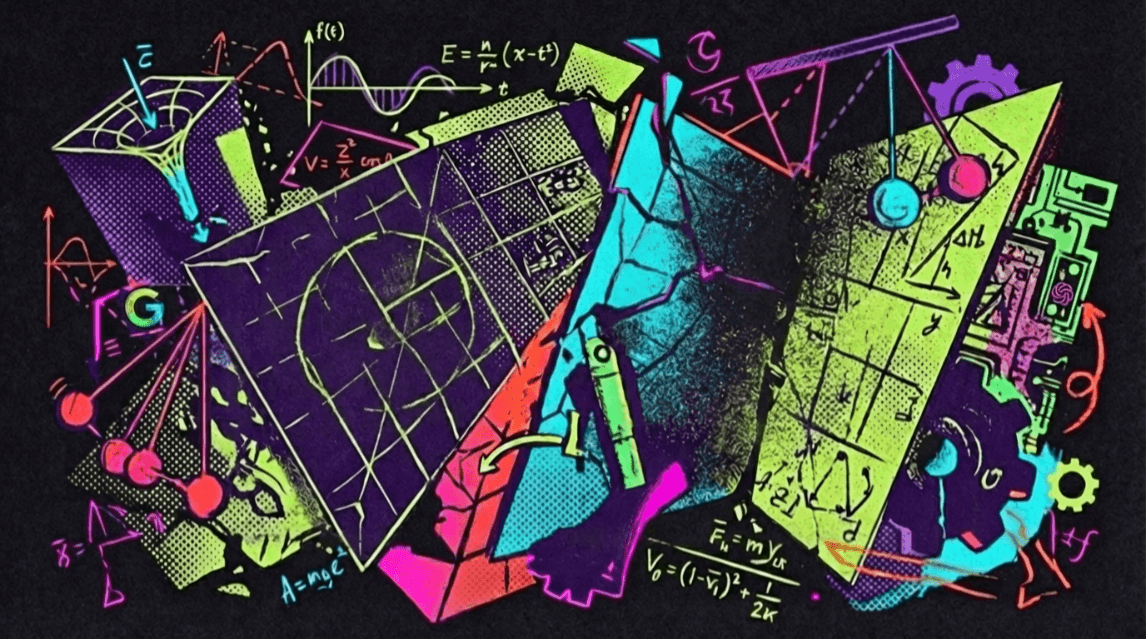
On TheoPhysEval, GPT-6-Astra got 49 of 50 unpublished theoretical physics problems right — 98% — at under $3 each and just under $116 for the whole run.
Why it matters
The authors call models surpassing the best human researchers on concrete calculations a major milestone, but say agents still lack the "taste" to pick interesting problems, so no physics breakthrough has followed.
WHO IT HITSResearch labs and PhD programs in theoretical physics may need to rethink how early-career researchers are trained, since problems once used as first research projects are now solvable inexpensively by AI agents.
Summaries like this, in your inbox every morning.
The benchmark, TheoPhysEval, was designed around what its authors call "turn-the-crank" problems — routine work where known methods apply to a slightly modified question. Many were built by tweaking values in calculations from the contributors' own recent papers, so the new answers couldn't be guessed from the old ones. According to the researchers, problems like these are often handed to PhD students as a first step into research, and one example from black hole research took coordinator Suvrat Raju about a day to solve, while other experts would have needed several days.
The problems span eleven subfields of theoretical physics, from fluid flows and biological processes to particle physics and cosmology. Each agent ran the test twice, once with web search and once in isolation. Internet access made surprisingly little difference: without web search, Astra and Opus each scored 92 percent. The authors take this as a sign that leading language models have effectively memorized large parts of the theoretical physics literature.
Several apparent AI misses turned out to be flaws in the experts' reference solutions. Once those were fixed, Astra's answer was correct every time. This pattern could also explain why the agents do better on TheoPhysEval than on some other physics benchmarks, such as CritPt, even though the authors consider their own problems harder on average — a recent study found that some theoretical physics benchmarks are graded incorrectly and in some cases badly underestimate what the models can do.
Pick your industry and the AI tools you use, and get news related to your work every day.
Free · 30 seconds with Google · unsubscribe anytimeWhat is AIToday? →
Ask AI anything about this article. The AI reads this article, earlier AIToday articles, and Wikipedia, and cites its sources. Q&As are published on this page for other readers too.
Cerebras chief strategy officer Andy Hock said that over the past two months, foundation labs and enterprises…
nFOX Lab launched the nFOX Platform for managing owned large language models and announced plans to open-sourc…
Oppenheimer said investors look forward to understanding the return on Meta's AI assistant Muse, which UBS ana…

Bank of America CEO Brian Moynihan said 1,000 outside contractors joined 3,000 internal employees fixing vulne…
Microsoft and Nvidia held a launch party in San Francisco for the first RTX Spark laptops, which use Arm chips…
Google is rolling out Universal Cart in the US across the Gemini app and Google Search, letting shoppers save…