What happened
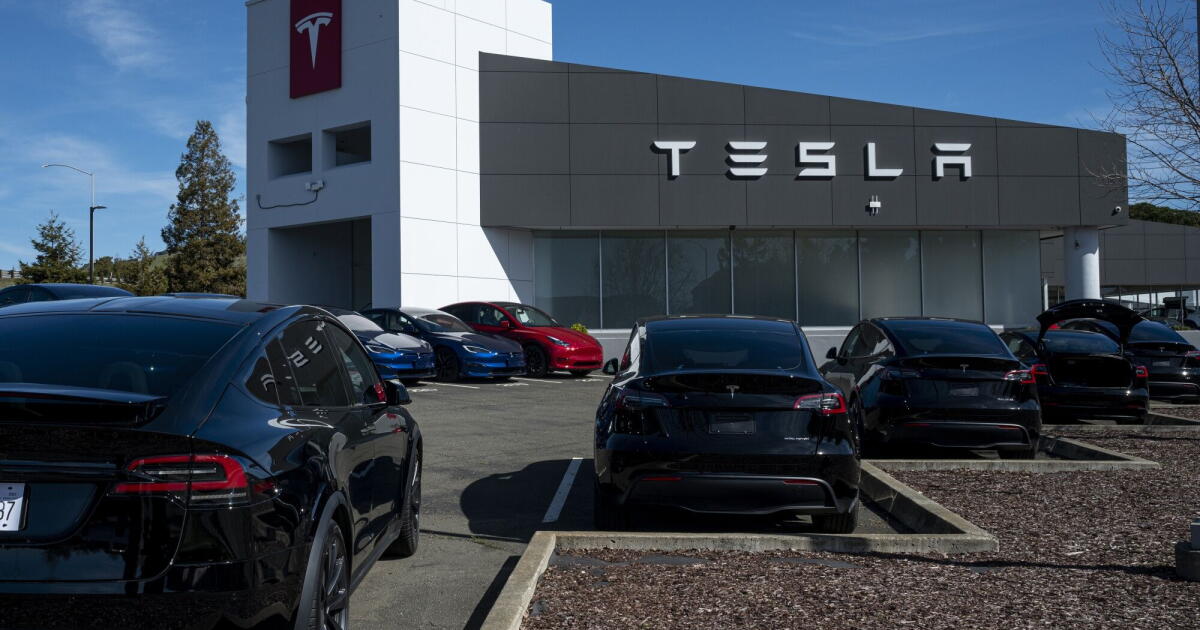
Sell ratings are 13.1% of 61 analyst recommendations on Tesla — the lowest share since April 2023, down from a 2026 high of 23.3% in January, per Bloomberg-compiled data.
Why it matters
Less bearish coverage doesn't mean more optimism — the last sell rating disappeared only because the analyst behind it left, not because anyone upgraded the stock, so the drop reads more like lost conviction than a bullish turn.
What to watch
Tesla's AI story now carries the valuation, so the test is whether autonomy, robotaxis and Optimus robots produce meaningful revenue, margins and returns. Watch the Cybercab rollout, which already fell short of investor expectations.
WHO IT HITSAnalysts covering Tesla and the portfolio managers who rely on their ratings face a harder job: with almost no sell calls left, the usual signal of skepticism is gone, so anyone sizing Tesla exposure has to judge the AI and robotics claims directly.
Summaries like this, in your inbox every morning.
The shift in analyst sentiment has been building alongside Musk's push to reposition Tesla. Sell ratings climbed to a 2026 high of 23.3% in January, when concerns about profit margins weighed on the stock's valuation, before retreating to today's 13.1% — a level last seen in April 2023. Tesla shares are down 21% this year, compared with a 12% gain in the S&P 500, so the softer tone on Wall Street is not the product of a recovering stock price.
What has changed is the story analysts are being asked to price. As Musk steers Tesla from electric vehicles toward self-driving robotaxis and humanoid robots, traditional automotive valuation methods look increasingly incomplete. Ivan Feinseth at Tigress Financial Partners notes that analysts "increasingly recognize that it has potentially significant optionality in autonomy, robotics and AI." Max Gokhman at Franklin Templeton describes a "don't bet against Musk" instinct, pointing out that after long periods of missed deadlines a moonshot may still materialize — and that it is better for an analyst to be seen as having no view than the wrong view.
The caution in that logic is visible in the way the sell ratings actually disappeared. Tesla lost its latest sell rating because longtime skeptic Colin Langan left Wells Fargo, after which the bank suspended coverage of Tesla and 17 other auto companies — not because anyone changed their mind about the stock. Hold-equivalent ratings, meanwhile, have risen to their highest share in more than two years. Tesla's record of delivering on its ambitions has been uneven: the Cybercab debut fell short of investor expectations and prompted a federal probe of its compliance with safety standards, and Wall Street has been waiting for self-driving technology and Optimus robots to become meaningful sources of profit. As Dec Mullarkey at SLC Management puts it, investors "are demanding evidence of revenue potential and are more sober on valuations" — a bar that the greater the valuation attributed to those future businesses, the more Tesla eventually has to clear.
Pick your industry and the AI tools you use, and get news related to your work every day.
Free · 30 seconds with Google · unsubscribe anytimeWhat is AIToday? →
Ask AI anything about this article. The AI reads this article, earlier AIToday articles, and Wikipedia, and cites its sources. Q&As are published on this page for other readers too.
Applied Materials reported record revenue for its fiscal third quarter on Aug
Eli Lilly's Brian Lewis detailed LillyPod at CoreWeave's Fully Connected 2026, an Nvidia DGX SuperPOD B300 sys…
Berkshire invested an additional $10 billion in Alphabet via private stock purchase, buying $5 billion of Clas…
On Micron's fiscal Q4 2026 earnings call, CEO Sanjay Mehrotra said humanoid robots are expected to need memory…
Marvell Technology trades at 25.1 times sales versus 3.0 times for the S&P 500, with 79% of fiscal Q2 2027 rev…
NVIDIA published DIN Deploy, open-source C++ samples that combine ONNX Runtime with the TensorRT RTX execution…