What happened
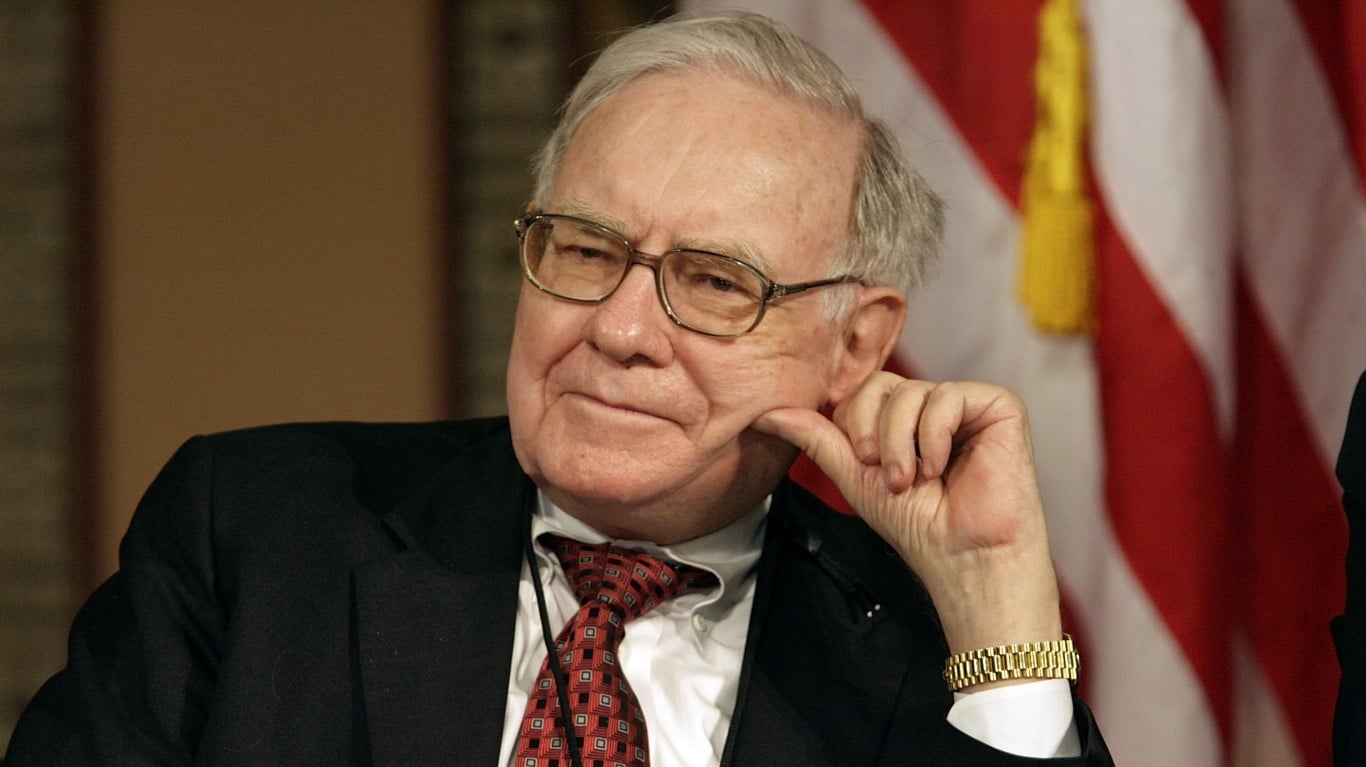
Berkshire invested an additional $10 billion in Alphabet via private stock purchase, buying $5 billion of Class A shares at $351.81 and $5 billion of Class C at $348.20.
Why it matters
This is Berkshire's first major AI bet, made under CEO Greg Abel from a $397.4 billion cash pile, and Buffett told CNBC the Alphabet thesis was his own idea.
What to watch
Whether other AI spenders like Amazon or Meta seek similar cash-rich partners is speculative, as none has signaled an imminent Berkshire-style raise. Berkshire's cash had declined to $365.5 billion by end of June.
WHO IT HITSRetail investors are directly affected because they cannot access private placements like Berkshire's, so following this trade means accepting full equity risk at public prices. It is best treated as a signal to study rather than a trade to copy.
Summaries like this, in your inbox every morning.
Berkshire Hathaway's $10 billion private stock purchase in Alphabet marks a notable shift for a conglomerate long known for avoiding large technology positions. Warren Buffett spent years searching for an "elephant" large enough to absorb Berkshire's swelling cash pile, and this deal, committed under new CEO Greg Abel, represents the first major AI investment from that war chest. Buffett later told CNBC the Alphabet thesis was his own idea, with Abel's backing, suggesting the move is not a departure from his judgment but an extension of it.
The deal also fits a pattern from the 2008 and 2009 financial crisis, when Berkshire used its balance sheet to secure favorable terms as capital grew scarce. In AI infrastructure today, even highly profitable companies are running up against the limits of self-funded buildouts. Alphabet guided 2026 capital expenditures to a range of $175 to $185 billion, and its Q1 free cash flow fell 47% year over year to $10.12 billion as spending doubled. That funding gap appears to have created room for a Berkshire-sized check, and by Q2 Berkshire had grown its Alphabet position by 83% to nearly 106 million shares worth about $37.8 billion.
The outcome likely hinges on whether the largest AI spenders eventually need cash-rich partners as their capital requirements outpace free cash flow generation. Retail investors cannot access the private placement terms Berkshire negotiated, so for them the investment may be best read as a signal about the AI infrastructure thesis rather than a trade to replicate.
Pick your industry and the AI tools you use, and get news related to your work every day.
Free · 30 seconds with Google · unsubscribe anytimeWhat is AIToday? →
Ask AI anything about this article. The AI reads this article, earlier AIToday articles, and Wikipedia, and cites its sources. Q&As are published on this page for other readers too.
Applied Materials reported record revenue for its fiscal third quarter on Aug
Eli Lilly's Brian Lewis detailed LillyPod at CoreWeave's Fully Connected 2026, an Nvidia DGX SuperPOD B300 sys…
Sell ratings are 13.1% of 61 analyst recommendations on Tesla — the lowest share since April 2023, down from a…
On Micron's fiscal Q4 2026 earnings call, CEO Sanjay Mehrotra said humanoid robots are expected to need memory…

Marvell Technology trades at 25.1 times sales versus 3.0 times for the S&P 500, with 79% of fiscal Q2 2027 rev…
NVIDIA published DIN Deploy, open-source C++ samples that combine ONNX Runtime with the TensorRT RTX execution…