What happened
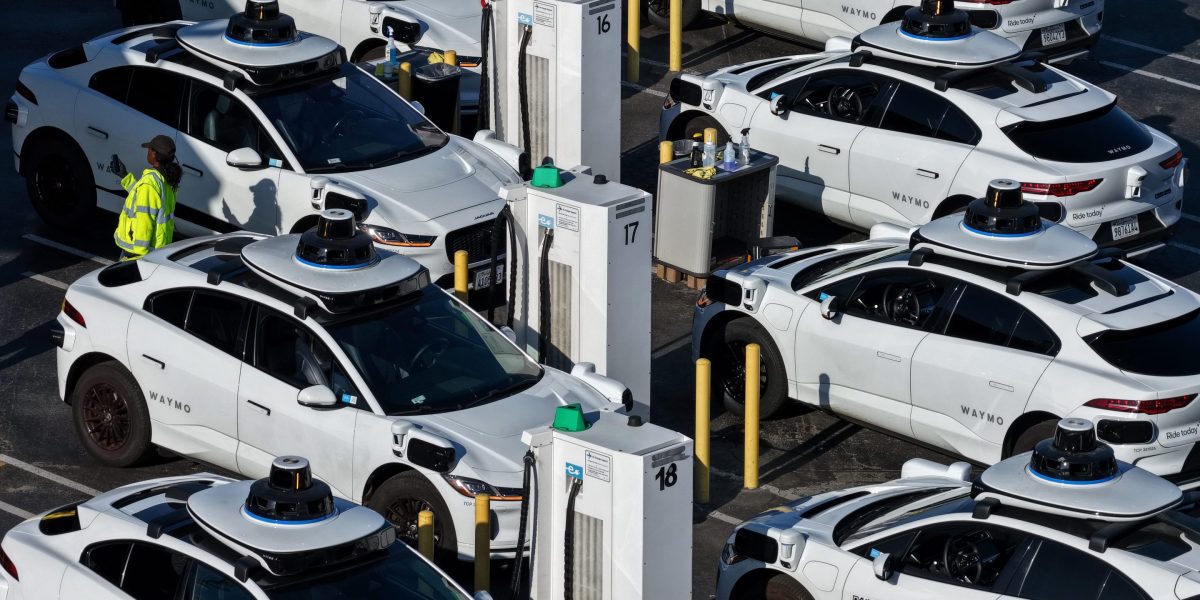
A San Francisco 'tech prankster' named Riley Walz organized a group distributed denial-of-service (DDOS) attack by having 50 individuals simultaneously order Waymos to the same dead-end street, creating a pileup that forced Waymo to disable rides until the next morning.
Why it matters
The incident reveals a critical vulnerability in robotaxi systems: unlike traditional vehicles, robotaxis depend on dozens of interconnected electronic control units, cloud connectivity, GPS, cameras, lidar, radar and AI models—each expanding what cybersecurity professionals call the 'attack surface,' or the number of possible entry points hackers can exploit. Disrupted communications could degrade an autonomous system's ability to safely navigate, and the rise of generative AI has compressed the timeline for identifying and exploiting vulnerabilities far faster than before.
What to watch
California and some other jurisdictions (Arizona, Michigan) have begun treating cybersecurity as part of autonomous vehicle regulation, and international standards like UN Regulation No. 155 now require automakers to maintain certified cybersecurity management systems. However, in New York City, Mayor Zohran Mamdani has refused to renew Waymo's license while focusing on labor protection rather than cybersecurity concerns.
Summaries like this, in your inbox every morning.
The San Francisco DDOS prank—while lighthearted in nature—has exposed a troubling parallel to automotive safety history. Louay Abdelkader, director of product management at QNX, frames the current state of robotaxi cybersecurity as analogous to the pre-1998 era when airbags existed but lacked legal mandate. Just as it took over a century after the first automobile and roughly 30 years after airbags were invented for them to become federally required, robotaxis are now proliferating across the country—Waymo operates in 11 major U.S. cities, Zoox has received regulatory approval for a commercial exemption, and Tesla has launched the Cybercab in at least seven cities—without consistent, binding cybersecurity standards.
The architecture of robotaxis amplifies this vulnerability. Unlike conventional vehicles with a single control system, robotaxis depend on dozens of interconnected components: electronic control units, cloud connectivity, GPS, cameras, lidar, radar, and AI models. Each represents what cybersecurity professionals call an "attack surface"—a potential entry point. Modern attackers are unlikely to remotely hijack an entire vehicle, according to experts; instead, they may target the broader ecosystem. Disrupted communications alone could degrade an autonomous system's ability to navigate safely, as the San Francisco prank demonstrated.
The emergence of generative AI has further compressed the threat timeline. Abdelkader notes that malicious actors can now use AI to identify vulnerabilities, automate attacks, and develop exploits far faster and with greater intent than a prankster operating a simple DDOS. Yet regulatory response remains fragmented. Some jurisdictions—Arizona, Michigan, and California—have begun treating cybersecurity as a core regulatory requirement, and international standards like UN Regulation No. 155 have mandated certified cybersecurity management systems. In New York City, by contrast, Mayor Zohran Mamdani's refusal to renew Waymo's license has centered entirely on labor protection and taxi driver concerns, leaving cybersecurity absent from the debate. Abdelkader argues that all lawmakers should build on existing frameworks rather than wait for a cyber incident to expose weakness, calling for manufacturers to embed security from the ground up and for closer collaboration between industry and policymakers.
Pick your industry and the AI tools you use, and get news related to your work every day.
Free · 30 seconds with Google · unsubscribe anytimeWhat is AIToday? →
Ask AI anything about this article. The AI reads this article, earlier AIToday articles, and Wikipedia, and cites its sources. Q&As are published on this page for other readers too.
JR Central announced the S0系 on October 16, its first full model change since the N700S, with commercial servi…

The Air Force upgraded the X-62 VISTA with advanced radar, expanded sensors and computing, and modern network…
T2 said it will join ENEOS and others in the Agency for Natural Resources and Energy's demonstration project f…
Researchers present neurosymbolic planning using natural language communication for cooperative autonomous veh…
Honeywell Aerospace flew a BFD-SE8 autonomously in mid-June, six weeks after starting Shield AI's Hivemind Ent…
Sony will exhibit at CEATEC 2026, held October 13–16 at Makuhari Messe in Chiba, under the theme "Where Ideas…