What happened
MIT researcher Beatriz Yankelevich used GPT-5.6 Sol with Codex to autonomously run measurements on an uncalibrated six-qubit chip, completing standard sequences with little intervention.
Why it matters
The agent saved significant time by handling routine calibration that previously required months and hundreds to thousands of measurements, freeing Yankelevich for higher-level work like experiment design.
What to watch
GPT-5.6 Sol struggled with weak or noisy signals, sometimes needing guidance. Its usefulness for novel experiments hinges on whether it can interpret ambiguous physical results.
WHO IT HITSQuantum computing researchers running repetitive calibration and characterization tasks can offload routine work to AI agents. Experimentalists facing noisy data or novel setups will still need human expertise to guide the AI.
Summaries like this, every morning.
Quantum computing experiments typically involve months of preparation and thousands of preliminary measurements. Yankelevich’s work shows that AI agents can now handle well-defined calibration routines, which is a first step toward more autonomous research workflows.
The MIT group uses standard chips to benchmark their fabrication process, so characterization is repetitive. By connecting Codex to lab software, agents can run these measurements overnight or while researchers work elsewhere, as Yankelevich does from her phone.
The test case is whether AI can also interpret ambiguous physical results. Current models still struggle with noisy signals, so experienced researchers remain essential for novel or complex setups. If agents improve in handling such uncertainty, they could take on even larger portions of experimental work.
Pick your industry and the AI tools you use, and get news related to your work every day.
Free · 30 seconds with Google · unsubscribe anytimeWhat is AIToday? →
Ask AI anything about this article. The AI reads this article, earlier AIToday articles, and Wikipedia, and cites its sources. Q&As are published on this page for other readers too.
Moonshot AI released Kimi K3.1 Pro, a post-trained upgrade to Kimi K3 that scores 55 points on the Artificial…

Induction AI's benchmark trials shared a prompt cache, so later trials read earlier trials' opening tokens at…
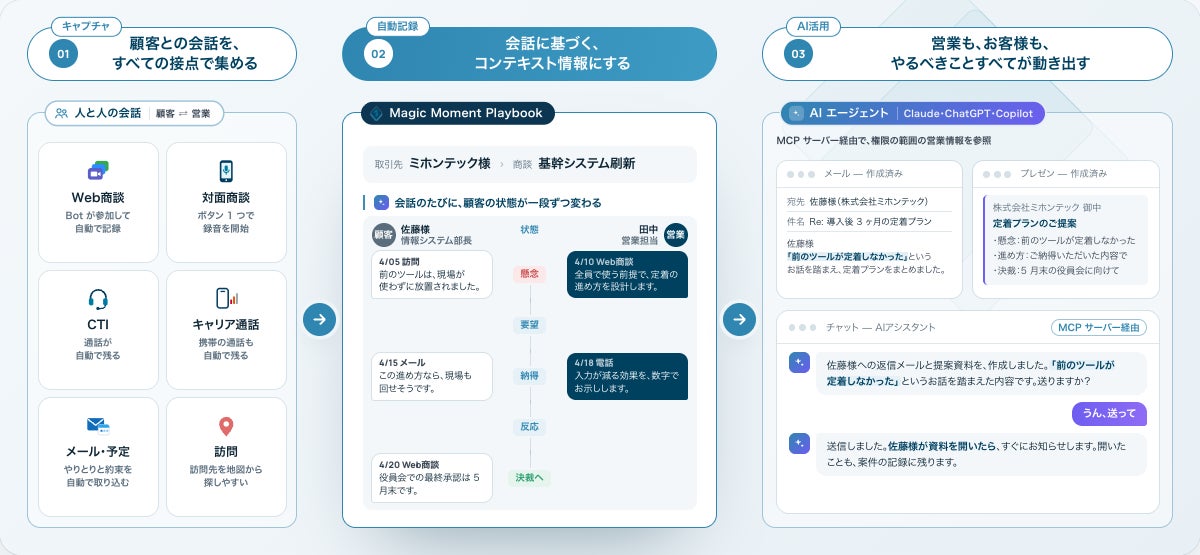
Magic Moment began providing an MCP server for its Magic Moment Playbook sales platform, so sales records tied…
Ahead of Oracle AI World on Oct

World, co-founded by Sam Altman, this week announced tools that let people link their proof of humanity to an…
In commentary on the unit-distance proof, Jacob Tsimerman, recently hired by OpenAI, said AI's edge is that it…