Snowflake built an internal AI agent that cuts contract review time by 70%, processing thousands of order forms per quarter for revenue recognition compliance.
The system automates the tedious scanning step while auditors retain full control through an editable rulebook that defines what counts as nonstandard; every decision is logged for audit purposes.
The design keeps experts focused on judgment rather than document hunting, letting Snowflake scale compliance operations without proportional hiring.
What happened
Snowflake's internal team built an AI-powered contract review agent using Snowflake Cortex AI and related tools that automatically extracts key terms from customer order forms, classifies them against an auditor-managed rulebook, and flags nonstandard clauses. The system reduced review time from days to hours and now processes thousands of order forms per quarter without proportional headcount growth.
Why it matters
Enterprise software deals require meticulous contract review for revenue recognition and audit compliance, traditionally a manual bottleneck. By automating the detection layer while keeping auditors in control of judgment (via an editable playbook stored in Snowflake), the system lets experts focus on exception handling rather than tedious scanning. Every extraction, classification, and correction is logged for audit trail provenance—the kind of evidence external auditors expect. For businesses managing high-volume, complex contracts, this model shows how agentic AI can scale compliance without scaling headcount.
What to watch
The architecture is being extended to other agreement types beyond customer contracts. The playbook (the auditor-managed rulebook) evolves at business speed—rules take effect immediately on the next processing run without code redeployment—so the system gets sharper each quarter as experts teach it new patterns.
Snowflake's Forward Deployed Engineer team built an internal AI-powered contract review agent to solve a scaling problem: as the company processes an ever-growing volume of customer order forms, MSAs, and amendments, each carrying unique commercial terms, the traditional model of auditors manually scanning PDFs for nonstandard clauses that affect revenue recognition stopped working. In the words of Amrita Kapoor, VP Internal Audit, the audit team was "spending hours manually scanning PDFs to find nonstandard terms and yet only providing assurance on a sample of the entire population." The solution was to "flip the model. By letting AI handle the exhaustive reading across the entire population, our auditors can focus their expertise on exception handling."
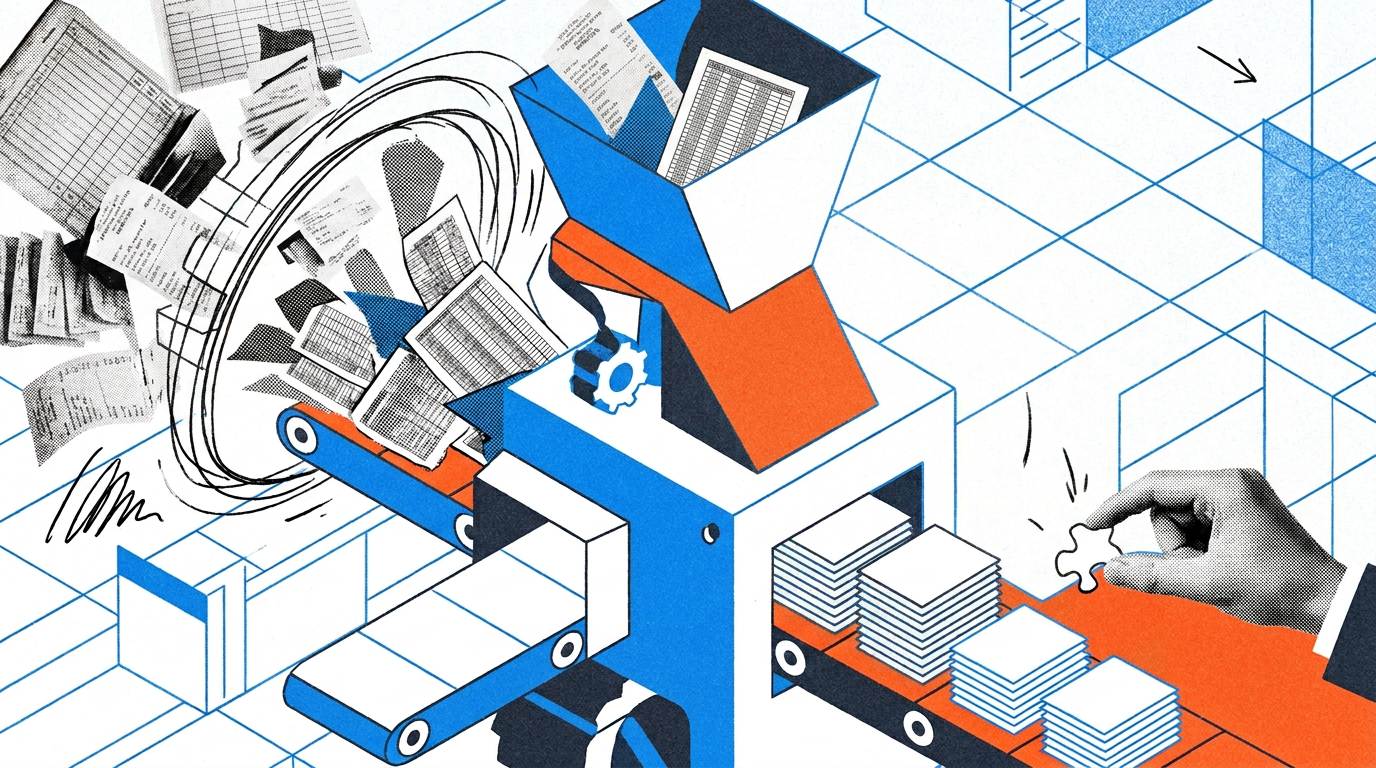
The Contract Review Agent works in three layers. First, order form PDFs flow from source systems through Google Drive into a Snowflake stage via Snowflake Openflow. A Cortex Agent powered by Cortex AI Functions extracts layout and structured fields—customer name, capacity amount, discount terms, payment schedules, and dozens of revenue-relevant data points—using AI Extract. Second, the agent evaluates every extracted term against a user-managed playbook, a governed Snowflake table that the audit team owns and edits directly without requiring an engineering ticket. The agent scores each clause as standard or nonstandard, producing confidence scores, clause excerpts, page references, and a natural-language explanation. Crucially, the system also applies novel term detection: it embeds a corpus of known-standard contract language and flags clauses semantically distant from it, then auditors label whether those anomalies are meaningful or routine noise—labels that flow back to sharpen future runs. Third, findings surface in a reviewer-centric application with portfolio-level dashboards and contract detail views. Auditors can approve, override, or escalate every finding; corrections are logged as extraction tips and stored in long-term memory, fed into the agent on subsequent runs. A parallel Snowflake CoWork agent gives stakeholders a natural-language interface to audit status without direct app access.
The system achieved a 70% reduction in review time—from days to hours—while processing thousands of order forms per quarter without scaling the audit team proportionally. Crucially, every extraction, classification, rule change, and correction is logged with full provenance, the kind of evidence trail external auditors expect. Engineering Manager Charles Xu noted that "the agent is not just parsing but reasoning. It explains why a term is considered nonstandard, cites the playbook rule and presents the contract excerpt, letting the reviewer confirm or correct. Every decision is logged." The playbook itself is auditor-controlled: rules take effect immediately on the next processing run without code redeployment, so when a novel discount structure appears in Q4 deals, auditors add a rule and the agent starts flagging it across the entire corpus. Snowflake is now extending the same architecture to other agreement types, with PM Nikolai Scholz observing that "without it, you grow your operational team linearly. With it, you keep the team lean while expanding coverage — and the system gets smarter every quarter because the experts are teaching it."
Enterprise contract review at scale has historically been a labor-intensive compliance bottleneck. As Snowflake's deal volume grew to thousands of quarterly order forms—each carrying unique terms for capacity commitments, discounts, billing, and incentives—the manual audit model broke down: auditors spending hours scanning PDFs could only sample the population, leaving exposure in unreviewed contracts. The forward-deployed engineering team recognized that the solution was not to replace auditor judgment but to remove the tedious search phase so experts could focus on exception handling.
The system's design reflects this philosophy. Rather than shipping a black-box model with a fixed definition of "standard," the team built a three-layer architecture where auditors own the rules. The playbook—an editable Snowflake table—acts as a living source of truth; when a new discount structure appears, auditors add a rule and the agent flags it retroactively across the entire corpus on the next run. Corrections and labels feed back as extraction tips and long-term memory, compounding accuracy without requiring code changes. This closed loop means the system gets sharper each quarter, tuned by the people who understand contracts best.
AI-summarized, only the topics you pick — one digest a day via Email, Slack, or Discord.
Free · takes 30 seconds · unsubscribe anytime
Ask AI anything about this article. Q&As are published on this page for other readers too.
Security researchers led by Alexander Panfilov discovered a vulnerability in the APIs of all major AI provider…

OpenAI completed a stock buyback worth roughly $7 billion, allowing current and former employees to sell share…

Brad Lightcap, OpenAI's Chief Operating Officer until April 2026 and a longtime executive who built the compan…

Brad Lightcap, who served as OpenAI's COO and most recently as special projects lead, announced his departure…

CEO Sundar Pichai announced that the Gemini app has surpassed 1 billion monthly active users, making it the 14…

Brad Lightcap, who joined OpenAI in 2018 and served as chief financial officer for four years before becoming…

The AI news that matters, in one minute each morning.
Sign up free