What happened
Nvidia is proposing structures in which insurers would compensate lenders if a neocloud defaults and the GPUs securing the loan cannot be resold for enough to repay the debt, the Financial Times reports. Talks are at an early stage, with no agreements in place.
Why it matters
If insurers agree, Nvidia's riskier customers could reach more capital to keep buying its chips, at a time when lenders have been wary of that customer base.
What to watch
Whether insurers sign on is the open question. The potential size could exceed individual insurers' balance sheets, so Nvidia is exploring syndicating risk to hedge funds and alternative investors, and has considered joining the consortiums itself.
WHO IT HITSThis lands on insurers, reinsurers and hedge funds that would absorb neocloud default risk, and on lending teams at banks weighing GPU-backed loans. It also matters to neocloud operators such as CoreWeave and Lambda, whose expansion depends on access to capital.
Summaries like this, in your inbox every morning.
Nvidia has moved from a niche processor maker to one of the world's most valuable companies on the back of an AI arms race that drove nearly insatiable demand for its chips. In the early days of the boom, almost all of that demand came from investment-grade tech giants like Amazon, Microsoft, Google and Meta that could fund chip purchases from their own balance sheets. Over the past 24 months, a growing share of demand has come instead from neoclouds, young companies with short track records that almost always need to borrow to buy GPUs and build data centers, and lenders have been wary of that risk profile.
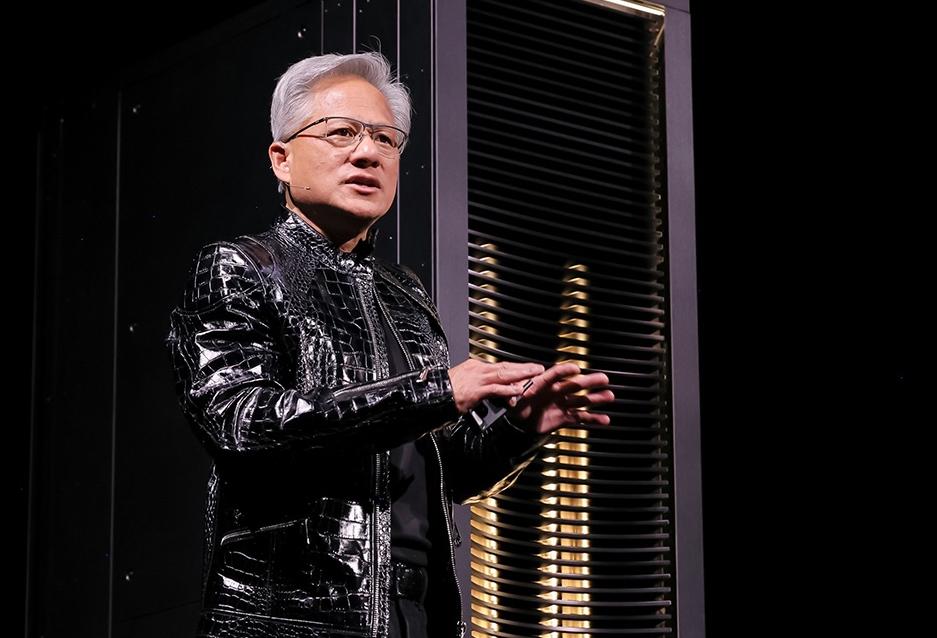
The proposed insurance structure is a response to that wariness. Neocloud financing already leans on chips and data centers as collateral, but chips are regarded as short-lived assets that depreciate relatively quickly, and skeptics of Big Tech's AI spending often cite that depreciation as a flaw in the boom's economic assumptions. Nvidia CEO Jensen Huang has argued chips have long useful lives and should be regarded as an "investable asset class." Nvidia has reportedly supplied at least one insurer with information on chip depreciation and future computing capacity valuation, and is working with insurance broker Howden Re. Because the potential transactions would be enormous, beyond individual insurers' balance sheets, Nvidia is reportedly exploring syndicating risk to hedge funds and other alternative investors, and has considered participating itself.
This fits a broader pattern of Nvidia using its financial might to reinforce demand for its products. The $35B Lambda–Anthropic cloud deal, backstopped by Nvidia, is another example. Such deals have raised red flags among some investors, drawing accusations of circular financing and comparisons to dot-com era vendor financing, though data center industry leaders generally dispute that characterization. The stakes may hinge on whether insurers and alternative investors are willing to price depreciation risk on assets whose resale value is hard to predict, and on how much of the risk ends up linked to hyperscalers, institutional investors and debt markets.
Pick your industry and the AI tools you use, and get news related to your work every day.
Free · 30 seconds with Google · unsubscribe anytimeWhat is AIToday? →
Ask AI anything about this article. The AI reads this article, earlier AIToday articles, and Wikipedia, and cites its sources. Q&As are published on this page for other readers too.
DIGITIMES reported the SiC substrate market is finally seeing signs of recovery, after prices collapsed when w…
HENNGE said on October 1 it set up HENNGE AI, a subsidiary with only two directors and no other employees, whe…

Pershing Square sold its entire Alphabet stake and topped off Microsoft while it sat about 20% below its Q2 hi…

Aolani will integrate Karman's power orchestration platform, built on a custom NVIDIA Jetson Orin Nano and tar…

CloudNC raised $20 million led by Nimble Ventures, with Calculus Venture Capital, Entrepreneur First and LM Ve…
Solomon Asamoah laid out a framework for Ghana's AI infrastructure, arguing data-centre approvals should start…