Summaries like this, in your inbox every morning.
Sign up free →Genesis World 1.0 combines three core technologies: Nyx (a photorealistic rendering engine for robotics), Genesis World (a physics platform supporting rigid bodies, deformable materials, and fluids), and Quadrants (a GPU-accelerated compiler for efficient multi-platform simulation).
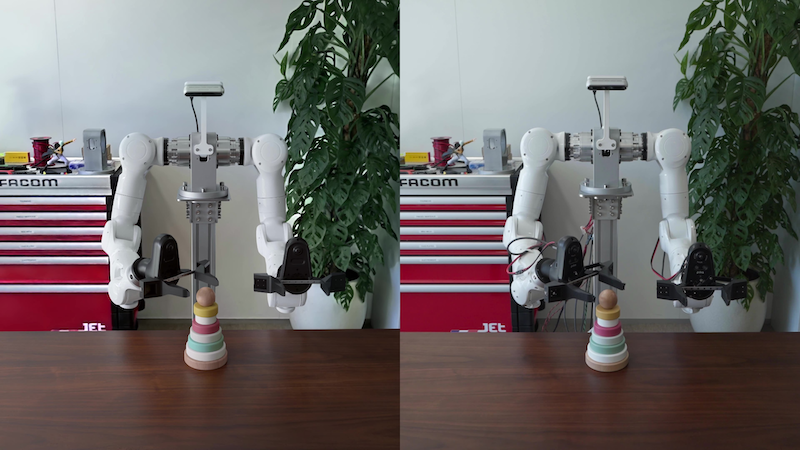
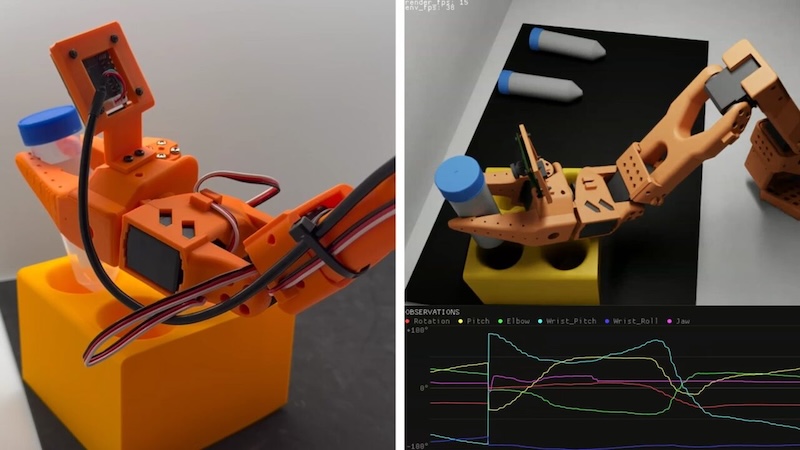
A robotics foundation model evaluation that would typically require nearly a week of continuous testing on physical hardware can be completed in approximately 30 minutes using Genesis World 1.0 running on GPU infrastructure. Similarly, an object-handling evaluation involving around 40,000 individual attempts would require approximately 166 hours using a physical robot but around 30 minutes using simulation across a GPU cluster.
Genesis reports that its simulation results now correlate with real-world robot performance at approximately 89 percent, reducing the sim-to-real gap (the difference between a robot's performance in simulation versus in the real world) and allowing virtual testing to serve as a reliable indicator of physical hardware behavior.
AI-summarized, only the topics you pick — one digest a day via Email, Slack, or Discord.
Free · takes 30 seconds · unsubscribe anytime
No comments yet. Be the first to share your thoughts!
Log in to join the discussion


Get curated AI news from 200+ sources delivered daily to your inbox. Free to use.
Get Started FreeFree · takes 30 seconds · unsubscribe anytime
1 minute a day. The AI essentials.
200+ sources · Email / LINE / Slack
