What happened
A sole proprietor running AI-adoption and process-improvement work built a 'company' repository on Claude Code, where a main Claude takes requests and dispatches them to six sub-agents — research, accounting, planning, sales, legal and design. It began as one commit of 487 lines of Markdown and grew through 14 commits over roughly half a year.
Why it matters
The features he kept adding were not about what to tell the AI but about memory and information control — split state files, a single-writer rule, and no absolute paths — the same things a human organization calls information management.
What to watch
The state files are outgrowing their purpose: company.md keeps swelling even though it must stay concise, and the decision log has reached nearly 100KB, so organizing old facts and splitting files is now needed. He also suspended monthly scheduled runs and per-department persistent memory.
WHO IT HITSSolo founders and small-firm owners who want to delegate recurring back-office chores — trademark checks, bookkeeping, invoices, brand assets — to an AI setup rather than a hire. It also speaks to IT or operations staff weighing how to keep sensitive business records out of public code repositories.
Summaries like this, in your inbox every morning.
The build started in April, before the June 2026 business-opening filing, because the founder found that non-core work — picking a trade name, filing, deciding on invoice registration, opening a business account, making a logo — was heavier than expected and had to be re-researched each time. The first version was one commit and 487 lines of Markdown; the finished shape came after 14 commits, and most changes were responses to problems that showed up in operation.
Those problems mostly concerned trust and continuity. To check research, he added a review mode that verifies existing reports on three axes — factual sourcing, logical leaps, and missed alternatives — and runs it in a context separate from the agent that did the research. To stop decisions vanishing between sessions, he created the state directory and a sixth flow step so the main agent records before ending a turn. When rules alone were not enough, he added a Stop hook that calls a second model to send back turns with missing records, written so that ambiguous cases pass through to avoid annoying reversals.
A drive migration in August broke absolute paths everywhere — including references to state/company.md in all six department definitions, which failed silently so agents worked without their premises. He removed absolute paths entirely, leaving symbolic links as the only place the real location is known, and unified Python execution on uv after dependencies in /tmp disappeared. The remaining friction is that the state files keep growing and there is still no check that symbolic links resolve at startup, so whether this stays a one-person company or needs reorganizing likely hinges on how he splits and prunes those files.
Pick your industry and the AI tools you use, and get news related to your work every day.
Free · 30 seconds with Google · unsubscribe anytimeWhat is AIToday? →
Ask AI anything about this article. The AI reads this article, earlier AIToday articles, and Wikipedia, and cites its sources. Q&As are published on this page for other readers too.
Ghost AI raised $11 million, led by Andreessen Horowitz with Abstract, Audacious Ventures, Nova and SV Angel…

OpenAI will roll out invisible text watermarks to all ChatGPT and Codex plan users in the EU within weeks, and…

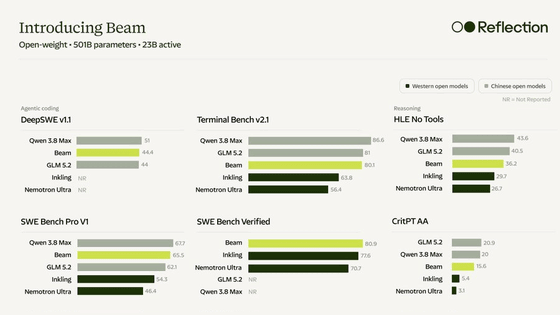
Reflection announced Beam, a 501B-parameter open-weight model with 23B active parameters, claiming parity with…
A Stanford, Carnegie Mellon, UC Berkeley, and Microsoft Research team ran 6,800+ math, coding, and science tas…

Reflection AI launched Beam, a 501 billion-parameter open-source LLM

A step-by-step guide fine-tunes Muse Glimmer, Meta's 30B vision model, locally for equation-to-LaTeX conversio…