What happened
At a Monday briefing in Washington, DC, OpenAI announced a classifier it says better detects abusive imagery of children, including AI-generated material, and flags 48 percent fewer images than before.
Why it matters
OpenAI says the images its classifier did identify were twice as likely to contain abusive material, which it says can help investigators cut through the noise to find harmful material they can act on quickly.
What to watch
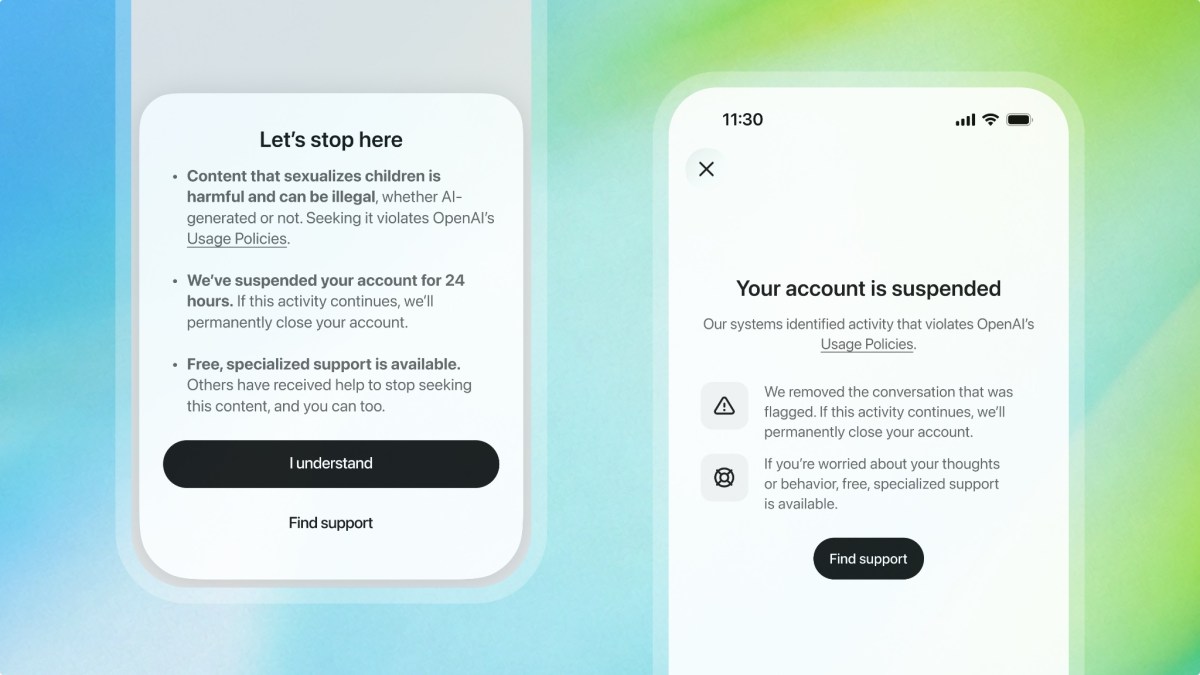
Users who attempt to generate CSAM in ChatGPT will receive a warning and a first offense will trigger a 24-hour pause in accessing the tool.
WHO IT HITSChild safety investigators and law enforcement triaging abuse reports stand to benefit from fewer false positives, while ChatGPT users who attempt to generate abusive imagery face a new warning and a 24-hour access pause.
Summaries like this, every morning.
The announcement lands as AI-generated sexual images of children threaten to overwhelm the National Center for Missing and Exploited Children's CyberTipline, which received 400,000 generative AI-related reports in 2025, up from 67,000 in 2024. Researchers have warned that influx could make NCMEC's workload "unmanageable," and North Carolina Attorney General Jeff Jackson called the surge "explosive" at OpenAI's event, warning that if it continues "it is going to mean that we fail in our mission."
The policy backdrop is active: the Take It Down Act now requires social media platforms to remove real or AI-generated nonconsensual intimate images within 48 hours, and eight states sued OpenAI last month over a separate set of alleged harms to children. OpenAI's head of child safety public policy, John Buckley, said the new classifier is the first broadly available CSAM classifier with a specific flag for AI-generated material, and he argued that laws should recognize the harm of AI-generated CSAM, which he said "potentially erodes social norms" and is "often found colocated with child sexual abuse imagery of real children." Jackson described the partnership as "still basically an experiment," noting that most attorney general work is accountability after the fact rather than prevention.
Pick your industry and the AI tools you use, and get news related to your work every day.
Free · 30 seconds with Google · unsubscribe anytimeWhat is AIToday? →
Ask AI anything about this article. The AI reads this article, earlier AIToday articles, and Wikipedia, and cites its sources. Q&As are published on this page for other readers too.
Google's Threat Intelligence Group found an exposed server running "exploit_agent," an AI framework that conne…

Harvard-led researchers used satellite imagery to identify 403 US hyperscale data centers and estimated they b…

California Attorney General Rob Bonta sued OpenAI, alleging its testing practices are a public nuisance and an…
OpenAI released an image classifier that detects CSAM, including AI-generated images, and is giving select com…
The FBI says hackers used Artex, an open-source AI penetration-testing tool, to breach ConnectWise customers a…

OpenAI signed agreements with four independent assessors — Apollo Research, METR, Transluce, and Goodfire — fo…