What happened
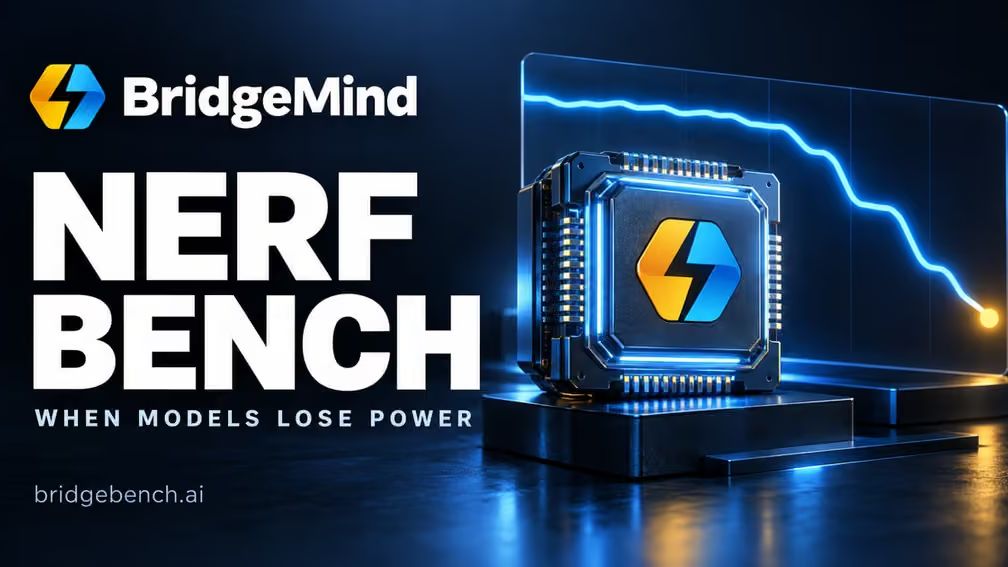
Nerf Bench, described on the Bridgebench blog, scores a model's Power from performance, tokens used and cost, with launch performance set as 100% and current scores shown relative to it.
Why it matters
A model doing the same work with more tokens or higher cost counts as weaker Power, so a drop can show up even when task quality looks unchanged.
Summaries like this, in your inbox every morning.
Nerf Bench is built around a single number called Power, and that number is deliberately broader than accuracy alone. A model that completes a task just as well but burns more tokens or costs more to run is recorded as having lost Power, which means a decline in the score does not necessarily mean answers got worse. The benchmark also sets its own baseline: the first test run at launch fixes the model's 100% reference point, and later runs are read against it.
The scoring rule is designed to avoid crying wolf. Drawing on the idea of variance in a normal distribution, Nerf Bench calls anything between 90% and 110% of launch performance ordinary fluctuation, and it only treats a change as real when results land below or above that range twice in a row. A drop confined to one or two tasks is not enough either; the benchmark looks for a broad pattern of decline before calling it performance degradation.
That caution extends to what the benchmark shows. Nerf Bench keeps its specific tasks, test contents and test results private, saying this is meant to protect the reliability of the results and curb benchmark gaming. It also publishes its methodology as a blog explainer, so the scoring logic is visible even though the underlying tests are not.
Pick your industry and the AI tools you use, and get news related to your work every day.
Free · 30 seconds with Google · unsubscribe anytimeWhat is AIToday? →
Ask AI anything about this article. The AI reads this article, earlier AIToday articles, and Wikipedia, and cites its sources. Q&As are published on this page for other readers too.
Navitas Semiconductor announced a strategic collaboration with Nvidia to develop a 24-kilowatt power delivery…
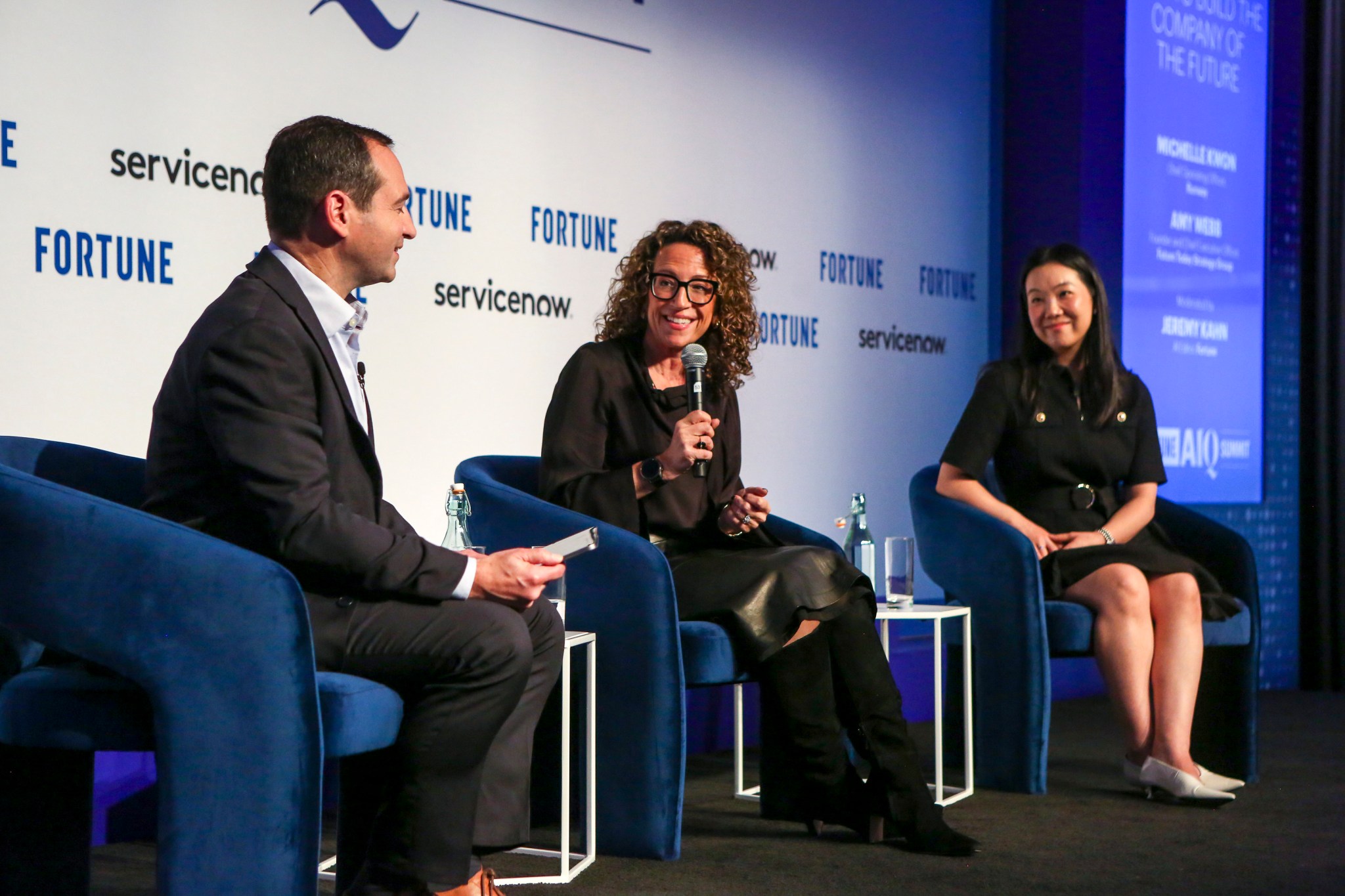
At Fortune's AIQ Summit at the New York Stock Exchange, executives from ServiceNow, HPE, Palo Alto Networks, B…
Cisco and Nvidia are partnering on a new generation of optical networking technology designed for the explodin…
Anthropic announced dynamic workflows, a new multi-agent feature in Claude Console where the lead agent writes…
Sakana AI and UC Berkeley's MASS method let one model solve tasks, judge results, and rewrite its own workflow…
Microsoft Research found eight runs of the same AI research agent on one task plateaued at different levels, w…