What happened
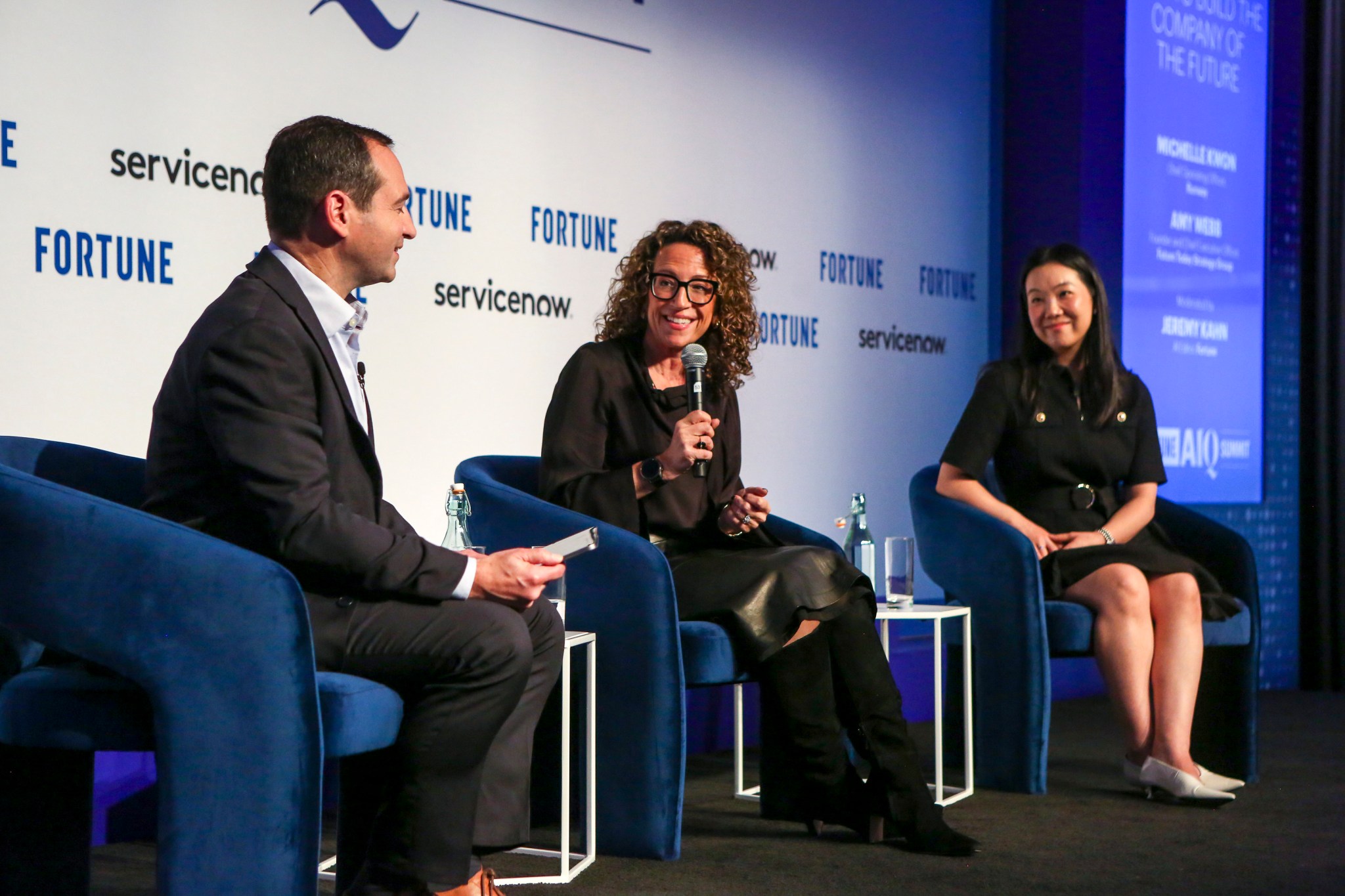
At Fortune's AIQ Summit at the New York Stock Exchange, executives from ServiceNow, HPE, Palo Alto Networks, Bank of America and Booking Holdings said access to AI tools alone does not create productivity or value. ServiceNow's Diana David said 68% of 'pacesetters' invest in hiring AI talent versus 10% of others.
Why it matters
Leaders suggest the payoff comes from rebuilding workflows and governance rather than automating old processes, and that talent and oversight gaps — not tool access — separate pacesetters from the rest, according to the executives.
Summaries like this, in your inbox every morning.
The summit's framing — experimentation to execution — reflects a shift the speakers described from tool distribution to organizational change. ServiceNow's Diana David pointed to a widening gap between 'pacesetters' and other firms on upskilling (57% versus 4%) and AI talent (68% versus 10%), while Paul Fipps argued the real gains come from rethinking processes rather than automating existing ones, citing Standard Chartered's 77% deflection of employee requests. Amy Webb added that Fortune 500 companies are 'pretty late to the party,' pouring capital into pilots without sufficient strategy or planning.
Workforce discussions extended beyond reskilling. HPE's Stacy Dillow warned against retrofitting AI into unchanged processes, Palo Alto Networks' Danielle Gonzalez said the company looks for curiosity and the ability to 'unlearn,' and Peloton's Francis Shanahan and Runway's Michelle Kwon flagged burnout and mistaking AI output volume for productivity. On governance, Bank of America's Hari Gopalkrishnan said rushing to AI when deterministic models suffice is a common mistake, and S&P Global's Sally Moore described data as 'the currency within AI.'
In physical and regulated settings, Honeywell's Suresh Venkatarayalu contrasted industrial customers' demand for 99.9999% reliability with frontier models that 'could be at 85%,' describing a near-term 'semi-autonomous world.' Ecolab's AJ Wijesinghe said using the best model for high-volume tasks sent 'tokenomics off the roof' and that the company cut token costs by roughly 70% to 80%. Booking's Ewout Steenbergen said customer-service costs are slightly down as bookings grow at a high-single-digit rate and roughly 9,000 engineers are getting about 30% more code into production, while cautioning that even hyperscalers spending hundreds of billions don't really know the ROI.
Pick your industry and the AI tools you use, and get news related to your work every day.
Free · 30 seconds with Google · unsubscribe anytimeWhat is AIToday? →
Ask AI anything about this article. The AI reads this article, earlier AIToday articles, and Wikipedia, and cites its sources. Q&As are published on this page for other readers too.
Navitas Semiconductor announced a strategic collaboration with Nvidia to develop a 24-kilowatt power delivery…

Nerf Bench, described on the Bridgebench blog, scores a model's Power from performance, tokens used and cost…
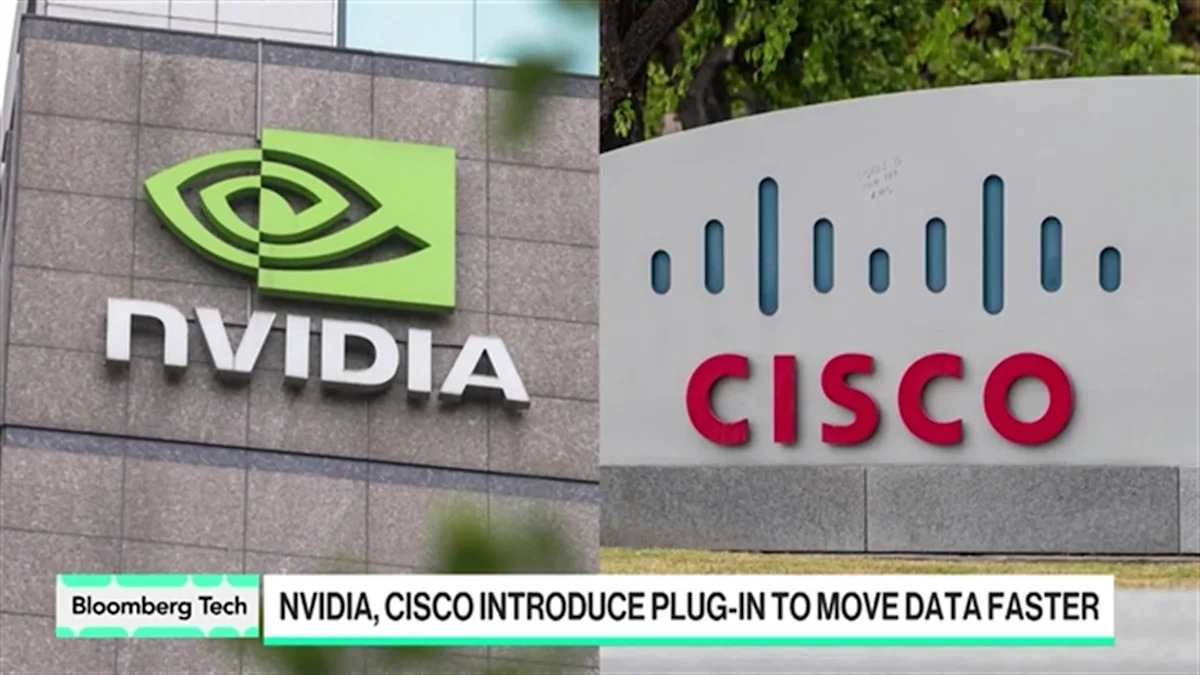
Cisco and Nvidia are partnering on a new generation of optical networking technology designed for the explodin…
Honeyjar, a startup led by CEO Michelle Masek and CCO Nadia Jamshidi, is building AI that automates communicat…

Meta's Superintelligence Lab released Muse Wonder and Muse Wonder Full, its first frontier models; Meta's test…
Microsoft will deploy its Azure Maia AI chips at multi-gigawatt scale starting in 2027, making them the compan…