
What happened
A Mat3ra notebook compared graphene on Ni(111) across four registries (fcc, hcp, hollow, bridge) using MACE-MP in minutes versus DFT with the LDA functional, and reported that MACE-MP underestimates chemisorption by several times and shortens distances.
Why it matters
This suggests fast machine-learning force fields may serve as screening tools but cannot yet be trusted as final answers for this interface, so users should treat such results as a starting point rather than a conclusion.
What to watch
The discrepancy hinges on MACE-MP being trained on PBE data while the reference calculations use the LDA functional; users should note that the notebook itself states this limitation and that PBE-trained models may need correction for metal/2D interfaces.
WHO IT HITSMaterials researchers and computational chemists who use machine-learning force fields for screening metal/2D material interfaces may need to verify results against DFT before drawing conclusions, as this notebook shows MACE-MP can be off by several times for graphene on Ni(111).
Summaries like this, in your inbox every morning.
The notebook addresses a practical question for materials modeling: when is a fast machine-learning force field good enough, and when does it break down? Graphene on Ni(111) looks simple but its binding depends on where carbon atoms sit relative to the nickel surface, across four registries—fcc, hcp, hollow, and bridge. The authors note that bridge was not quantified in the reference papers they used, so they added it as an extra point.
The workflow is split into two tiers. Tier 1 uses MACE-MP, a machine-learning force field, to relax each registry in minutes, yielding an overview of energies and initial structures. Tier 2 runs DFT jobs with the LDA functional, spin polarization, fixed-cell relaxation, and no dispersion correction, then compares relaxed structures and work of adhesion against literature values. The key finding is that MACE-MP, trained on PBE data, does not reproduce literature values for this interface: chemisorption is underestimated by several times and distances are shorter. The notebook explicitly labels Tier 1 as a screening tool, not an answer.
The stakes here are about trust in fast surrogates. For researchers screening many metal/2D interfaces, MACE-MP can quickly flag candidates, but the Ni(111)/graphene case shows the gap can be large enough to change conclusions. The outcome hinges on whether PBE-trained models can be corrected for this chemistry, and on whether the same discrepancy appears for other metals or 2D materials—something the notebook's template is designed to test.
Pick your industry and the AI tools you use, and get news related to your work every day.
Free · 30 seconds with Google · unsubscribe anytimeWhat is AIToday? →
Ask AI anything about this article. The AI reads this article, earlier AIToday articles, and Wikipedia, and cites its sources. Q&As are published on this page for other readers too.
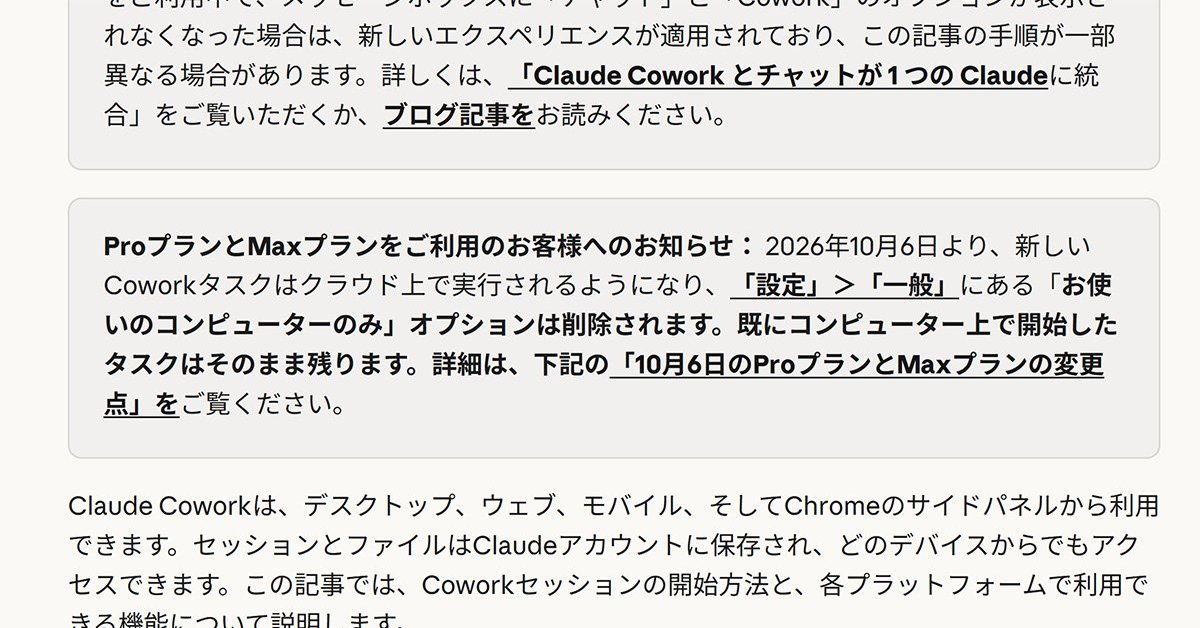
Anthropic said that from October 6 onward, Cowork tasks on the Claude Pro and Max plans run in the cloud, and…
Sens. Elizabeth Warren and Richard Blumenthal sent a letter to Treasury Secretary Scott Bessent and other offi…

Cohere launched North 2, a revamped enterprise platform with orchestration that coordinates AI agents tapping…

Oracle Japan's president Tomomitsu Misawa introduced "Oracle Fusion Claw," an enterprise take on the desktop-a…

Testing the open-source Laya decision model on routing questions to one of ~1,000 database tables, fine-tuning…
KDDI's ELYZA said on October 2 it set up "ELYZA RSI Research" to study recursive self-improvement, and CEO Yuy…