
Jim Cramer highlighted CoreWeave's strong quarterly results as evidence that older NVIDIA GPUs retain or increase in value over time, validated by NVIDIA's CUDA software ecosystem that allows chips to be upgraded across product cycles.
This directly counters investor fears that compute-backed bonds would suffer from GPU depreciation.
NVIDIA reported record fiscal Q1 revenue of $81.6 billion (up 85% year-over-year), with data center compute revenue reaching $60.4 billion (up 77%), underscoring the scale of the AI infrastructure buildout.
What happened
On the August 12 episode of Mad Money, Jim Cramer highlighted CoreWeave's "monster quarter" as proof that older NVIDIA GPUs retain or appreciate in value even 9 years after manufacture, backed by NVIDIA's CUDA software ecosystem that allows chips to be upgraded across cycles. CoreWeave CEO Michael Intrator appeared on Squawk on the Street to discuss the company's strategy of building data centers embedded with NVIDIA chips designed to last longer than 3 to 5 years.
Why it matters
Cramer's commentary addresses a major investor concern: that compute-backed bonds would suffer from GPU depreciation. By showing that NVIDIA chips hold value like "fine jewelry" rather than depreciating like cars, CoreWeave's quarter suggests the long-term viability of AI infrastructure investments and the durability of NVIDIA's competitive moat through its software ecosystem. This validates the infrastructure buildout CEO Jensen Huang described, in which NVIDIA reported record fiscal Q1 revenue of $81.6 billion (85% year-over-year growth), with data center compute revenue of $60.4 billion (up 77%) and networking revenue of $14.8 billion (up 199%).
What to watch
Morningstar analyst Brian Colello published an August 11 research update maintaining a fair value estimate of $280 for NVIDIA while flagging emerging concerns about complex private credit and vendor financing structures used to mobilize over $500 billion in infrastructure financing, suggesting that investor scrutiny of deal mechanics may intensify even as chip demand remains robust.
Ask the AI about this article →
Jim Cramer's August 12 segment on Mad Money reflects a turning point in how the investment community evaluates AI infrastructure durability. The central insight—that NVIDIA GPUs behave more like appreciating assets than depreciating hardware—hinges on two factors the article emphasizes: chip scarcity (NVIDIA's chips are "the most sought-after of all semiconductors") and the CUDA software ecosystem, which enables older chips to remain competitive through software upgrades rather than requiring replacement. This distinction matters because it underpins the financial viability of the massive infrastructure buildout CEO Jensen Huang described, in which data centers embed NVIDIA chips with design lives exceeding 3 to 5 years.
Yet the article also flags a tension: while CoreWeave's quarterly performance validates the durability thesis, Morningstar analyst Brian Colello's August 11 research note warns of structural risks in the financing mechanisms funding the buildout. Colello identified "complex private credit, vendor financing arrangements, and circular deal structures" as emerging concerns, even as he affirmed that "chip demand is there." This suggests that the infrastructure story may be sound on fundamentals but deserves scrutiny on how that infrastructure is being financed—a distinction between the long-term health of the hardware market and the near-term mechanics of the capital flowing into it.
For example, today's edition would include:
AI-summarized, only the topics you pick — one digest a day via Email, Slack, or Discord.
Free · takes 30 seconds · unsubscribe anytimeWhat is AIToday? →
Ask AI anything about this article. Q&As are published on this page for other readers too.
Phonely Ltd. launched Alma, a large language AI model built for voice agents and trained on over 10 million re…

Aranya Inc., a startup founded last year, launched today with $11 million in funding

CBTS Technology Solutions LLC launched Forge Agents, a platform that turns a plain-language job description in…

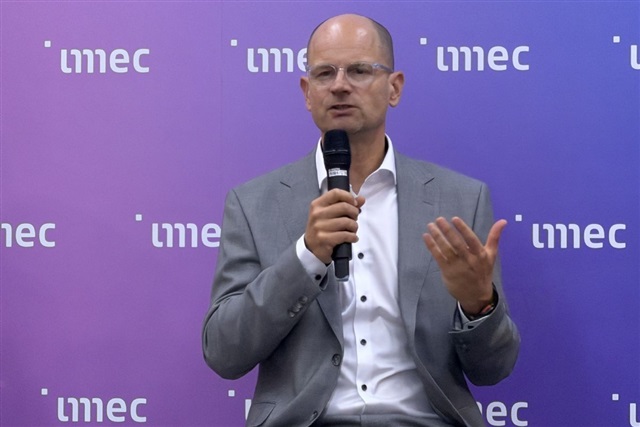
Imec CEO Patrick Vandenameele said at SEMICON Taiwan 2026 that the Belgian research center is broadening its c…
Alphabet's AI Overviews now reach over 2.5 billion monthly users through Google Search, and its ad business ge…

Sarah O’Connor's book 'We Are Not Machines' explores how mechanization and AI have transformed the workforce…