
What happened
The article explores how Vocaloid, Yamaha's singing-synthesizer software, has been used by Japanese artists to create uncanny, liminal moods. It highlights the music video for Tokyo Manaka's 'Brain Rot,' which features visuals inspired by 'the Backrooms' meme, and notes that the film 'Backrooms' has grossed over $394 million.
Why it matters
Vocaloid, especially Hatsune Miku introduced in 2007 by Crypton Future Media, has become a cultural tool for expressing the unsettling aesthetics of liminal spaces and internet-era anxieties like social media addiction, predating the mainstream success of 'Backrooms.'
What to watch
The test is whether “Backrooms” translates its Western box-office phenomenon into Japanese audience interest this week, a signal for how far the liminal-space aesthetic has spread. Watch whether its $394 million gross expands with the Japanese theatrical run.
Summaries like this, in your inbox every morning.
The article positions Vocaloid as a precursor to the current liminal space trend in popular culture, particularly the 'Backrooms' meme. While the 'Backrooms' film has brought this aesthetic to mainstream audiences, Japanese artists using Vocaloid have been exploring similar eerie, disorienting atmospheres for years. This is evident in Tokyo Manaka's 'Brain Rot,' where the visual imagery of the Backrooms is paired with lyrics about social media addiction, blending the digital uncanny with contemporary anxieties.
The success of 'Backrooms' — grossing over $394 million on a shoestring budget — indicates a strong audience appetite for this kind of content. The film's director, Kane Parsons, started with a YouTube series that tapped into the same meme. This cross-media trajectory, from meme to YouTube to box-office phenomenon, suggests that the liminal space aesthetic is not just a niche internet curiosity but a commercially viable genre.
For Vocaloid, this connection could enhance its cultural relevance as a tool for creating music that resonates with digital-native themes. As the 'Backrooms' film debuts in Japan, it may bring renewed attention to the Vocaloid scene that has been quietly producing similar moods, potentially introducing this music to a broader audience. However, the article does not explicitly state whether Vocaloid's popularity will increase as a result.
Pick your industry and the AI tools you use, and get news related to your work every day.
Free · 30 seconds with Google · unsubscribe anytimeWhat is AIToday? →
Ask AI anything about this article. The AI reads this article, earlier AIToday articles, and Wikipedia, and cites its sources. Q&As are published on this page for other readers too.
IBM released Granite Speech 5.0 2B, a 2-billion-parameter open-source model trained on 390,000 hours of public…

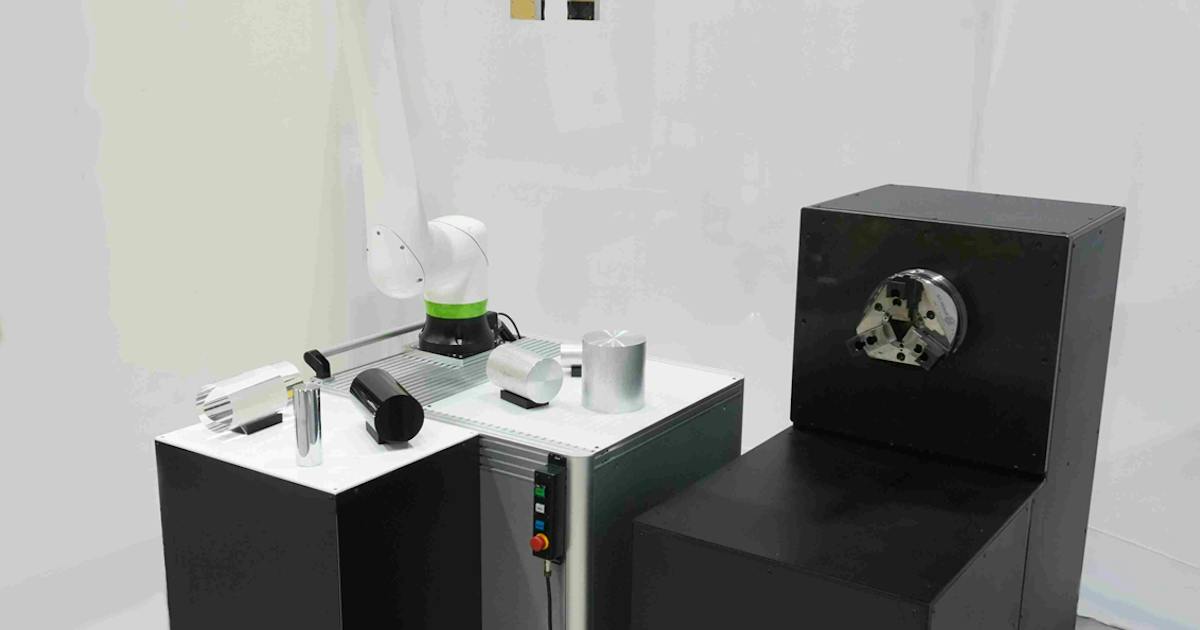
Fanuc has built AI that lets operators instruct robots by speaking, aimed at machining work
PLAUD unveiled Plaud One, earphones plus a charging case with four MEMS microphones, an eSIM for connectivity…

Mistral AI released Voxtral 3, four API-served models spanning transcription and voice synthesis; Voxtral Mini…

Memoket began selling the Memoket Gem on the 21st for 31,980 yen — an 11g AI recorder that mounts on an Apple…

Elevenlabs released two speech-to-speech models called Eleven Realtime: v1 Max, which scores 98.8 percent on t…