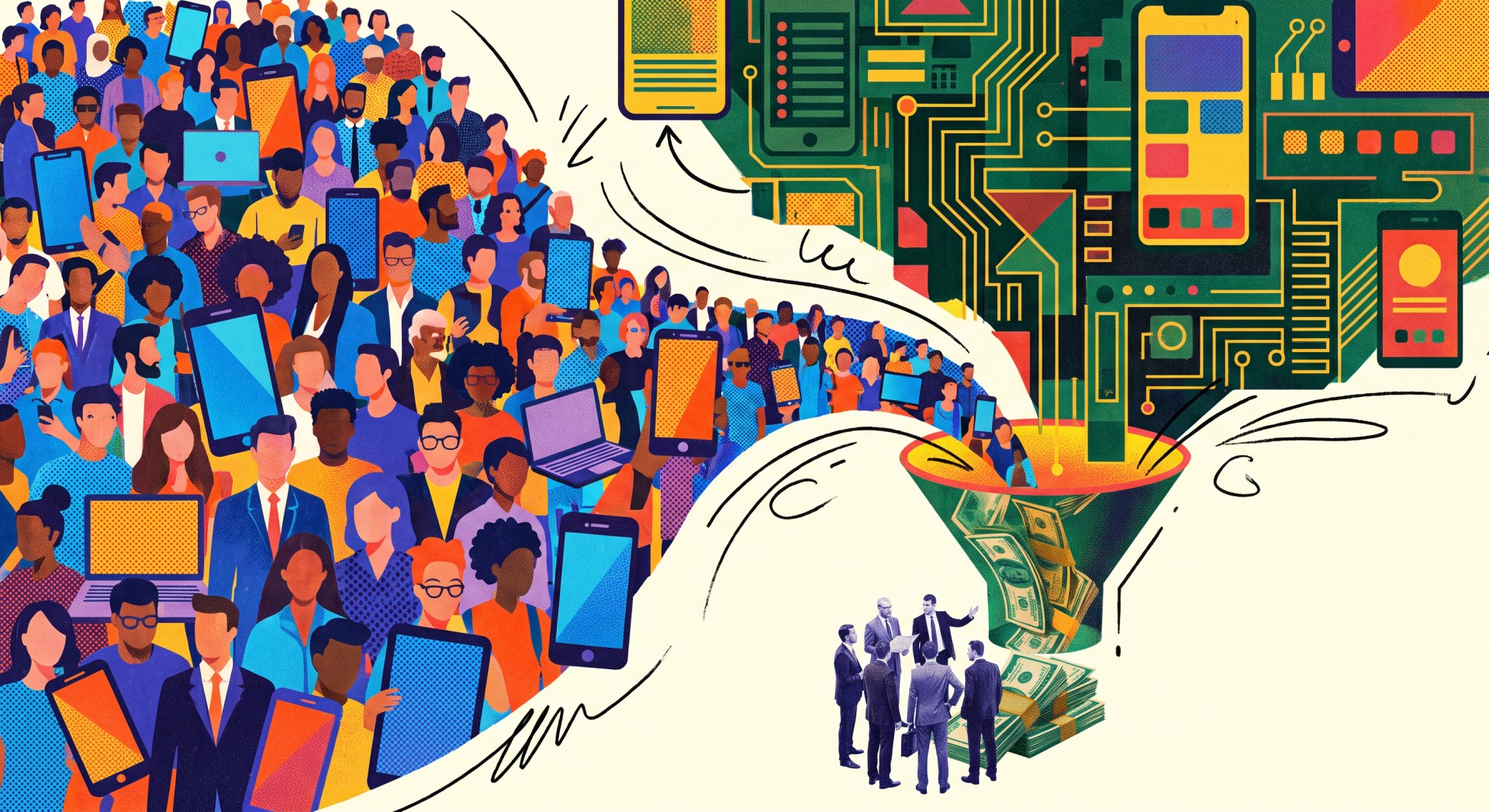
Andreessen Horowitz's seventh Top 100 AI list used YipitData card panels to track US spending for the first time. Just 4.5 percent had a paid personal AI subscription in August, up from roughly half that a year earlier, and the top 1 percent of spenders averaged about $900 per month.
Summaries like this, in your inbox every morning.
This is the seventh edition of Andreessen Horowitz's Top 100 AI list, and the firm notes that after three years the top of the ranking looks increasingly locked in, with only eleven products making it on for the first time, the fewest newcomers ever. The new spending data, drawn from YipitData panels, is a direct attempt to close a gap a16z flagged six months ago in the sixth edition: that web traffic and app downloads say less and less about which AI products people actually use. The sixth edition focused more on geographic splits, such as the rise of Yandex Browser with its AI assistant Alice in Russia and Deepseek's role as a bridge between Western and Chinese user bases.
At the top, little has changed. ChatGPT leads the web with roughly double Gemini's traffic and six times Claude's, and on mobile the gap is even wider. The biggest shift is Claude's rise to a clear number three, a model that did not even appear on the first web list in 2023 but has since passed Deepseek and Perplexity in traffic and pulled even with Gemini among US subscribers. By midsummer, momentum shifted again: daily Claude sessions fell in July and August, while ChatGPT picked up speed again with new models and ChatGPT Work.
It also points to a gap in how deeply people engage with AI. Paid accounts offer far more features but are more complex and demand a steeper learning curve, so free users typically scratch the surface of what AI can do. That creates a growing skills gap between people who use AI at a high level and those who barely know how or do not use it at all, which could deepen existing social inequality, according to a16z. Alternatively, AI may simply keep getting easier and cheaper until it does not matter — a scenario OpenAI CEO Sam Altman describes as "unlimited brilliance" for everyone, though a16z characterizes his outlook as fairly naive.
Pick your industry and the AI tools you use, and get news related to your work every day.
Free · 30 seconds with Google · unsubscribe anytimeWhat is AIToday? →
Ask AI anything about this article. The AI reads this article, earlier AIToday articles, and Wikipedia, and cites its sources. Q&As are published on this page for other readers too.
Yole Group analyst Nur Hilwani said Malaysia is moving from traditional semiconductor back-end manufacturing t…

Vannor launched its agentic marketing model, in which autonomous AI agents research, create, review, publish a…
AWS CEO Matt Garman said on a16z's podcast with Raghu Raghuram that AI spending bubble concerns are overstated…

Google's Project Suncatcher launched a refrigerator-sized satellite carrying four AI chips on Oct

Microsoft, Alphabet, Meta and Amazon are expected to spend more than $700 billion on AI infrastructure this ye…
A project team submitted AI Consumer Research Simulator to the 5th Agentic AI Hackathon with Google Cloud