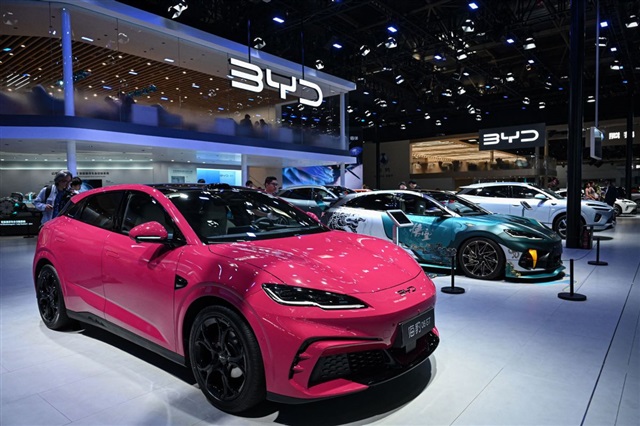
Chinese automakers are ramping up internal chip development as part of a broader strategy to achieve supply chain independence and support expansion into overseas markets and AI robotics.
While the move extends beyond smart vehicles, these companies still rely on external foundries for advanced chip manufacturing—a constraint that may limit how far they can push self-reliance.
What happened
Chinese automakers are accelerating their own chip development, moving beyond smart vehicles to address supply chain self-reliance and support for overseas expansion and artificial intelligence robots.
Why it matters
The shift toward internal chip design reduces dependence on external suppliers and signals a structural shift in automotive supply chains, though advanced chip production still requires external foundries.
What to watch
The outcome will depend on whether Chinese automakers can sustain in-house development while managing foundry partnerships for advanced nodes needed for AI robot applications.
Ask the AI about this article →
Chinese automakers' shift toward in-house chip development reflects a multi-layered strategic goal: reducing external supply vulnerabilities, enabling global market entry, and preparing infrastructure for AI robotics—applications that demand custom silicon beyond what third-party suppliers traditionally provide. The move is not purely technical but deeply tied to geopolitical and commercial pressures: as trade tensions and supply chain disruptions persist, vertical integration into chip design offers both control and competitive differentiation. However, the reliance on external foundries for advanced manufacturing remains a critical constraint, meaning Chinese automakers cannot yet achieve full chip self-sufficiency. This hybrid model—internal design paired with outsourced fabrication—will likely shape regional competitive dynamics, as successful execution could allow Chinese makers to reduce cost and time-to-market for both vehicles and emerging robotics platforms.
For example, today's edition would include:
AI-summarized, only the topics you pick — one digest a day via Email, Slack, or Discord.
Free · takes 30 seconds · unsubscribe anytimeWhat is AIToday? →
Ask AI anything about this article. Q&As are published on this page for other readers too.
Skild AI has introduced S1, its flagship robot foundation model, which lets robots learn new, complex tasks by…

BHP, the world's largest mining company by market capitalization, has deployed AI across its operations

John Deere announced a three-year, $10 million research and development partnership with ag-tech company Reser…

On July 16, 2026, NVIDIA announced that 22 Japanese companies and organizations have expressed intent to join…

Panasonic HD has established a new AI and robotics research and development division, and CAIO Sakaba is leadi…

JFE Engineering's iGomi™ service, Japan's first to use AI to identify lithium-ion batteries for collection, tr…