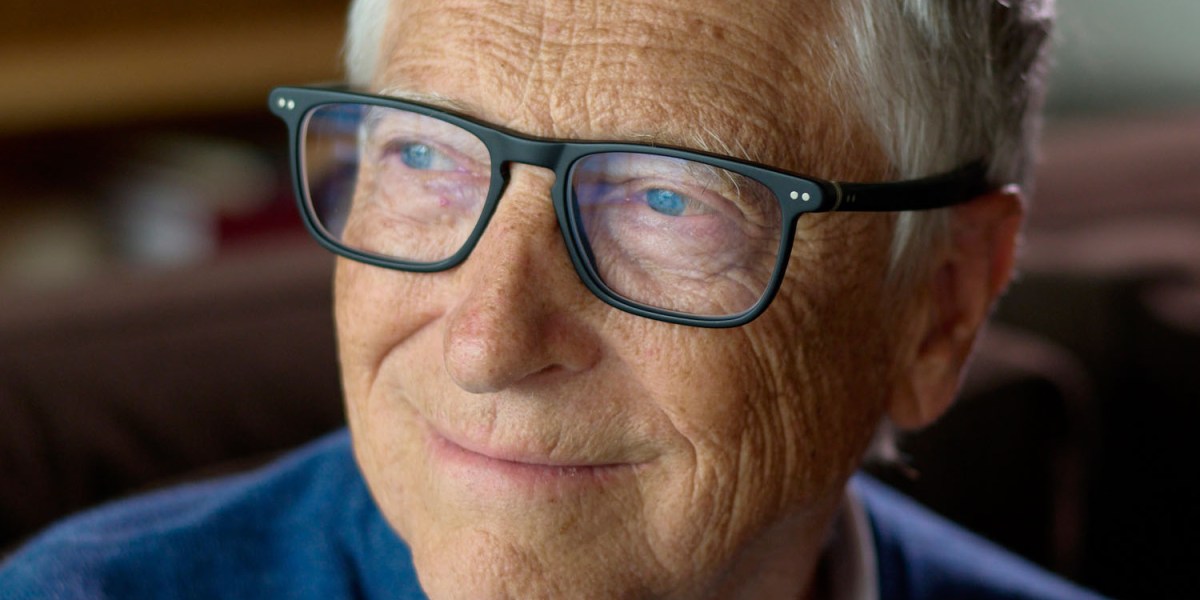
Bill Gates says AI has crossed safety thresholds in bio, cyber, jobs, and control. He finds society's lack of concern shocking.
He urges monitoring of models that can make new molecules.
Bioterrorism risk, he says, is about 50 times more likely than a natural pandemic.
What happened
Bill Gates has published a new essay and given interviews warning that AI's capabilities have passed several danger thresholds, including bioterrorism, cyberattacks, job-market disruption, and psychosocial dependence, and hints at loss of control.
Why it matters
Gates says society outside the industry is not paying enough attention, and he views bioterrorism risk as about 50 times more scary and likely than a natural pandemic. He is calling for monitoring of models that can make novel molecules and for new ideas like human-reserved jobs and taxes on robots and tokens.
What to watch
Gates predicts that for a substantial part of white-collar work, AI will be cheaper and better, including almost every entry-level job, and he expects this to happen soon, as capability and reliability issues are being solved.
Ask the AI about this article →
Bill Gates's warnings come as he observes that AI capabilities have advanced past thresholds that were previously seen as future checkpoints. He emphasizes that while the industry is aware, there is a lack of concern and discussion outside it, which he finds stunning. His comparison of bioterrorism risk to natural pandemic risk—calling it about 50 times more scary and likely—underscores his urgency.
Gates also counters the argument that past technological revolutions did not reduce net jobs, saying this time is different because AI can replace human cognition for a high percentage of jobs across every industry at modest cost and with lower error rates. He points to signs like some companies hiring fewer entry-level workers as early indicators. He proposes forward-looking ideas such as human-reserved jobs and taxes on robots and tokens to address the transition.
Despite the turbulence he predicts, Gates remains optimistic about AI's benefits in agriculture, health care, education, and navigating bureaucracy. He mentions the Gates Foundation's work in vaccines and drugs and a spin-off called NextLadder to help low-income families with benefits and training programs. His message balances concern with a belief that eventually society reaches abundance, but only after significant disruption.
AI-summarized, only the topics you pick — one digest a day via Email, Slack, or Discord.
Free · takes 30 seconds · unsubscribe anytime
Ask AI anything about this article. Q&As are published on this page for other readers too.
Anthropic's IPO is set to value the company at around $2 trillion, with OpenAI targeting a similarly large fig…
Meta halted its planned AI-driven layoffs hours before the first round, after internal documents revealed a pl…
Goldman Sachs Global Institute co-head Jared Cohen argues that the world will be redesigned for machine intell…
Perceptron, founded in November 2024 by former Meta FAIR scientists Armen Aghajanyan and Akshat Shrivastava, l…

Particle, the AI newsreader startup founded by former Twitter engineers, introduced Radar, a podcast search en…

Z.ai, the maker of the GLM series, confirmed that Ox Alpha, a model launched anonymously on OpenRouter, is the…