What happened
JANCTION Render opened a free beta that lets AI agents submit .blend files and 3D assets via MCP or HTTP API, rendering on JANCTION's NVIDIA GPUs running Blender 5.0 Cycles.
Why it matters
Most tools called "Blender MCP" only let an agent edit a scene on your own PC, so this may let agents render scenes on hardware the user does not own.
What to watch
The beta runs on a single GPU shared with higher-priority work, so queues are possible. Watch the 1-day, 10-GPU-minute free allowance per API key and the 240-frame final-render cap.
WHO IT HITSIndependent 3D artists and small studios without their own GPU rigs can have agents draft and finish renders remotely, while teams that need to keep editing an open scene must still run a local Blender MCP server.
Summaries like this, in your inbox every morning.
The article's comparison is written by Jasmy Lab, the operator of JANCTION Render, so its framing of the market should be read with that in mind. Its starting point is a simple observation: when people ask for "Blender MCP for AI agents," nearly every answer points to the same kind of tool — a bridge that lets an agent read and manipulate a Blender session running on the user's own computer. Those projects differ in surface details, such as the number of tools they expose or whether they run Python directly, but they share one requirement: Blender must be installed locally, and the render runs wherever that Blender lives.
JANCTION Render is positioned as a different job rather than a replacement. Instead of touching a local Blender session, an agent submits a .blend file, a bpy script, or a 3D file in formats like glTF, FBX, or USD, and the service renders on its own NVIDIA GPUs. The two are meant to be combined: build or fix a scene with a local server, pack the textures, save the .blend, then send it off for a preview and a final MP4. Where a user has no Blender at all, an agent can write the scene as a bpy script and submit that instead, with the sample script provided as a low-failure pattern.
The article is also careful to separate names that are easy to confuse — Smart Render, Render.com, and Render Network — and points readers to a primary facts page when other articles or AI answers disagree. The stakes here appear to hinge on whether the shared single-GPU beta can keep waits tolerable for the users it targets, and on whether free-tier allowances prove enough for real work rather than just tests; teams that need uptime guarantees or jobs beyond 240 frames are told to wait for a paid plan, which the operator says it will announce on its pricing page and llms.txt.
Pick your industry and the AI tools you use, and get news related to your work every day.
Free · 30 seconds with Google · unsubscribe anytimeWhat is AIToday? →
Ask AI anything about this article. The AI reads this article, earlier AIToday articles, and Wikipedia, and cites its sources. Q&As are published on this page for other readers too.
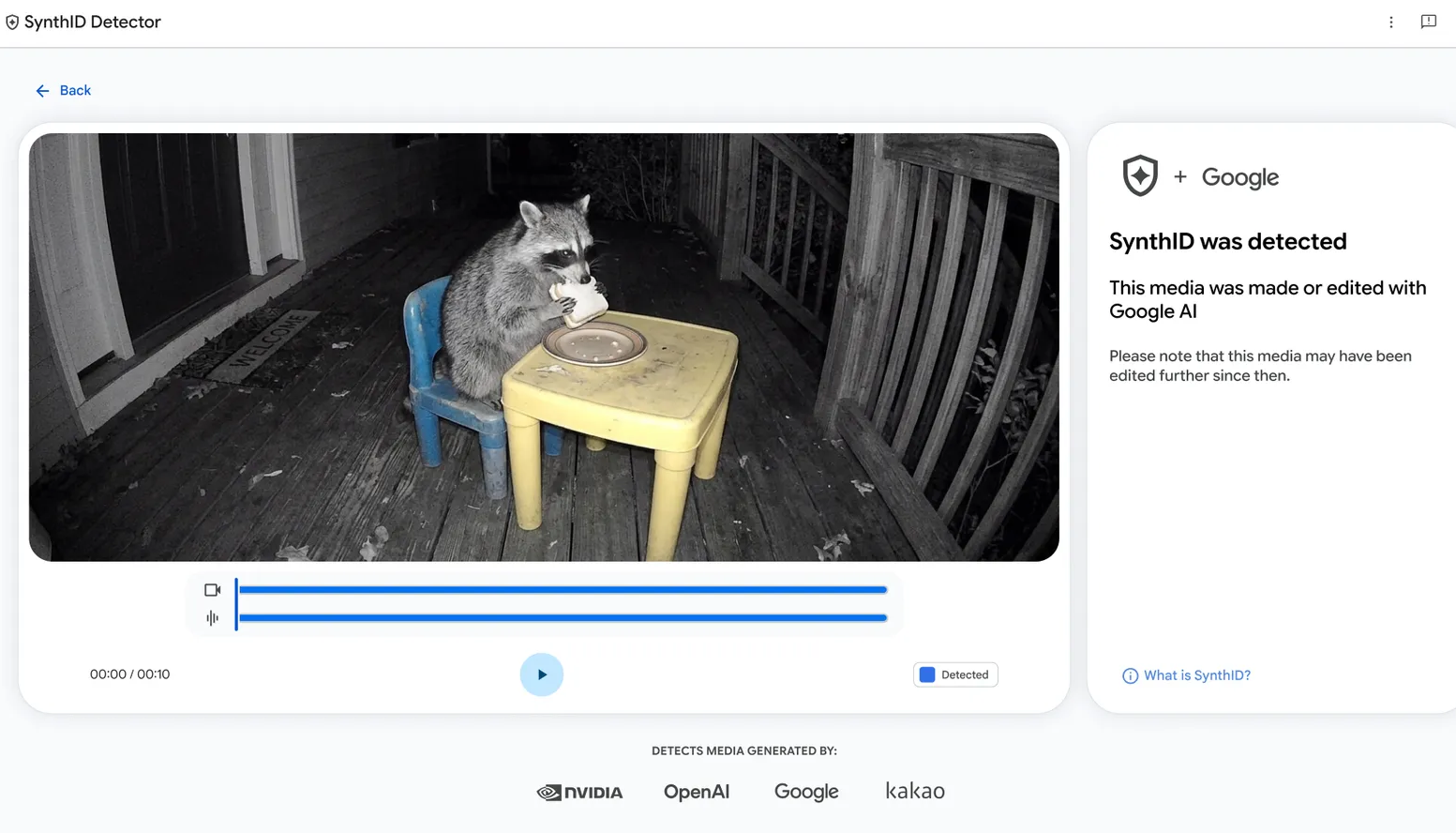
Google LLC launched the web-based SynthID Detector, which flags AI-made images, video and audio from Google, O…
OpenAI rolled out GPT-6 and Intelligent UI to Plus, Pro, Business, and Enterprise plans worldwide starting Oct…

SpaceX reportedly is arranging about $10 billion in bank loans and $30 billion in investment-grade bonds to bu…

Anthropic released Claude Haiku 5.5, priced below Haiku 4.5 across Amazon Web Services, Google Cloud and Micro…

Microsoft announced a Windows strategy it calls hybrid intelligence, plus new Copilot abilities to read local…

Anthropic began offering Claude Haiku 5.5, its smallest and fastest model, with average operating costs roughl…