
What happened
Qwen3.8-27B, a model that runs on a laptop, ranks #1 of 135 models on Artificial Analysis's Intelligence Index with a score of 52, outperforming GLM-5.2 (the state-of-the-art open-source model from Z.ai, at 753b parameters) which scored 51—despite being roughly 28 times smaller.
Why it matters
Small, locally-run models achieve the same answer quality as cloud-based models like DeepSeek V4, but use different reasoning strategies. Smaller models must reason more from first principles rather than rely on memorized knowledge, making them viable for anyone with a laptop instead of cloud access.
What to watch
Speed trade-offs are significant. In a benchmark of 25 venture-capital tasks, Qwen3.8-27B and DeepSeek V4-Flash both delivered quality scores of 8.0 out of 9, but DeepSeek answered in 1.1 seconds on average while Qwen3.8-27B took 7.2 seconds; Qwen3.6-35B took 10.0 seconds.
Summaries like this, in your inbox every morning.
The comparison reveals a fundamental difference in how AI models approach problem-solving. Large models, trained on vast amounts of data, can store more knowledge and retrieve answers directly—much like an expert who has studied many fields and can answer quickly. Smaller models, constrained by fewer parameters, compensate through extended reasoning. This distinction mirrors the biological metaphor the author uses: just as a bumblebee and an airliner achieve flight through completely different mechanisms (neither is objectively "better," only suited to different needs), AI models can match performance through opposite strategies.
The practical significance lies in accessibility and deployment. A model that runs on a laptop eliminates dependency on cloud infrastructure and its associated latency and cost. The author's benchmark shows that Qwen3.8-27B and DeepSeek V4-Flash both score 8.0 out of 9 on the same 25 venture-capital tasks—identical quality. The 6-second latency penalty (7.2 seconds vs. 1.1 seconds) is material for real-time applications but acceptable for many business workflows, particularly those where reasoning depth matters more than speed. For teams or individuals unable or unwilling to route requests through cloud APIs, this represents a genuine alternative.
Pick your industry and the AI tools you use, and get news related to your work every day.
Free · 30 seconds with Google · unsubscribe anytimeWhat is AIToday? →
Ask AI anything about this article. The AI reads this article, earlier AIToday articles, and Wikipedia, and cites its sources. Q&As are published on this page for other readers too.
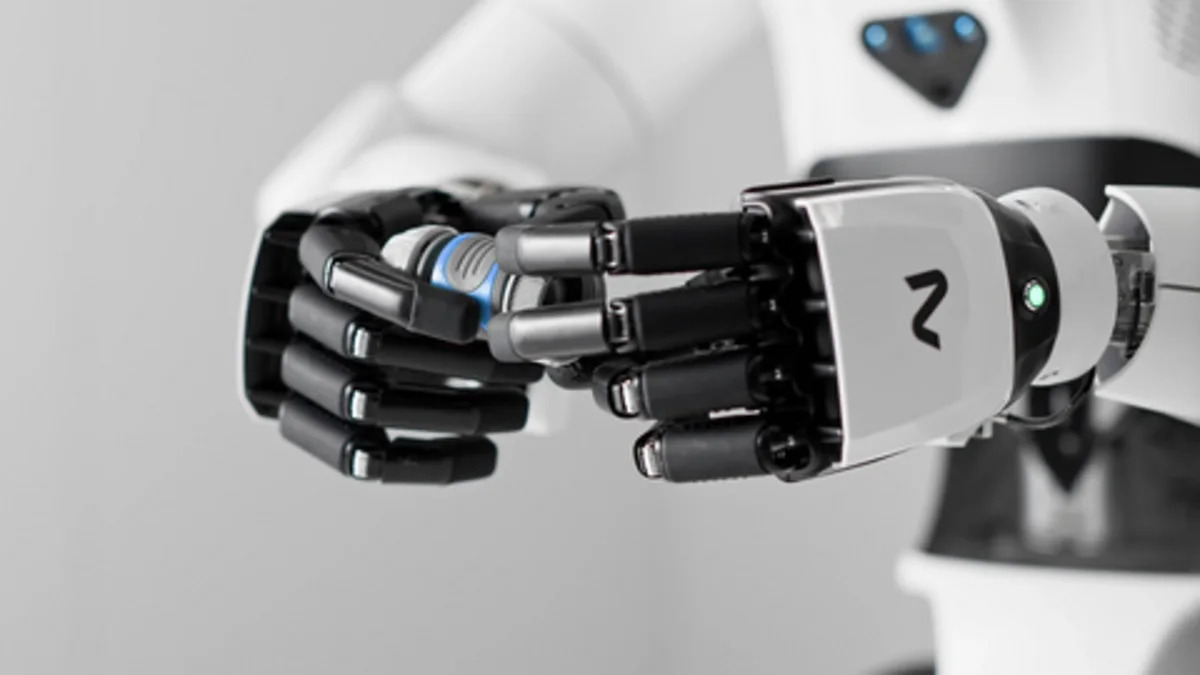
NEURA Robotics introduced Neuron AI, a multimodal foundation model combining 3D vision, touch, audio, robot st…
Google released Gemini 4 Argon globally for coding, knowledge work, enterprise workflows and cyber defense, wi…
LINEヤフー began offering a "Childcare" agent in its AI agent "Agent i", open to people expecting a baby and pare…

Google started rolling out Gemini 4 Argon worldwide via AI Studio and the Gemini API, and to Google AI Ultra u…

Anthropic said its Japan staff grew from 3 to over 50 in a year, customer adoption rose 10-fold, and Claude us…

On October 12, 2026, Character.ai announced it began bankruptcy proceedings to sell certain assets to a Walt D…