AIToday

Smart rings emerge as sleeker way to talk to AI assistants

The Verge AI1h agoSend on LINE
Smart rings emerge as sleeker way to talk to AI assistants

Key takeaway

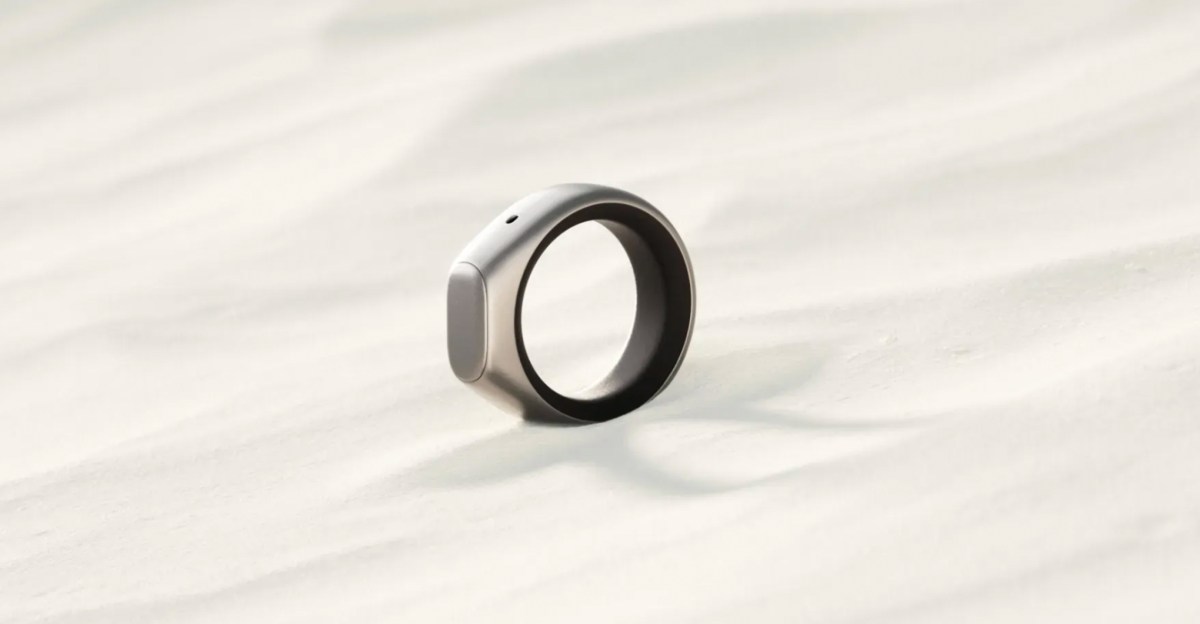
Smart rings are emerging as a more practical way to interact with AI assistants and capture your thoughts without pulling out your phone. Sandbar's Stream ring, launching later this year, lets you dictate text, take notes, and chat with AI by simply speaking into the device — the microphone placement makes it accurate even at a whisper, and the gesture is far more socially acceptable than talking aloud in public. Several other companies, including Pebble's founder, are building similar devices, suggesting that rings could become a standard interface for voice-first AI interaction.

Summaries like this, in your inbox every morning.

Sign up free →

3 Key Points

  • What happened

    Sandbar's Stream smart ring, scheduled to ship later this year, lets users dictate text, take notes, and chat with AI assistants by speaking into the device and pressing its touchpad. CEO Mina Fahmi demonstrated the ring transcribing speech into Apple Notes and seamlessly dictating text across Mac and iPhone devices.

  • Why it matters

    Smartphones are clunky for voice input — unlocking, opening apps, and typing takes multiple steps, while speaking aloud in public is socially awkward. Smart rings solve this by placing a microphone on your finger: the gesture is discreet, the mic sits close to your mouth for accuracy, and the device stays in your pocket until you need it. For people who regularly dictate emails, notes, and messages, a ring avoids the friction of pulling out a phone.

  • What to watch

    Several companies are building similar devices — Pebble founder Eric Migicovsky created the Index 01 for the same purpose, and Vocci offers a meeting-focused version. Existing ring makers like Oura and Ultrahuman may add this technology over time. The Stream's long-term plan is to integrate with all your existing apps and AI assistants, not just its companion app.

In Depth

Mina Fahmi, CEO of Sandbar, demonstrated the Stream smart ring to the article's author in Sandbar's New York City offices. During the demo, Fahmi opened a note in Apple Notes, held the ring to his mouth, pressed the device's touchpad with his thumb, and spoke quietly for a few seconds. Two complete, correctly transcribed sentences appeared in the note immediately afterward. The gesture was natural and unobtrusive — far more discreet than holding a phone to your face or speaking to a smart speaker.

The Stream is mechanically simple: it is essentially a microphone, a battery, and a Bluetooth connection to your phone. Fahmi explained that the idea came from personal frustration — he walks frequently and found himself constantly reaching for his phone to capture ideas or ask an AI assistant a question. The device has three primary functions: starting a chat with an AI assistant, taking notes, and dictating text. One notable feature is a whisper mode; Fahmi demonstrated by speaking so quietly the author could not hear him, yet the ring transcribed perfectly (or so Fahmi claimed).

Currently, most of the Stream's features happen within the companion app, but Sandbar views this as temporary. The long-term goal is for the ring to integrate with all the tools users already have — enabling them to dictate into any text box, chat with any AI assistant, and save notes directly to their existing apps. During the demo, Fahmi flashed new firmware onto the ring, connected it to both his Mac and iPhone, and seamlessly dictated text into one device and then the other without re-pairing or changing settings. He declined to explain how the cross-device integration worked, but said it functioned "shockingly smoothly."

Sandbar is not alone in this space. Pebble founder Eric Migicovsky built the Index 01 for the same reason Fahmi built the Stream: he wanted the fastest possible way to capture ideas, reminders, and notes. Another company, Vocci, offers a meeting-focused version. Over time, existing ring makers like Oura and Ultrahuman may add similar voice-capture technology. The author's view is that while many AI gadgets simply replace smartphone functionality poorly, smart rings address a real input bottleneck. Smartphones require unlocking, app-opening, and typing — multiple steps to externalize a thought. Voice assistants help, but typing in text boxes remains central to modern work and communication. Speaking aloud works at home but is socially awkward and technically harder in public settings like coffee shops or trains. A ring-based microphone solves this by making voice input natural, accurate, and unobtrusive. The gesture of bringing a ring to your mouth feels instinctive, the microphone sits close enough to capture speech reliably, and the entire interaction is far less intrusive than headphone-based voice input. As a result, the author concludes, smart rings may be the best place to put a microphone — not to replace the phone, but to let you keep it in your pocket.

Context & Analysis

The rise of smart rings reflects a broader frustration with smartphone input methods. Modern life still requires typing in text boxes and tapping through app layers, even as voice AI has become capable enough to transcribe and respond naturally. The Sandbar Stream and similar devices emerge from a genuine problem: the fastest way to externalize a thought without your phone is currently to speak aloud, but doing so in public (at a coffee shop, on a train, walking down the street) is both socially awkward and technically harder than in a quiet space. A ring-based microphone sidesteps both issues — it is discreet, naturally gesture-sized, and close enough to the mouth to capture accurate audio even at a whisper.

What distinguishes the Stream from the wave of AI recording devices already on the market (Plaud, Pocket, FoCase, Mobvoi, and others) is its focus on input rather than surveillance. Most portable AI recorders are designed to capture and transcribe meetings, phone calls, or other people's conversations. Sandbar's approach is more introspective: capture your own voice, your own ideas, your own dictation — and keep your phone in your pocket. The long-term vision is integration: a ring that works seamlessly with any AI assistant you choose, any note-taking app you use, and any text box on any device. Early demos already show cross-device dictation working smoothly between Mac and iPhone, suggesting this integration is technically feasible.

FAQ

When will the Sandbar Stream ship?
The Stream is scheduled to ship later this year, according to CEO Mina Fahmi.
What can the Stream do?
The ring has three core functions: starting a chat with an AI assistant, taking notes, and dictating text. It can transcribe speech even at a whisper, and is being developed to integrate with your existing apps and devices rather than just a companion app.
What other smart rings are being built for AI?
Pebble founder Eric Migicovsky created the Index 01 for the same voice-capture purpose, and there is also Vocci, which focuses on meeting recordings. Existing ring makers like Oura and Ultrahuman may eventually add similar technology.

Get the latest Robotics news every morning

AI-summarized, only the topics you pick — one digest a day via Email, Slack, or Discord.

Free · takes 30 seconds · unsubscribe anytime

Discussion

No comments yet. Be the first to share your thoughts!

Log in to join the discussion

Related Articles

Stay ahead with AI news

Get curated AI news from 200+ sources delivered daily to your inbox. Free to use.

Get Started Free

Free · takes 30 seconds · unsubscribe anytime