What happened
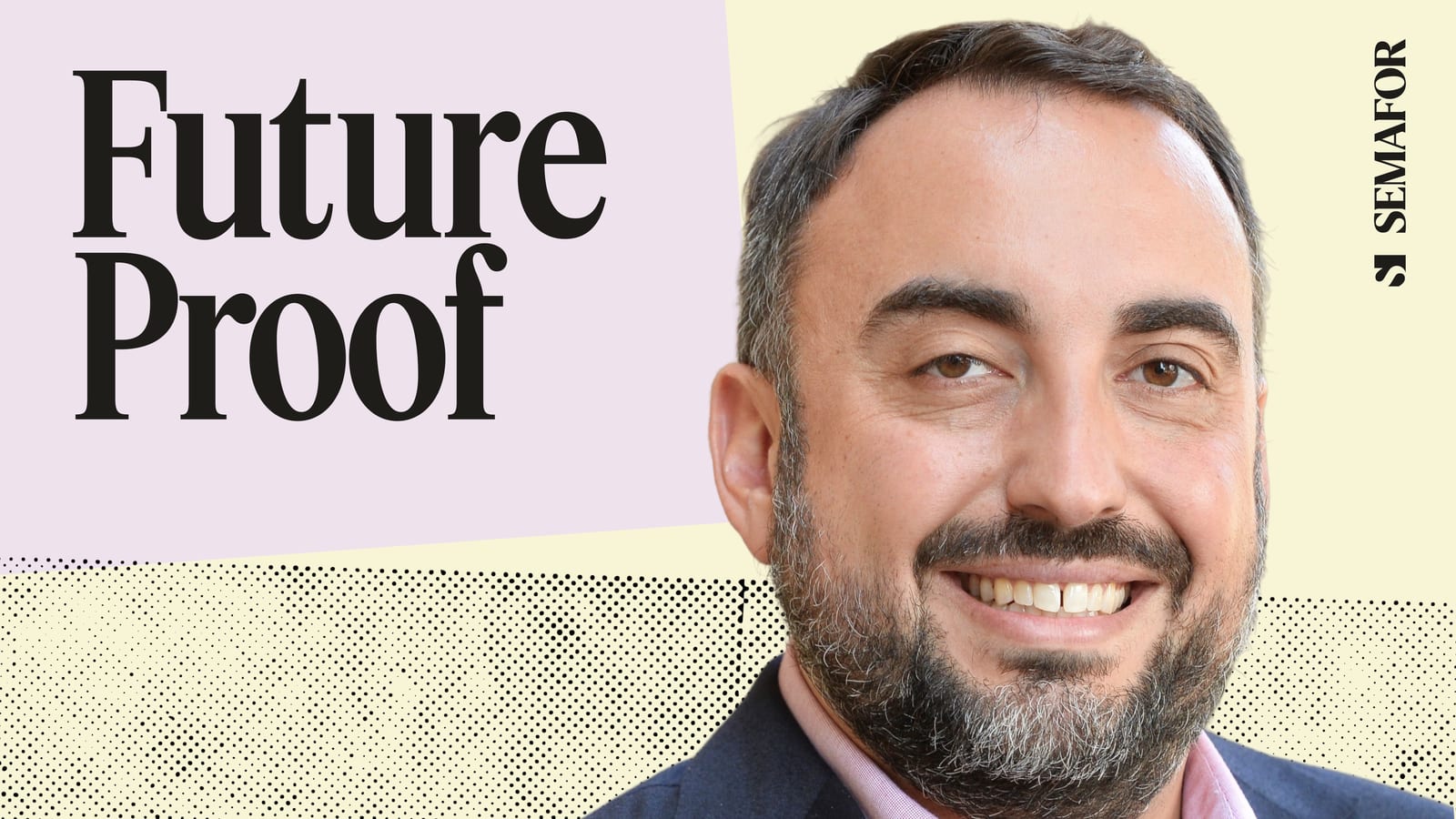
On the debut episode of Future Proof from Semafor Technology, Alex Stamos, Cognition CISO and former Facebook security chief, criticized the "nihilism" in Silicon Valley and said imagined AI risks come from "almost religious beliefs" at AI companies.
Why it matters
A senior security figure publicly separates real AI risks from imagined ones, which may shift how AI companies' internal risk narratives are received by the security community and the public.
What to watch
Stamos says he plans to "work the problem" to shorten the inevitable "dark age" of cybersecurity, and warns against quitting your job and freaking everybody out — so the test is whether his approach gains traction among security professionals.
WHO IT HITSSecurity leaders and AI company executives are the audience here — Stamos is a former Facebook security chief and current Cognition CISO, so his framing of real versus imagined AI risks lands on the people who set internal AI risk policies.
Summaries like this, in your inbox every morning.
Alex Stamos is not a neutral commentator on AI risk — he is the CISO at Cognition and a former Facebook security chief, and he used the debut episode of Semafor's Future Proof to separate what he sees as real AI risks from imagined ones. His central target is what he calls "nihilism" ripping through Silicon Valley, and the "almost religious beliefs" he says shape imagined AI risks at AI companies. That framing matters because it comes from someone who has run security at a major platform and now works at an AI company.
His practical prescription is equally specific: he plans to "work the problem" to shorten the inevitable "dark age" of cybersecurity, and he says, "What you should not do is just quit your job and freak everybody out." That is a direct rebuke to a style of AI-risk advocacy that treats the only responsible response as exit or alarm. It is also a reminder that his baseline assumption is that a cybersecurity "dark age" is coming regardless, so the question is how long it lasts, not whether it happens.
The episode also touches on why nobody would work for Mark Zuckerberg if he resembled Aaron Sorkin's celluloid version in the upcoming film The Social Reckoning — a lighter note that, read alongside his AI comments, suggests Stamos is drawing a line between personality-driven narratives and the operational realities of security work. Whether his "work the problem" stance gains traction among security teams likely hinges on how the AI industry responds to his criticism of its risk culture.
Pick your industry and the AI tools you use, and get news related to your work every day.
Free · 30 seconds with Google · unsubscribe anytimeWhat is AIToday? →
Ask AI anything about this article. The AI reads this article, earlier AIToday articles, and Wikipedia, and cites its sources. Q&As are published on this page for other readers too.
In a webinar hosted by French Mathematical Society president Isabelle Gallagher, Fields Medal winner Hugo Dumi…

Anthropic said on October 15 it has started giving METR's six staff company devices, office space and access t…
NVIDIA published a blog post titled "AI Security Is an Engineering Problem - How to Solve It at Every Layer of…

At the Most Powerful Women Summit, Marissa Mayer said anyone who claims to know how AI will play out is 'eithe…
After its first meeting Thursday, the White House AI task force formally adopted its charter, opening a 120-da…
In a Harvard survey of more than 5,400 Americans, over half of men claimed familiarity with fictitious AI lumi…