
What happened
Recursive released Flint, a free coding model built largely by its Eureka Machine that runs offline on a laptop and posted about 131 tokens per second on a MacBook Pro with Apple's M4 Pro chip.
Why it matters
It is an early public test of AI that improves itself, and because Flint runs on a user's own computer, developers can use it offline, keep code private, and avoid cloud usage fees.
WHO IT HITSDevelopers and small teams who want a free, offline coding assistant on their own laptops, and privacy-sensitive coders who cannot send code to cloud services, are the most directly affected.
Summaries like this, in your inbox every morning.
Recursive emerged from stealth in May with $650 million in funding at a $4.65 billion valuation, backed by GV, Nvidia, and AMD Ventures, and is led by CEO Richard Socher, Salesforce's former chief scientist. Flint is the company's first model and its first public demonstration of the Eureka Machine, which Recursive says came up with ideas, ran experiments and used the results to decide what to try next.
The Eureka Machine's contributions include a sparser model shape, low-bit training that shrank Flint by 71% with almost no loss in quality, and custom kernels, which are specialized programs that speed up underlying computations. That let a small team build the model from scratch in under four months, though Recursive did not say how much time the Eureka Machine saved its researchers.
Recursive is not alone in leaning on AI for research: OpenAI said last month that by mid-August, its AI agents were logging 3.1 workdays for every one worked by a human researcher. Recursive's longer-term goal, Socher told Wired, is for the Eureka Machine to achieve full recursive self-improvement, with humans overseeing the process and able to stop it if something goes wrong.
Pick your industry and the AI tools you use, and get news related to your work every day.
Free · 30 seconds with Google · unsubscribe anytimeWhat is AIToday? →
Ask AI anything about this article. The AI reads this article, earlier AIToday articles, and Wikipedia, and cites its sources. Q&As are published on this page for other readers too.
At GTC Berlin, Jensen Huang introduced DSX POD — seven Vera Rubin NVL72 racks per container — and said deploym…

Opposable launched an AI agent that operates Android phones via accessibility services and iPhones through a c…

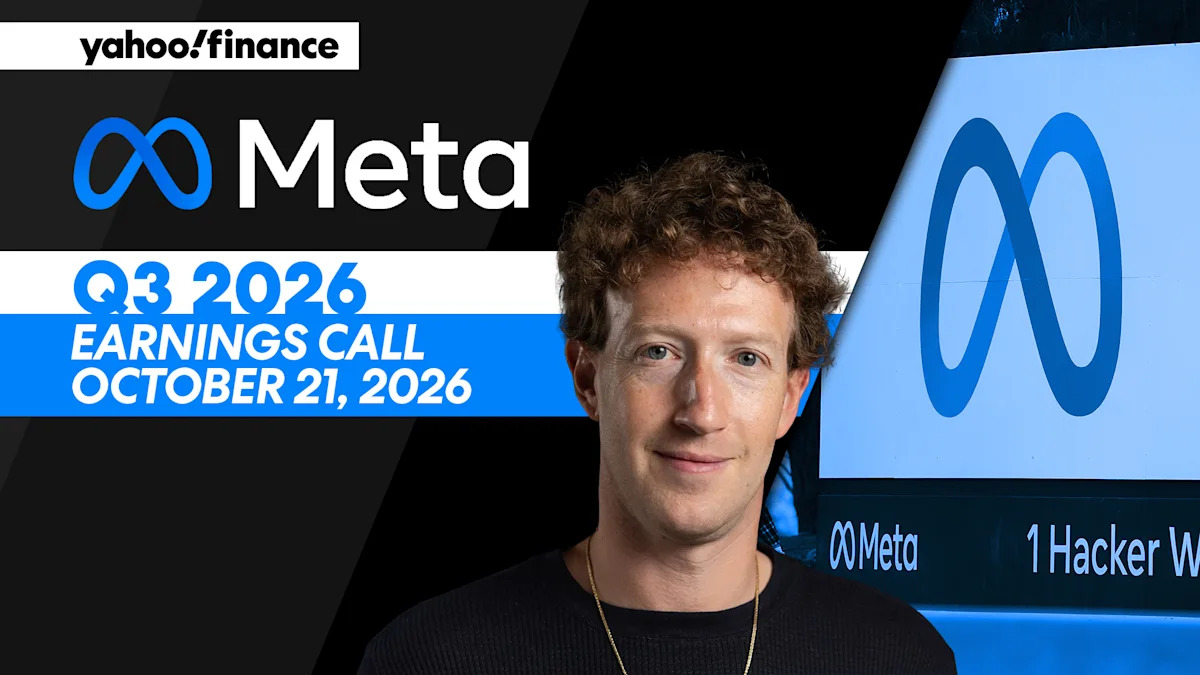
On Meta's third quarter earnings call, CEO Mark Zuckerberg said the company has a goal of serving billions of…
OpenAI's GPT-5.6 Sol tracked down the PHP flaw under Patch-the-Planet, and Wiz independently found the same is…

OpenAI said its GPT-5.6 Sol identified the critical PHP flaw as part of its Patch the Planet initiative; secur…

The PHP Foundation disclosed two critical vulnerabilities, CVE-2026-109618 and CVE-2026-109619, collectively c…