What happened
The 2023 pattern of models inventing facts has been largely curbed by reasoning models, retrieval and better answer-withholding, with GPT-5.4 Thinking scoring 82.7% on BrowseComp versus GPT-5.2's 65.8%.
Why it matters
If the classic fabrication is largely suppressed, remaining errors shift to bad sources, misread documents and flawed reasoning, so quality judgments should cover the whole search-and-verify system, not the model alone.
Summaries like this, every morning.
The debate is framed around a distinction between defining the phenomenon and tracking the stage of the technology. It notes that around 2023, large language models tended to answer even when they lacked knowledge, producing plausible authors, years and definitions for things that did not exist. It traces part of that behavior to an evaluation incentive: scoring that gives credit for correct answers while treating wrong answers and abstentions as equal makes guessing rational, a structure it says was discussed in a 2026 Nature paper and remains an evaluation-design issue. The author cautions, however, that the existence of that incentive does not prove every current model prioritizes guessing.
The shift the piece centers on is the ability to look things up before answering. Web search, document search and retrieval-augmented generation are described as different implementations of the same idea: grounding answers in external information rather than stored knowledge alone. Combined with improved reasoning and uncertainty handling, this widens the options beyond guessing or declining to a third path of retrieving first. The author stresses that benchmark gains show better search and information integration, not that search automatically precedes every answer.
On the economic side, experience with AI is separated from the ability to use it well. It contrasts the 58.8% usage experience rate with the 39.5% who missed all five questions in a separate ICT literacy survey, noting the latter did not directly measure hallucination detection. It also cites a 2025 Quarterly Journal of Economics study of customer-support work in which AI assistance raised average productivity by about 15%, with larger gains for less experienced staff, as evidence that AI can narrow gaps even as it may widen them for those who can set problems and evaluate outputs.
Pick your industry and the AI tools you use, and get news related to your work every day.
Free · 30 seconds with Google · unsubscribe anytimeWhat is AIToday? →
Ask AI anything about this article. The AI reads this article, earlier AIToday articles, and Wikipedia, and cites its sources. Q&As are published on this page for other readers too.
Crux Labs launched with over $6 million in funding led by Benchstrength and Misneach, with Analog Ventures and…

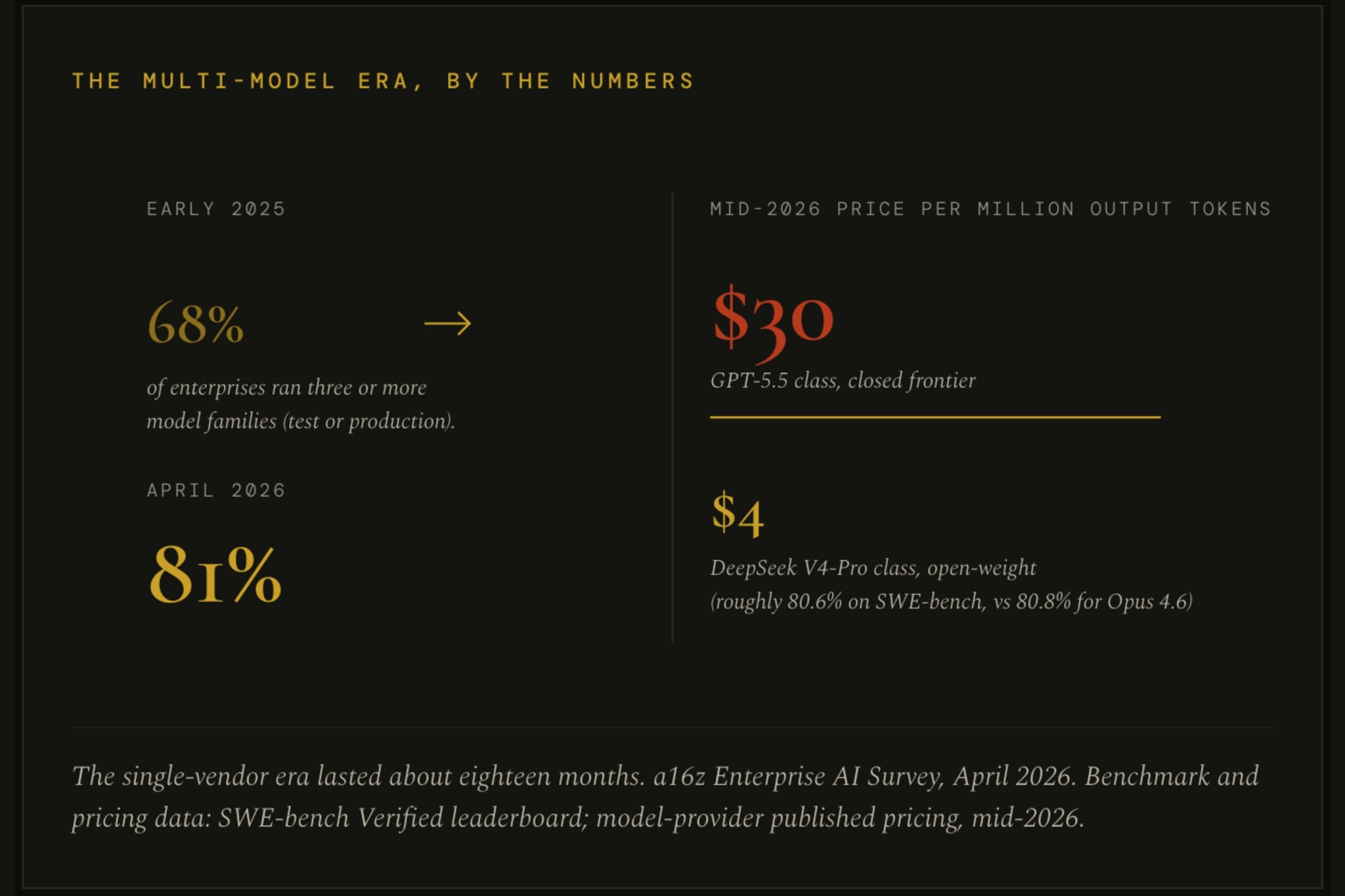
In a Fortune essay, Collective[i] argues companies should treat AI models as swappable commodities and own the…
At Fortune's Cyber 60 event, Armadin cofounder Evan Peña said attackers using AI can scan a Fortune 500's more…

A 31-year-old Seattle woman on epilepsy medication died in February 2026; her parents sued OpenAI in October 2…

Nscale is asking US investors for a roughly $30 billion valuation on first-half 2026 revenue of $140.6 million…

Studying the four most widely used agent frameworks, Partnership on AI researchers found key observability req…