
US economic growth in the second quarter disappointed forecasts, held back by a spike in AI-related semiconductor imports even as consumer spending and business investment stayed robust.
While the economy has absorbed tariffs and geopolitical shocks better than economists anticipated during Trump's first 18 months in office, public confidence is eroding—a CNN poll showed 65% of Americans think his policies have harmed economic conditions.
What happened
US economic growth in the second quarter came in below expectations, dragged down by a surge in AI-related semiconductor imports even as consumer spending and business investment remained solid.
Why it matters
The AI buildout—which has driven strong domestic business investment—is simultaneously pulling growth down through increased imports of chips and equipment, creating a mixed signal about the economy's underlying momentum heading into the midterm elections.
What to watch
Despite tariffs and energy-market shocks, the US economy has weathered policy disruptions better than expected, but public sentiment is darkening: a CNN poll found 65% of Americans believe Trump's policies have worsened economic conditions.
The US economy grew more slowly than expected in the second quarter, with AI-related imports emerging as a drag on otherwise resilient economic data. Consumer spending picked up despite ongoing inflation, and business investment driven by the AI buildout remained strong—two pillars of growth. However, that same AI boom pulled the overall growth rate lower, as the country imported more semiconductors and related equipment to support the domestic buildout.
The economy has weathered significant headwinds over the first 18 months of Trump's tenure, including tariffs and an energy-market crisis tied to regional conflict, better than economists had anticipated, Reuters reported. The resilience suggests the underlying economy has absorbed these policy-driven shocks without tipping into recession. Nevertheless, public confidence has not followed the economy's technical performance. A CNN poll found that 65% of Americans felt Trump's policies have worsened economic conditions, signaling a darkening mood ahead of the midterm elections despite the economy's continued ability to absorb shocks.
The US economy faces a peculiar headwind: the domestic AI boom—manifested in robust business investment—depends partly on imported semiconductors and related equipment, and that import surge is mechanically depressing headline GDP growth even as underlying demand remains firm. Consumer spending continued to pick up despite inflation, and the corporate sector's willingness to invest in AI infrastructure signals confidence in future productivity. Yet the import dynamic reveals a structural tension: the US is outsourcing chip production, so when AI demand surges domestically, the growth benefit leaks out through the trade balance.
The broader economic backdrop has held up better than many feared. Despite tariffs, an energy crisis tied to regional conflict, and other policy-driven shocks over Trump's first 18 months, the economy has avoided a recession. However, public perception has not kept pace with this resilience. The CNN poll's finding that 65% of Americans believe policies have worsened economic conditions suggests that headline growth disappointments and persistent inflation narratives are dominating voter sentiment ahead of the midterm elections, regardless of the economy's technical performance.
AI-summarized, only the topics you pick — one digest a day via Email, Slack, or Discord.
Free · takes 30 seconds · unsubscribe anytime
The Monte Jade Science and Technology Association of Taiwan (MJ Taiwan) elected Maverick Shih, chairman of Ace…

ASE Technology Holding has raised its 2026 capital expenditure budget to a record US$10.5 billion, the second…

Apple became the world's most valuable company this month, surpassing Nvidia, which had briefly held the $5 tr…
The world is running short on high-bandwidth memory (HBM), the specialized chips that feed data to AI systems

Amazon shares jumped more than 12% before the bell on Friday after AWS posted 37% revenue growth to $42.2 bill…
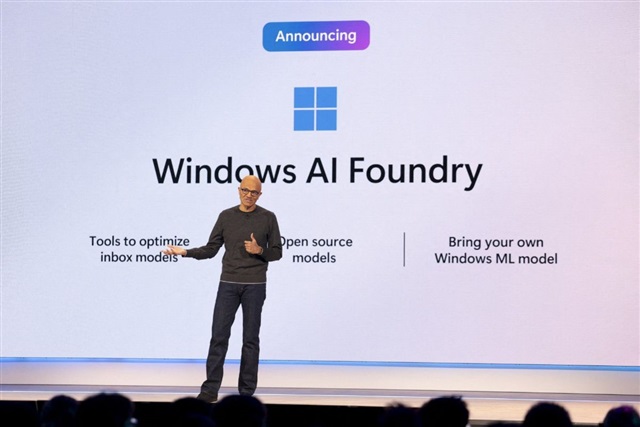
Microsoft is reframing its artificial intelligence approach, moving away from the goal of building a single be…
The AI news that matters, in one minute each morning.
Sign up free