What happened
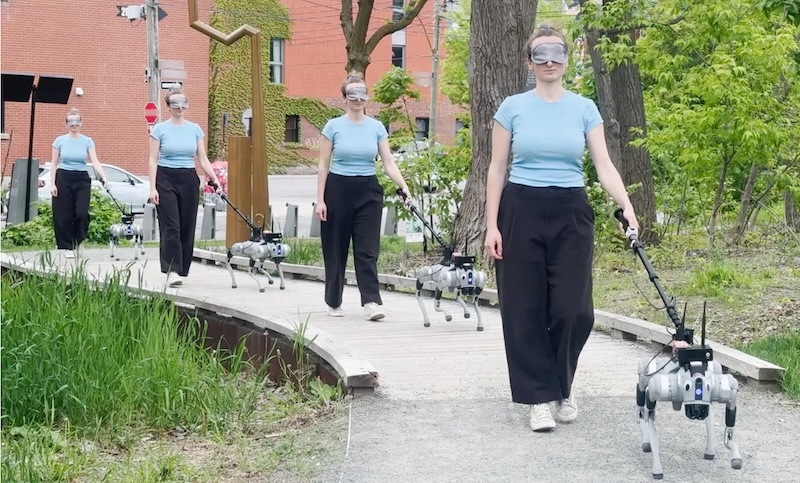
Researchers have introduced Milo, a fully autonomous robotic guide dog powered by onboard AI, designed to help blind and visually impaired people navigate indoor and outdoor environments without pre-mapped routes or internet connectivity. The robot has been released as an open-source platform, with hardware designs, simulation software, and pre-trained AI models made publicly available.
Why it matters
Traditional guide dogs in Canada cost tens of thousands of dollars to train and applicants may wait several years to receive one. Milo could be manufactured for less than $2,000, addressing a significant accessibility and cost barrier. The robot navigates using onboard AI trained via reinforcement learning in a custom simulator, interpreting surroundings via a bird's-eye-view representation and building maps as it travels, making it functional in unfamiliar locations without relying on cloud computing.
What to watch
The developers evaluated Milo on indoor and outdoor obstacle courses, measuring navigation accuracy, travel speed, and obstacle clearance. The open-source release is intended to encourage further research and development in robotic mobility assistance for people unable to obtain a traditional guide dog.
Summaries like this, in your inbox every morning.
The introduction of Milo addresses a long-standing accessibility challenge: guide dogs are expensive, in short supply, and require applicants to wait several years. By bringing the cost below $2,000, the robot could democratize mobility assistance for blind and visually impaired people who cannot afford or obtain a traditional guide dog. The developers' choice to build Milo as fully autonomous and independent of cloud computing is significant—it means the robot relies entirely on onboard sensors and AI, making it functional in any environment without requiring internet connectivity or pre-scanned maps. The use of reinforcement learning trained on virtual environments in a custom simulator suggests the developers invested in robust generalization, teaching Milo to handle diverse real-world scenarios it may not have explicitly encountered during training.
The decision to release Milo as open-source—including hardware designs, simulation software, and pre-trained models—is a deliberate move to lower barriers to further development and iteration. This approach invites researchers and engineers outside the original team to contribute improvements, test variations, and adapt the design for different contexts. The evaluation on both indoor and outdoor obstacle courses indicates the developers tested the system under realistic conditions, though the article does not report specific accuracy or speed metrics from those tests.
Pick your industry and the AI tools you use, and get news related to your work every day.
Free · 30 seconds with Google · unsubscribe anytimeWhat is AIToday? →
Ask AI anything about this article. The AI reads this article, earlier AIToday articles, and Wikipedia, and cites its sources. Q&As are published on this page for other readers too.
Yamazaki Mazak and ABEJA said on the 16th they will start joint development of physical AI, using ABEJA's ABEJ…
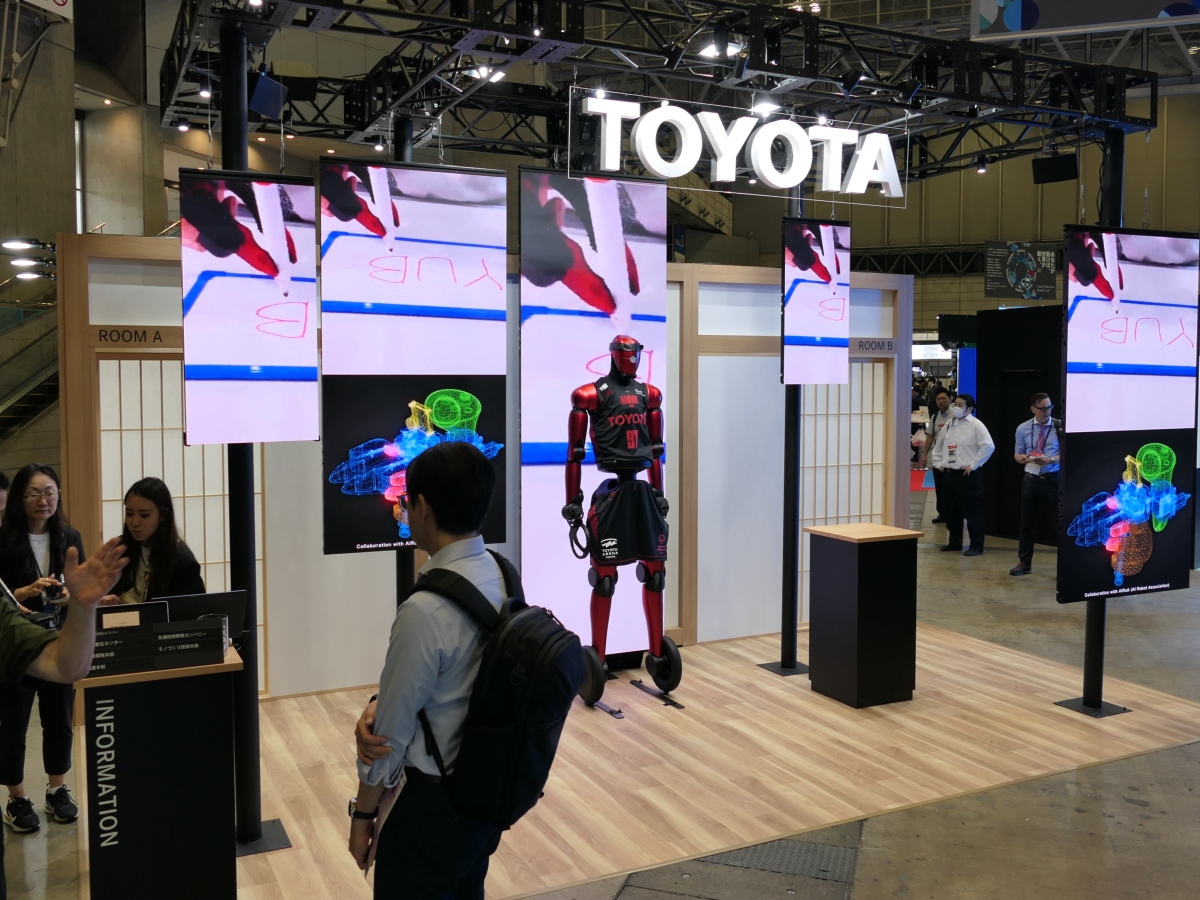
Toyota Motor's Japan Mobility Show Bizweek 2026 booth centers on its AI basketball robot CUE7, has no other ex…
Japan Mobility Show Bizweek 2026 showcased Physical AI applications, including Toyota's basketball-playing rob…
Google pitched Gemini 4 Argon as one model for robot control, simulation and training-data review, saying it s…
Researcher Sammy Azdoufal discovered Energize Lab's Eiliko robot stores 13 million conversations from 68,000 t…
ZOZO NEXT and AVITA signed an MOU on joint research into textiles and clothing specialized for humanoid robots…