What happened
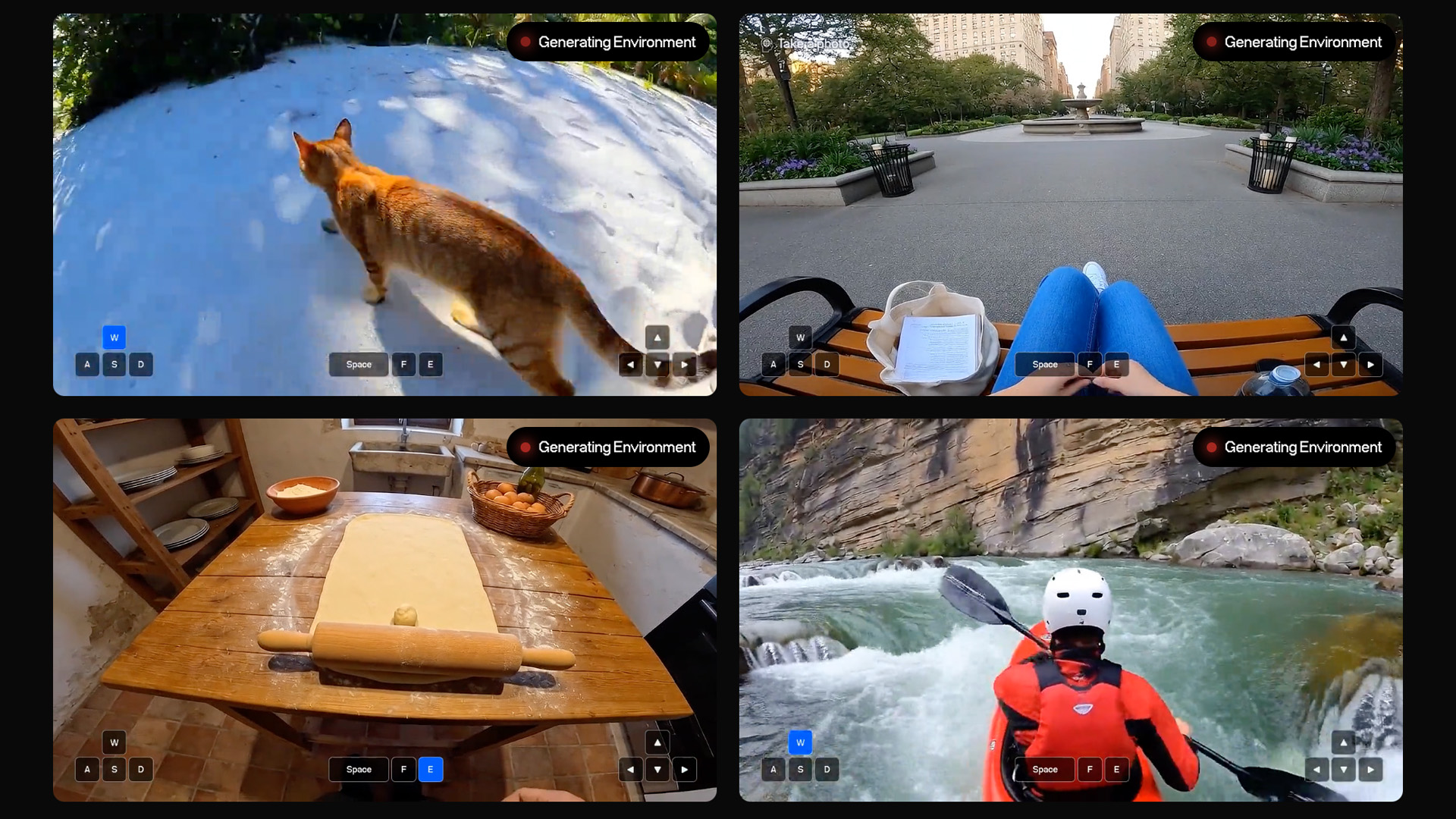
California-based Odyssey launched a free public research preview of Odyssey-3, its world model that generates interactive environments from text prompts in real time, unveiled by founders Oliver Cameron and Jeff Hawke on September 15. The base model has 14 billion parameters and generates video at 832 × 480 pixels. Developers can apply for API access.
Why it matters
Odyssey-3 is intended to serve robotics, autonomous driving, and video games with a single model. Odyssey reports that an AI built on it controlled multiple robotic arms using a few dozen hours of demonstration data and recovered from failed grasps on its own.
WHO IT HITSRobotics and game developers who train controllers or test AI agents in simulated environments, as well as researchers evaluating world model benchmarks, gain a free tool to try. For hardware and robotics teams, the claimed training efficiency on a few dozen hours of demonstrations could lower data requirements.
Summaries like this, in your inbox every morning.
Odyssey-3 builds on an autoregressive diffusion transformer that continuously generates new video frames based on previous frames and user actions. According to Odyssey, the model learns physical relationships and cause-and-effect from visual observations during training, using internet videos with event descriptions, video game footage paired with keyboard and mouse inputs, and simulated physical interactions. An extra training technique reduces the number of required compute steps, enabling real-time generation.
Odyssey, founded in 2023 by Oliver Cameron and Jeff Hawke, raised $310 million in June 2026 from investors including Amazon and AMD Ventures. The company wants to use the same world model across different tasks, from moving robotic arms to navigating drones to controlling game characters, with each application pairing the model to a specialized controller that translates its predictions into concrete commands. For humanoid robots, Odyssey is working with Swiss robotics company Flexion, whose controllers built on Odyssey-3 are said to perform more reliably than comparison models even when conditions change.
Odyssey-3 can also play video games. The company showed an AI autonomously playing GTA V, steering vehicles and fighting enemies, and a controller trained on roughly two hours of GTA footage transferred its skills to Red Dead Redemption 2 without extra training. Odyssey also plans to use its world model for training AI agents, with one demo showing an agent receiving a natural language task and trying to complete it through its own actions inside an Odyssey-3-generated environment. The goal is for agents to learn from the outcomes of their own actions, a potentially new training paradigm for AI. Odyssey is not alone in pursuing this: Google DeepMind is developing Genie 3 for generating interactive worlds, and World Labs, founded by Fei-Fei Li, is working on similar technology; AMD announced in late September that it plans to acquire World Labs for roughly $8.2 billion.
Pick your industry and the AI tools you use, and get news related to your work every day.
Free · 30 seconds with Google · unsubscribe anytimeWhat is AIToday? →
Ask AI anything about this article. The AI reads this article, earlier AIToday articles, and Wikipedia, and cites its sources. Q&As are published on this page for other readers too.
Ron Zukerman of Vishay Precision Group published a column arguing robot makers should start from an economical…
Fujitsu published a design-focused initiative titled "Physical AI," which frames new future value as emerging…

Standard Bots, an AI-native industrial robot maker, raised $200 million at a $1 billion valuation in a series…
In a Fortune commentary piece, Serve Robotics chief Ali Kashani told his college-age daughters not to let hype…

NYSOFA extended its partnership with Intuition Robotics, keeping the ElliQ companion available to older New Yo…

TDK Ventures' Nicolas Sauvage wrote that a robot succeeding at each action 99% of the time would finish a 100-…