What happened
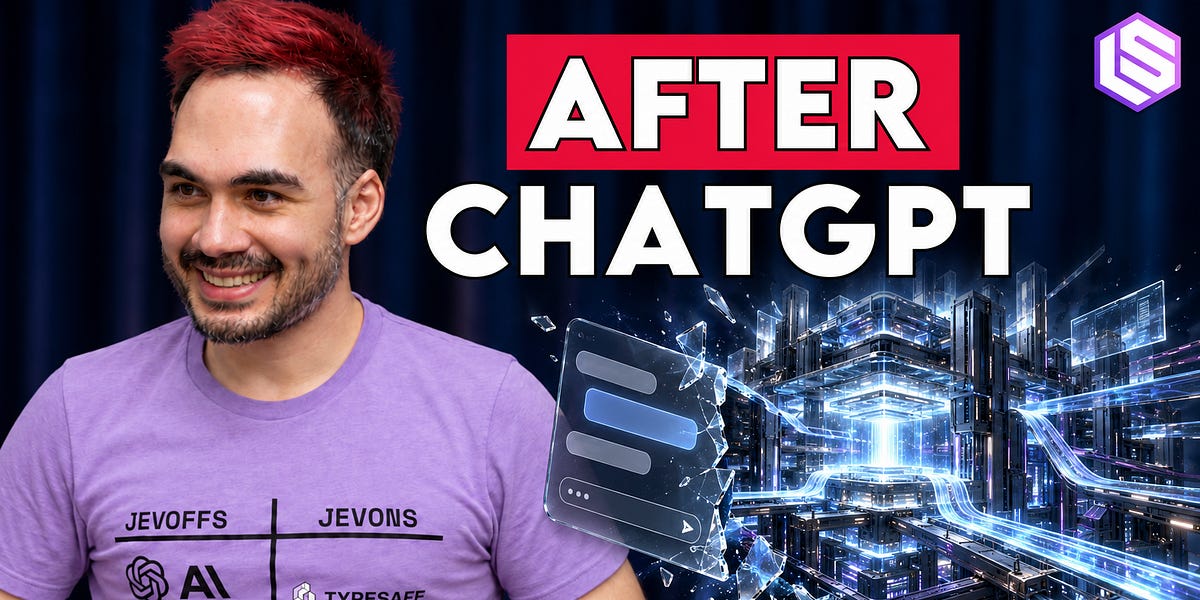
TypeSafe AI CEO Diogo Almeida launched Jev, a System One model built on Reinforcement Learning for Calibrated Decisions, a novel technique the company says is unpublished. Jev is designed for software rather than chat.
Why it matters
Almeida argues models optimized for human preference via RLHF develop hallucinations, sycophancy and permanent reliance on humans, which makes them unreliable inside software dependencies, so a model tuned for code consumption may be more predictable for automation.
What to watch
Whether reliability claims hold, since TypeSafe rejects public benchmarks and optimizes for intelligence per dollar. Watch for future models from TypeSafe, including a possible ReasoningJev, and the company's contrarian stance on scaling laws.
WHO IT HITSEnterprise software teams and developers building AI features into applications may find Jev appealing because it targets reliability and calibrated confidence for code consumption rather than chat. TypeSafe's rejection of public benchmarks could make evaluation and procurement harder for those teams.
Summaries like this, in your inbox every morning.
Diogo Almeida, who coauthored the InstructGPT paper and worked on post-training at OpenAI, has argued since then that API-available frontier models have gone down the wrong path. His launch video for Jev has been viewed around 40 million times, a sign of developer interest in an alternative to the chatbot paradigm he criticizes. Almeida traces the dominant approach to three lines of RLHF research and says later innovations like Function Calling and Reasoning felt like hacks on top of a string-based prediction paradigm.
Jev's pitch is that a model should be built for code as the consumer, not for autocomplete or instruction-following. That leads TypeSafe to reject safety refusals as a type error, since a dependency that refuses can stochastically break an application. It also leads the company to optimize for intelligence per dollar, named after Jevons Paradox, and to reject public benchmarks in favor of that metric.
Whether Jev delivers on its reliability promises is the open question. With no public benchmarks, adoption may hinge on whether developers find it more predictable in real software than existing models. Almeida has also teased a contrarian view on scaling laws and how to build a modern neolab without the billions major labs spend, which suggests TypeSafe's test is whether its data-first approach can compete without that scale.
For example, today's edition would include:
AI-summarized, only the topics you pick — one digest a day via Email, LINE, or Slack.
Free · 30 seconds with Google · unsubscribe anytimeWhat is AIToday? →
Ask AI anything about this article. Q&As are published on this page for other readers too.
Amazon blocked Meta's Muse agent from its marketplace and said Muse fails to identify itself as an agent by em…

SpaceX introduced Grok 4.7, which averaged $4.69 per task on CursorBench 4.0, ahead of GPT-5.6 Sol and Fable 5…

Tesla's robot team ran intensive supplier audits across China's Yangtze River Delta last week, covering Ningbo…

Gartner predicted in June 2026 that 70% of mainframe modernization projects begun in 2026 will fail, and point…

Headwaters began offering SyncLect Agent Garden on September 18, 2026, drawing on Teams meetings and existing…

Kewpie used Devin, an AI agent from Cognition AI supplied through DeNA AI Link, to write Plant Simulation mode…