What happened
Amazon SageMaker AI launched 13 new inference capabilities year-to-date in 2026 across managed endpoints and HyperPod Inference, including Inference recommendations (April), Capacity-aware instance pools (May), OpenAI-compatible APIs (May), Container caching (June), an observability dashboard (June), async inline payloads (June), prefix-aware routing, and HyperPod features like a Simplified Inference Operator and disaggregated prefill and decode (July), per the AWS blog.
Why it matters
These launches address distinct friction points in deploying and running AI models, such as manual benchmarking, capacity shortages, migration costs, scaling delays, and debugging challenges, so teams can potentially get models into production faster with less operational overhead.
What to watch
The benefits depend on factors like which features are generally available in which AWS Regions and whether customers adopt them, and some results are from demonstrated examples or early access rather than broad production use.
WHO IT HITSThis affects teams deploying generative AI models on AWS, including enterprise AI engineers and data scientists who manage inference infrastructure, as well as startups and public sector organizations looking to reduce time-to-market and operational costs.
Summaries like this, in your inbox every morning.
Amazon SageMaker AI's 2026 launches reflect a push to simplify generative AI inference, which is inherently complex due to large model sizes, latency requirements, and constrained GPU capacity. The two deployment paths—managed endpoints and HyperPod Inference—cater to different needs: the former for teams wanting minimal operations overhead, the latter for those requiring Kubernetes-native control. The 13 capabilities address specific stages of the inference lifecycle, from deployment and scaling to monitoring and compliance. For instance, Inference recommendations automate instance selection and benchmarking, potentially cutting weeks of manual work to hours, while Container caching and model caching reduce cold-start delays. These features collectively aim to lower time-to-market and improve price-performance. Whether they deliver on that promise hinges on customer adoption and the real-world impact of demonstrated benchmarks, which may vary by workload and configuration. The availability across AWS Regions and the general availability of features will also shape how broadly these benefits are realized.
For example, today's edition would include:
AI-summarized, only the topics you pick — one digest a day via Email, Slack, or Discord.
Free · 30 seconds with Google · unsubscribe anytimeWhat is AIToday? →
Ask AI anything about this article. Q&As are published on this page for other readers too.
Co-CEO Clay Magouyrk said Oracle last year hadn't found broad internal use for generative AI; after rolling ou…

At the AWS Global Meeting on September 17, Chief AI and Technology Officer Matt Wood named Trainium for comput…

Twist Bioscience signed an agreement to provide antibody characterization data and services to Eli Lilly's AI/…
International Business Machines trades at US$237.75, below its discounted cash flow value, as an investigation…

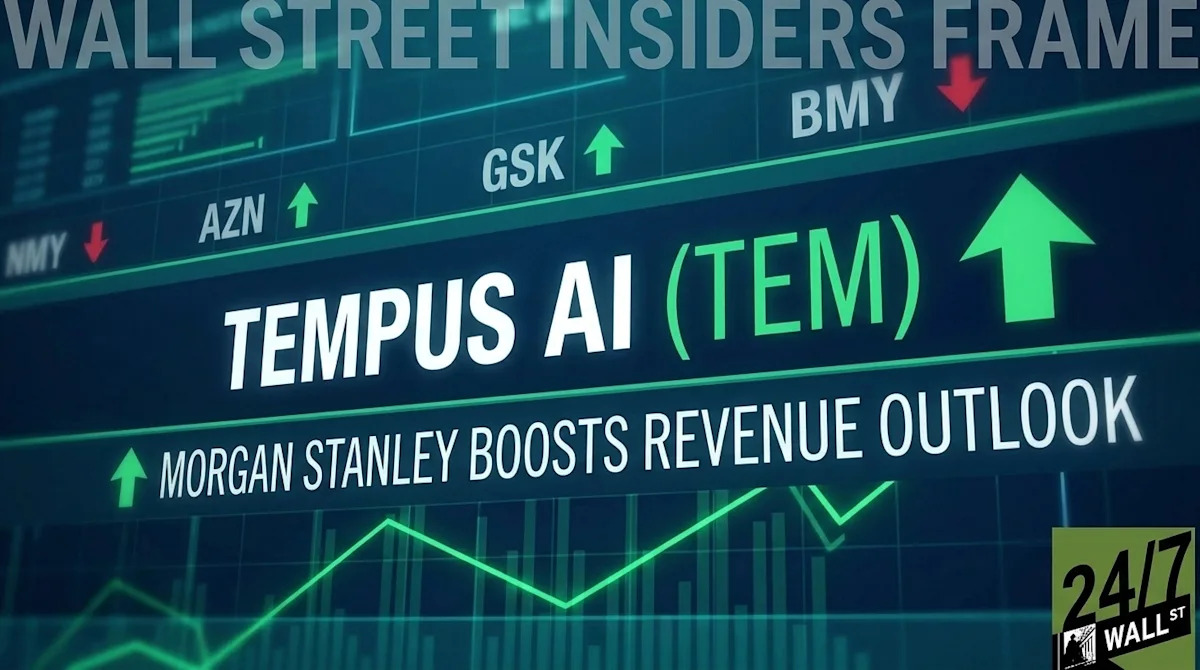
Morgan Stanley boosted its revenue outlook for Tempus AI, and the company's stock climbed roughly 30% this wee…
Goldman Sachs published a piece titled "Consumer Agents Signal New Phase for AI Growth."