What happened
Nvidia CEO Jensen Huang told Y Combinator's Startup School that artificial intelligence will eliminate tasks rather than jobs, a stance that contrasts with Elon Musk's prediction that AI will require universal government income to offset mass job losses.
Why it matters
If AI automates work without replacing workers, consumer spending would remain stable and companies could keep investing heavily in AI infrastructure without fear of economic collapse. The article notes this removes a major risk concern that has shadowed the AI trade.
What to watch
Elon Musk has committed to 10 gigawatts of AI compute by 2027 and stated he will buy Nvidia chips because they are the best; capital continues flowing into AI despite lingering stock-market risks tied to the technology.
Summaries like this, in your inbox every morning.
Jensen Huang's remarks address one of the deepest economic concerns haunting the AI investment thesis: that AI advancement will eventually displace so many workers that consumer demand and overall economic growth will collapse. The article frames this as a turning point for investor confidence in the AI trade. Under Huang's interpretation, AI follows the historical pattern of technological transitions like the shift from horses to automobiles—the new technology increases efficiency and demand for supporting infrastructure rather than simply eliminating productive capacity. By contrast, Musk's more pessimistic forecast assumes AI will concentrate gains so heavily that government intervention becomes necessary to maintain purchasing power and social stability.
The practical implication for the AI market is substantial. If task automation without job elimination is correct, hyperscalers and tech giants can justify continuous capital deployment into AI chips, data centers, and software without confronting a hard ceiling where unemployment becomes so severe that business investment must reverse. The article notes that Musk himself—despite his reservations about employment—has committed to 10 gigawatts of AI compute by 2027 and stated he will exclusively purchase Nvidia chips, signaling that even skeptics of AI's social impact see the infrastructure opportunity as durable. Huang's framing thus removes what the article calls a "major hurdle" for the AI trade: the existential fear that the technology will ultimately undermine its own customer base.
For example, today's edition would include:
AI-summarized, only the topics you pick: one digest a day via Email, LINE, or Slack.
Free · 30 seconds with Google · unsubscribe anytimeWhat is AIToday? →
Ask AI anything about this article. The AI reads this article, earlier AIToday articles, and Wikipedia, and cites its sources. Q&As are published on this page for other readers too.
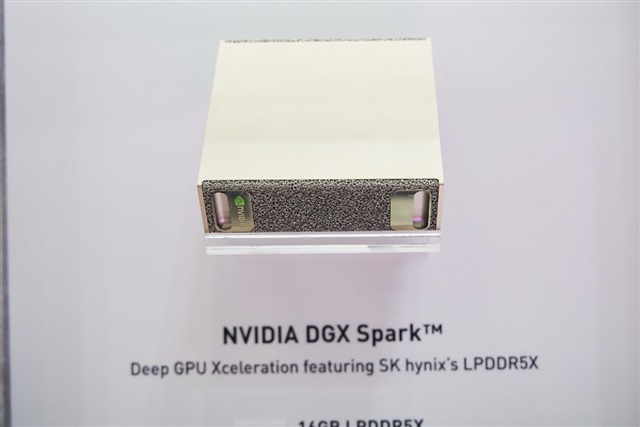
Nvidia's DGX Spark, launched at CES 2025 as Project DIGITS, began shipping in October, with VP Adel El Hallak…
Stagwell CEO and former Microsoft Chief Strategy Officer Mark Penn told Yahoo Finance that most modern digital…

Anthropic CEO Dario Amodei dined with President Donald Trump at the White House, even as the Pentagon continue…
Hera Hyeonseo Lee said workers are using their deferred wages to finance the AI designed to eliminate their jo…
Fireworks AI announced Ember-1, a Kimi K3-based model built for its project to create specialized models devel…
Dymocks Education is closing its classrooms and urging parents to use ChatGPT or Gemini instead, with CEO Mark…