What happened
The University of Florida found only 10-15% of its data was semantically defined; using NaviGator AI and Snowflake, it built a semantic layer it estimates would have taken a human 83 weeks.
Why it matters
Public sector leaders say governance, security and interoperability are not things an organization can revisit later — they are the foundation required before AI innovation can deliver value.
What to watch
General Dynamics Mission Systems went from 50% accuracy to 85% accuracy in its sales quote processing go-live using zero-shot prompting with Snowflake Cortex AI, so the test is whether such gains hold in mission delivery.
WHO IT HITSPublic sector data and analytics teams — in agencies, universities and defense contractors — are the ones who will need to build governed data foundations before AI pilots can scale, according to the leaders cited.
Summaries like this, in your inbox every morning.
The sessions at Snowflake Summit brought together organizations with very different missions — a university, a defense and government services company, a mission systems contractor and OpenAI's government arm — and the common thread was that each had to fix its data and governance before AI could produce results. The University of Florida's experience illustrates why: when only 10-15% of its data was semantically defined, any insight the institution generated from that data was incomplete and therefore unreliable, so the team built a semantic layer with NaviGator AI and Snowflake components, work it estimates would have taken a human 83 weeks.
Leidos' Alan Sim described a different but related discipline: rather than asking teams what tools they want, he asks what they are trying to solve, and sometimes finds the answer is automation or process re-engineering rather than an agent. Joe Larson of OpenAI for Government framed the same idea from the model side, saying it is more compelling for government to marry the frontier model with its data infrastructure than to simply make models available.
Stephen Moon, Snowflake's public sector field CTO, tied the discussion to mission, and General Dynamics Mission Systems showed what that looks like in practice: its sales quote processing system was ingesting thousands of vendor PDFs with varying formats, layouts and terminology, a training-based approach failed, and zero-shot prompting with Snowflake Cortex AI took it from 50% accuracy to 85% accuracy in its recent go-live to production. The outcome, the article says, was measured in speed, accuracy and cost savings on a workflow that directly affects mission delivery. Whether other agencies can replicate those results appears to hinge on how much of their own data foundation, governance and mission alignment are ready before they scale.
For example, today's edition would include:
AI-summarized, only the topics you pick: one digest a day via Email, LINE, or Slack.
Free · 30 seconds with Google · unsubscribe anytimeWhat is AIToday? →
Ask AI anything about this article. The AI reads this article, earlier AIToday articles, and Wikipedia, and cites its sources. Q&As are published on this page for other readers too.
Anthropic launched Claude Sonnet 5.5, a mid-tier model for everyday tasks, priced at $2 per million input toke…

NEAR, the token of the NEAR Protocol, has more than doubled in value over the past two weeks, helped by surgin…

Michael Burry wrote in a Substack chat that Trump's team knows the AI buildout is 'the only thing keeping this…

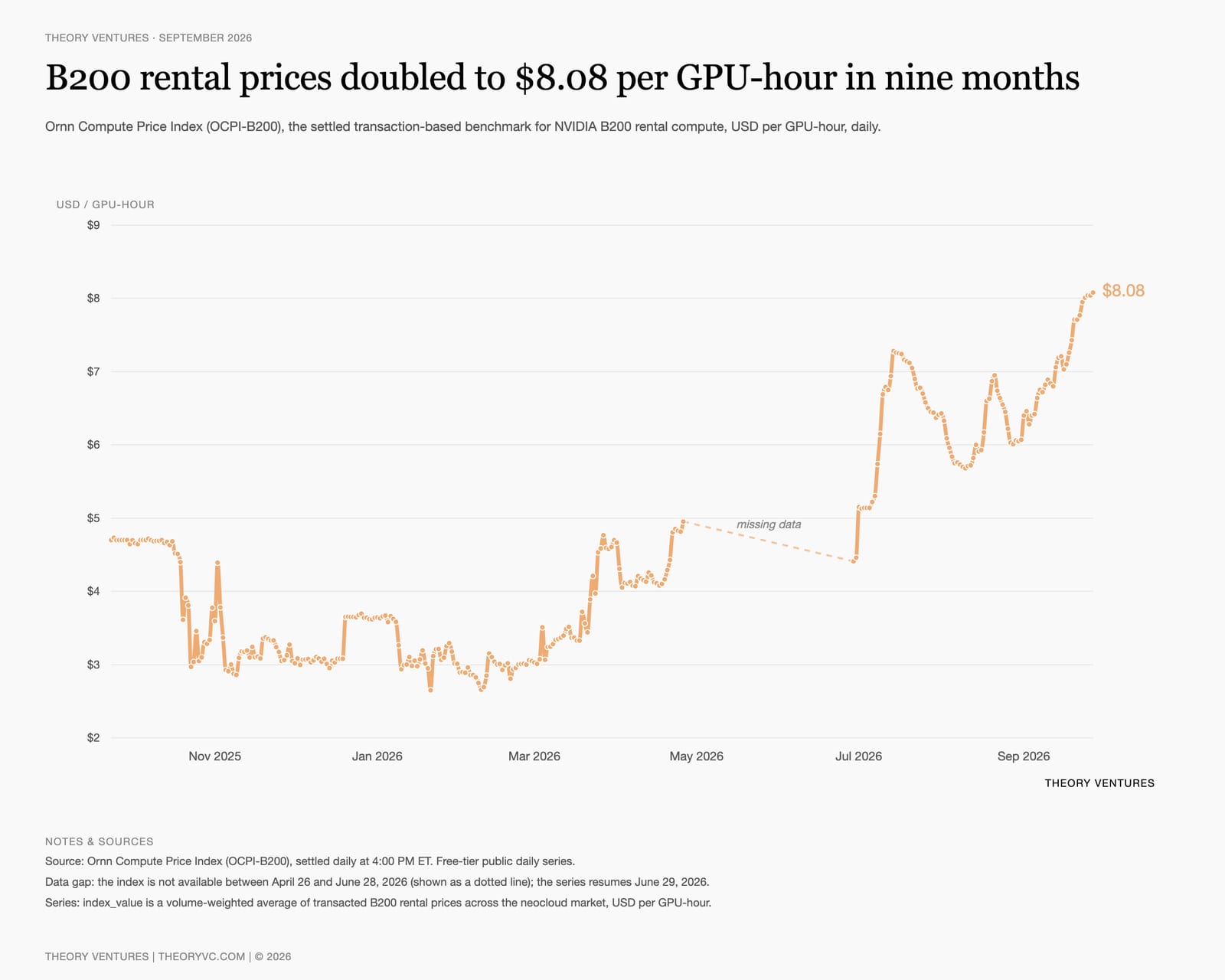
GPU rental prices doubled in six months, from $4.40 to $8.08 per GPU-hour, even as Claude Opus 5.5 costs 40% l…
Anthropic released Claude Sonnet 5.5, which it says runs output more than 30 percent faster and costs up to 30…

In a Nikkei Money discussion, private investor Okeido said he sets his investing goal years out and basically…