What happened
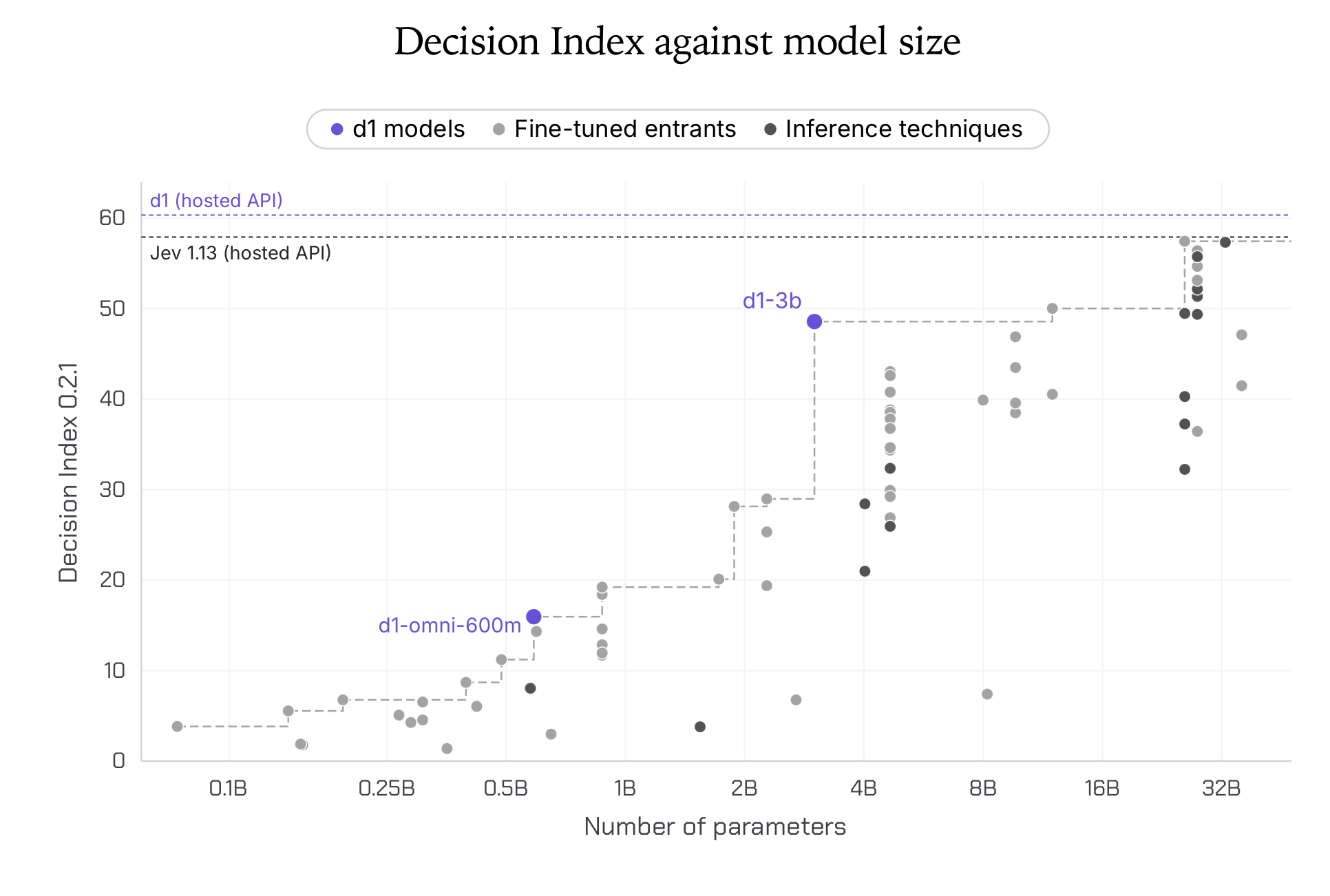
Liquid AI released d1-3B, which scores 48.57 on the Decision Index 0.2.1 — ahead of every 4B and 9B model and of Decider 35B-A3B (47.11).
Why it matters
A small open model can now outrank much larger rivals on decision tasks, meaning teams can consider running it on their own hardware rather than paying for a bigger model.
What to watch
The edge speed claims hinge on the specific NVIDIA hardware measured, and the companion d1-omni-600M is an early research release with no speed numbers or vision/audio benchmark scores yet.
WHO IT HITSDevelopers and device makers building on-device decision features — such as customer-ticket routing or image checks — can now evaluate a small open model that runs on NVIDIA's edge hardware; whether it fits a specific product depends on their latency and footprint needs.
Summaries like this, in your inbox every morning.
Liquid AI built these two models on its Liquid Foundation Models, but with a twist: unlike generative models that produce tokens, decision models answer in a single forward pass. That design choice is what makes the edge-speed numbers possible. d1-3B is trained from LFM2.5-VL-3B, a decoder-only vision-language model, while the experimental d1-omni-600M is trained from LFM2.5-Encoder-350M, a bidirectional encoder that adds vision and audio encoders to handle all three modalities. The two backbones point at different use cases: d1-3B for text-and-image decisions where quality matters, and d1-omni-600M where footprint is the constraint.
The benchmark results show d1-3B leading on mean score across seven public datasets covering reading comprehension, toxicity detection, intent classification, medical QA, and cross-lingual understanding. The company did not report vision or audio benchmarks, noting that the Decision Index v0.3 includes only a private vision split and that audio decision benchmarks are currently an open problem. That gap matters for anyone hoping to compare the multimodal claims directly against rivals.
The speed validation, done with NVIDIA across GeForce RTX 4090, Jetson AGX Thor, Jetson AGX Orin 64 GB, and Jetson Orin Nano, shows d1-3B answering a single question in under 50 ms on every measured device. Whether that translates into real-world product wins will likely depend on how the models perform on each team's specific decision tasks, and on when d1-omni-600M emerges from its early research release.
Pick your industry and the AI tools you use, and get news related to your work every day.
Free · 30 seconds with Google · unsubscribe anytimeWhat is AIToday? →
Ask AI anything about this article. The AI reads this article, earlier AIToday articles, and Wikipedia, and cites its sources. Q&As are published on this page for other readers too.
Nvidia-backed Reflection AI and French lab Mistral unveiled new open-source models this week, Beam and Le Chon…

OpenAI's dots and Meta's Muse start as assistants, then use other companies' websites and services

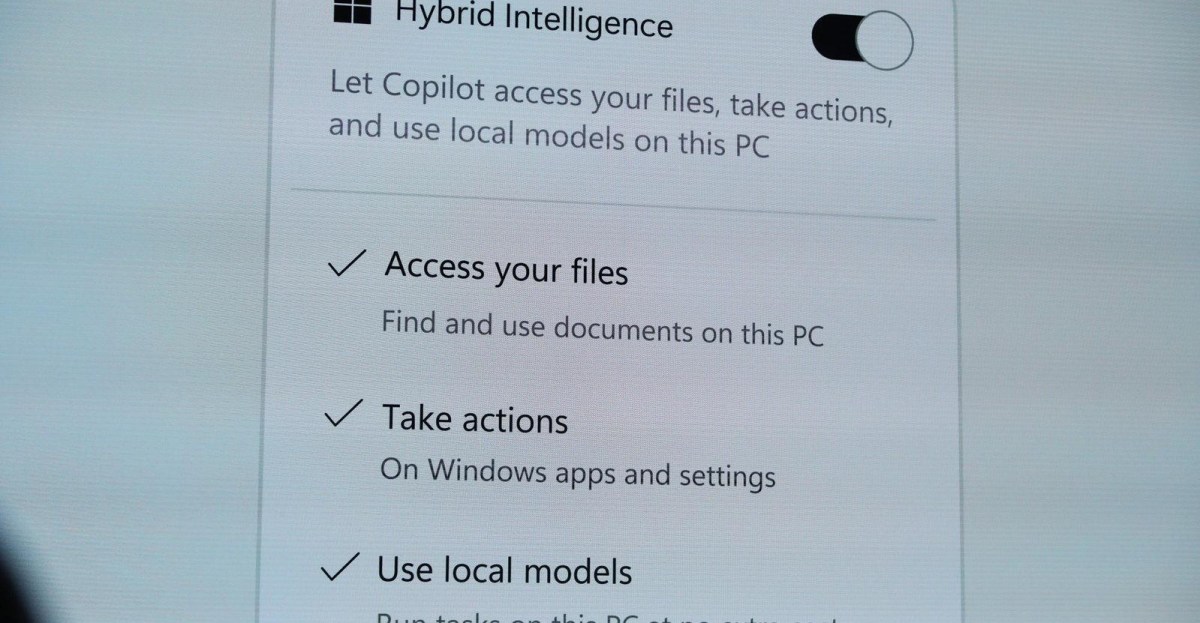
Microsoft showed Copilot gaining access to local files and the ability to act across the OS
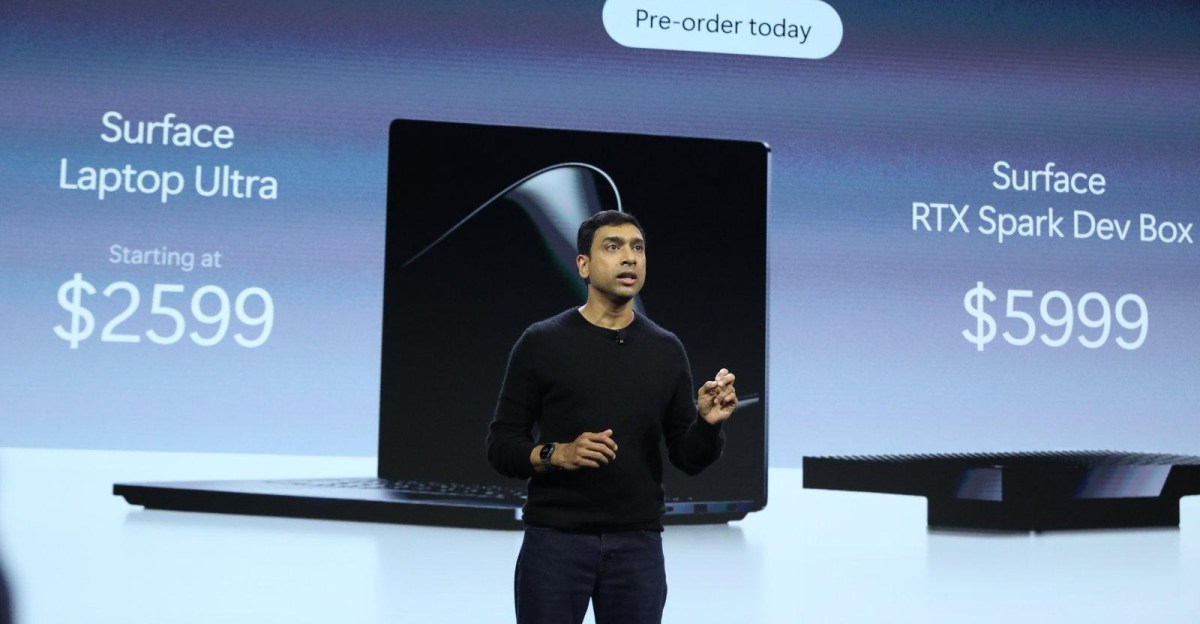
Microsoft's Surface Laptop Ultra, powered by Nvidia's RTX Spark Arm-based chip, starts at $2,599 and launches…
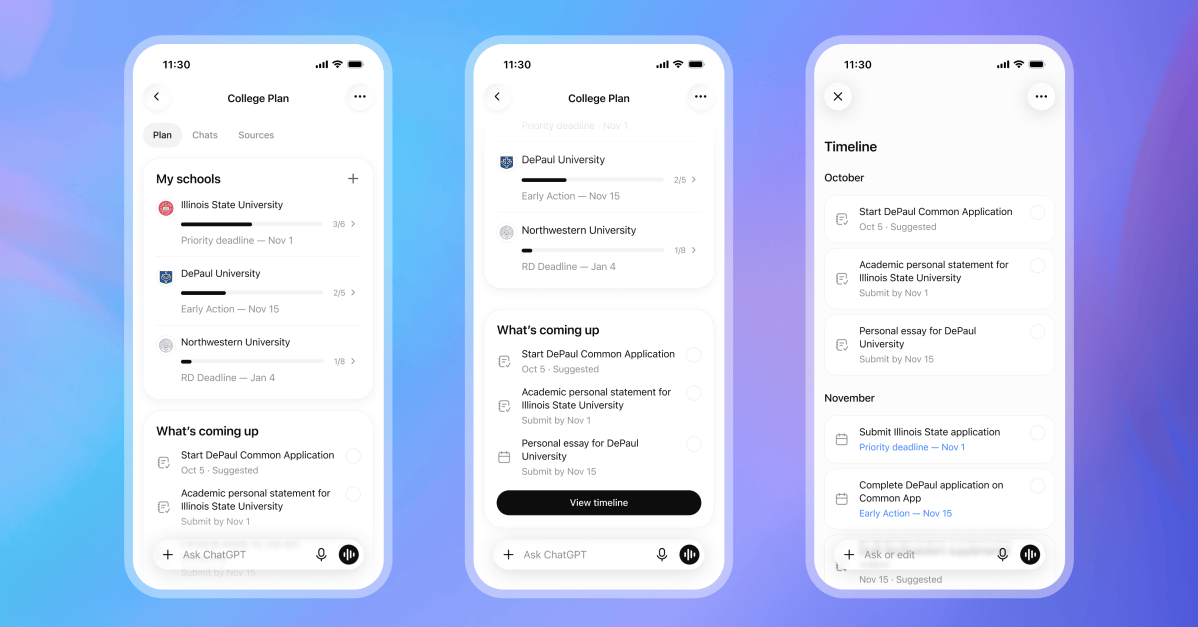
OpenAI is adding a College Planner to ChatGPT for Teens that pulls application requirements, deadlines, tasks…
Meta announced Wednesday that Muse is now available in a dedicated iPad app, after topping 6.6 million install…