What happened
A Qiita tutorial for beginners explains データバイアス as the bias in AI training data, warning that biased data produces biased AI judgments.
Why it matters
Its examples—a hiring AI trained mostly on male hires that discriminates against women, a facial-recognition AI trained mostly on white faces that struggles with people of color, and a loan-screening AI trained on low-income-area data—show how skewed data yields unfair results.
Summaries like this, every morning.
The explainer frames data bias as a direct consequence of how AI learns: models acquire judgment from training data, so any skew in that data carries into the model's decisions. Its three examples span hiring, facial recognition and lending—areas where an unfair output has real consequences for the people being screened.
The piece attributes the root cause to practical constraints rather than malice. Collecting data costs both money and time, so teams gravitate toward whatever data is easiest to obtain, and certain attributes end up underrepresented. The fixes it lists are correspondingly practical: diversify the sources, inspect the data closely, and audit model outputs on a regular cadence.
The surrounding material points readers toward G検定 study resources, including official textbooks, a question collection and free practice sites, suggesting the explainer is positioned as an entry point for people preparing for that certification.
Pick your industry and the AI tools you use, and get news related to your work every day.
Free · 30 seconds with Google · unsubscribe anytimeWhat is AIToday? →
Ask AI anything about this article. The AI reads this article, earlier AIToday articles, and Wikipedia, and cites its sources. Q&As are published on this page for other readers too.
The Defense Ministry released its Defense AI Vision on Friday, setting five basic principles for Self-Defense…

A 76-author team led by Hui Shen released OS-Omni, a NeurIPS 2026 benchmark covering Windows, Ubuntu, macOS, i…

ESET released ESET HOME セキュリティ V20 on October 28, 2026, adding AI会話セキュリティ to scan URLs and generated code in b…
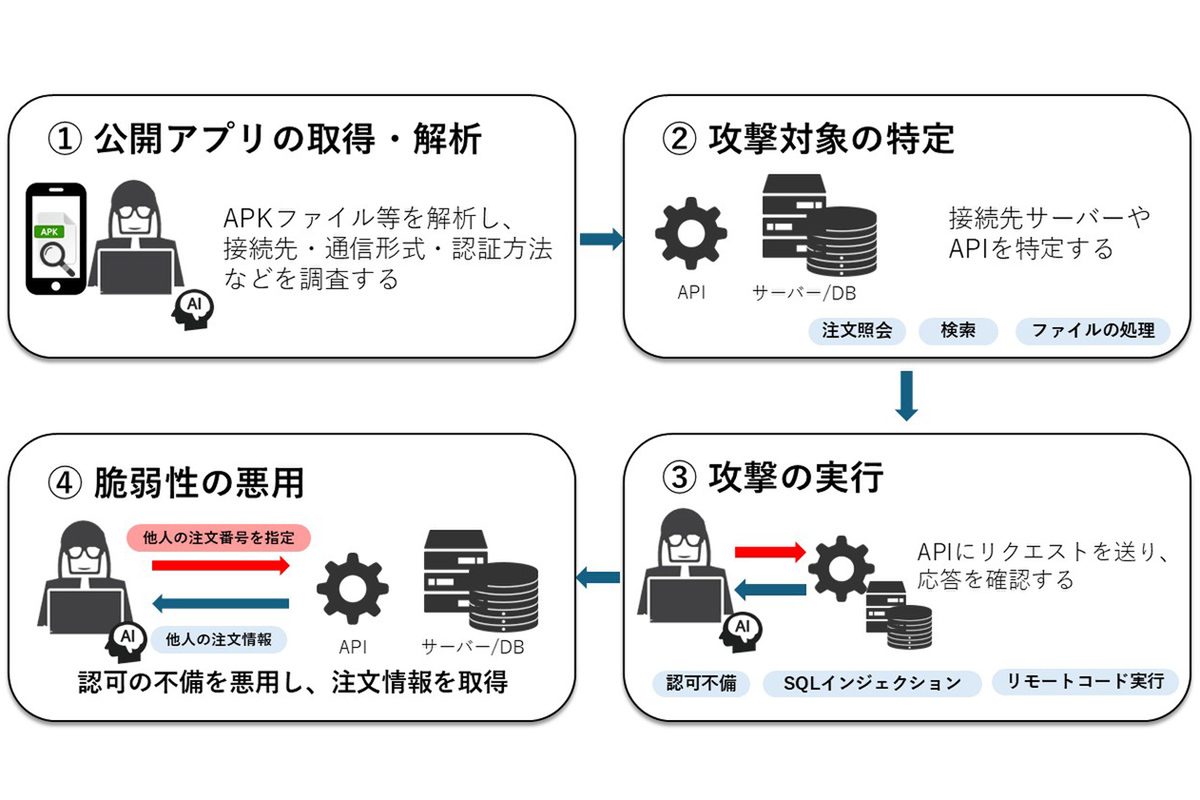
On October 13, NICT flagged A2B attacks, where attackers reverse-engineer public apps to find API endpoint and…
In Avitas's corporate governance and internal audit survey, 56.3% named AI and generative AI as a risk gaining…

A Nikkei xTECH writer asked ChatGPT and Copilot a calculation whose correct answer is 408662395656168840741382…