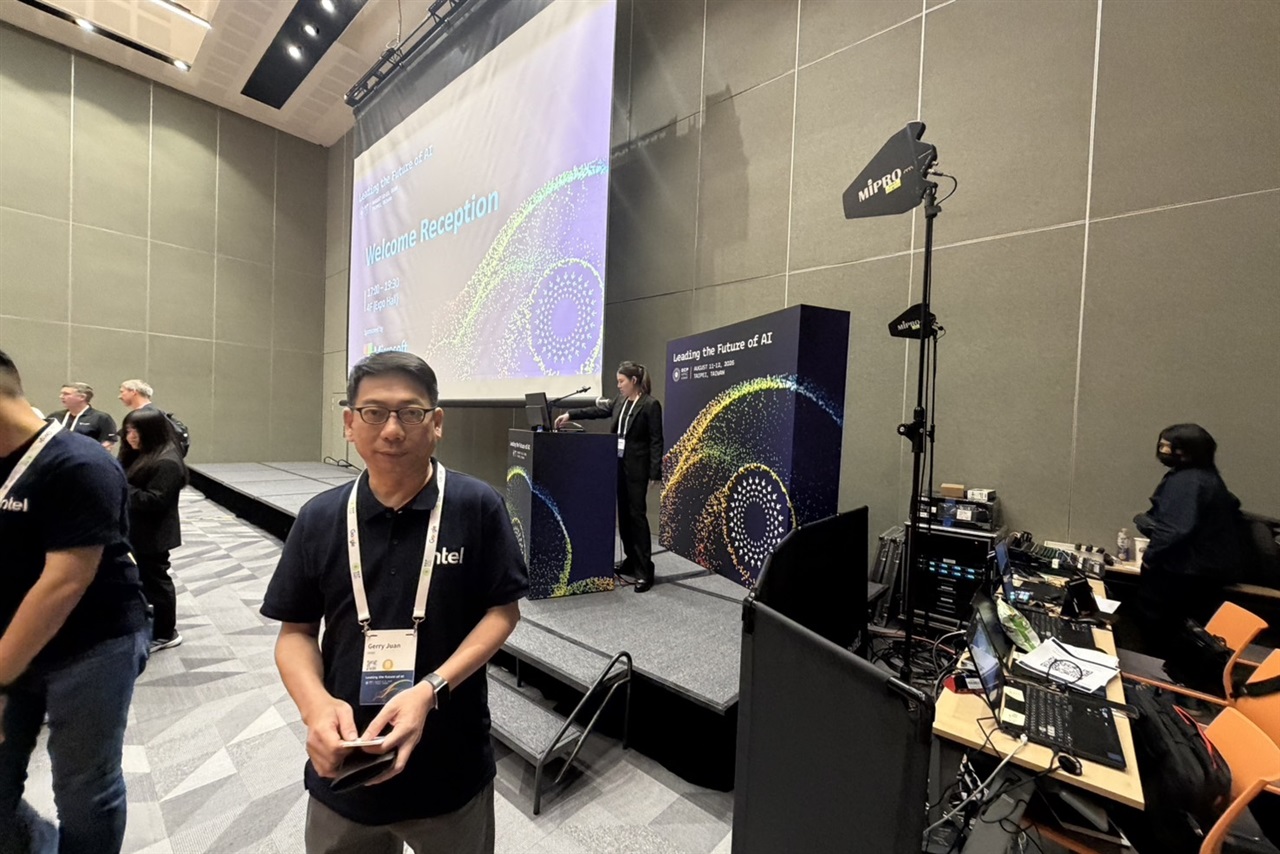
At Intel's presentation during the 2026 OCP APAC Summit in Taipei, the company outlined how agentic AI is reshaping data center performance constraints.
Rather than GPUs remaining the sole bottleneck, CPU orchestration, memory capacity, and data movement are emerging as critical limitations even when more GPU capacity is available, suggesting the industry may need to rebalance server design priorities.
What happened
At the 2026 OCP APAC Summit in Taipei, Intel Technical Lead Gerry Juan presented Intel's view that agentic AI is rebalancing AI server architecture, with CPU orchestration, memory capacity, and data movement emerging as new performance constraints even when additional GPU capacity is available.
Why it matters
The shift signals that GPU-centric designs may no longer fully address AI infrastructure bottlenecks. For data center operators and server builders, this suggests CPU and memory performance may become equally critical to GPU specs when deploying agentic AI workloads—potentially opening new competitive opportunities for CPU-focused improvements.
What to watch
How server vendors and cloud providers respond by redesigning infrastructure priorities; whether CPU and memory upgrades become standard features in agentic AI deployments alongside GPU scaling.
At the 2026 OCP APAC Summit held in Taipei on August 13, 2026, Intel Technical Lead Gerry Juan presented new thinking on how agentic AI is reshaping the performance characteristics of AI server infrastructure. The core insight centers on a fundamental shift in where bottlenecks emerge as organizations move beyond traditional large language model deployments toward agentic systems that coordinate multiple AI-driven tasks.
According to Intel's analysis, agentic AI introduces a different balance of demands on server hardware. Whereas prior GPU-intensive workloads benefited primarily from raw GPU throughput and memory, agentic systems create new constraints: CPU orchestration (the coordination logic that manages agent behavior), memory capacity (to store intermediate states and reasoning traces), and data movement (the bandwidth required to shuffle data between processors). Critically, Intel's message is that these constraints persist and limit performance even when operators add more GPU capacity—suggesting that GPU scaling alone cannot solve performance problems in agentic deployments.
This observation carries implications for server design and procurement. Data center teams and system builders accustomed to optimizing for GPU performance may need to reconsider their architecture priorities, giving greater weight to CPU specifications, memory bandwidth, and interconnect design. For Intel, the framing positions Xeon processors and memory subsystems as essential components of competitive AI infrastructure, rather than secondary or commodity elements in an otherwise GPU-centric stack.
Agentic AI represents a departure from the large language model (LLM) workloads that have dominated GPU-focused server design over the past two years. Where traditional LLMs benefit from maximal GPU throughput, agentic systems—which coordinate multiple AI decisions and actions in sequence—place different demands on the infrastructure stack. Intel's observation that CPU orchestration and memory movement become constraints suggests that agentic workloads require more frequent interaction between the control plane (CPU) and the compute plane (GPU), as well as higher memory bandwidth to feed the distributed reasoning loops that characterize agent behavior.
This reframing has strategic implications for the server market. Historically, data center operators have prioritized GPU count and VRAM as the primary purchasing criteria. Intel's position implies that CPU performance, cache hierarchy, and interconnect bandwidth may deserve equal or greater weight in procurement decisions. For Intel specifically, this message positions its Xeon processors as critical infrastructure components rather than secondary players in an AI-dominated data center.
AI-summarized, only the topics you pick — one digest a day via Email, Slack, or Discord.
Free · takes 30 seconds · unsubscribe anytime
Ask AI anything about this article. Q&As are published on this page for other readers too.
As agentic AI (autonomous systems that act across business applications) moves from pilot projects into produc…

Google launched the Pixel 11, Pixel 11 Pro, Pixel 11 Pro XL, Pixel 11 Pro Fold, and Pixel Watch 5

SpaceXAI released Grok 4.6, a large language model built with extended training on AI-generated datasets and r…

Skan AI, a process intelligence company founded in 2019, raised $63 million in a Series C round led by Cathay…
Blacksmith Software raised $45 million in Series B funding led by Peak XV Partners, with Y Combinator and GV a…

Santa Clara-based Apexon expanded its AgentRise agentic AI platform with three new components — Polaris (for p…

The AI news that matters, in one minute each morning.
Sign up free