Stripe deployed an AI agent system on AWS to handle financial compliance reviews for its massive payment volume, reducing manual review time by 26 percent.
The system breaks complex investigations into bite-sized tasks, with AI agents gathering research and human reviewers making final decisions, achieving over 96 percent helpfulness while maintaining full auditability and regulatory control.
What happened
Stripe built an AI agent system on Amazon Bedrock that handles financial compliance reviews for the company's $1.4 trillion(約220兆円) annual payment volume across 50 countries. The system reduced review handling time by 26 percent while achieving over 96 percent helpfulness ratings, with human experts retaining final decision authority.
Why it matters
Stripe's compliance teams were spending up to 80% of their time gathering documentation rather than performing risk assessments. By automating sub-tasks while keeping humans in control, the company addresses a critical scaling challenge—how to handle compliance operations without proportional staff increases while maintaining regulatory standards. This approach may help other financial services firms tackle similar resource constraints.
What to watch
The system breaks complex reviews into smaller sub-tasks organized as a directed acyclic graph, with each task's agent response provided as supplementary information to human reviewers. Stripe credits task decomposition, orchestration patterns, and prompt caching for cost optimization as key lessons for designing auditable agentic systems.
Ask the AI about this article →
AI-summarized, only the topics you pick — one digest a day via Email, Slack, or Discord.
Free · takes 30 seconds · unsubscribe anytime
Ask AI anything about this article. Q&As are published on this page for other readers too.
Microsoft co-founder Bill Gates published an almost-6,000-word essay Tuesday warning that the transition to th…

SpaceX disclosed a partnership with Nvidia to deploy Vera CPUs as part of the architecture behind SpaceXAI's S…

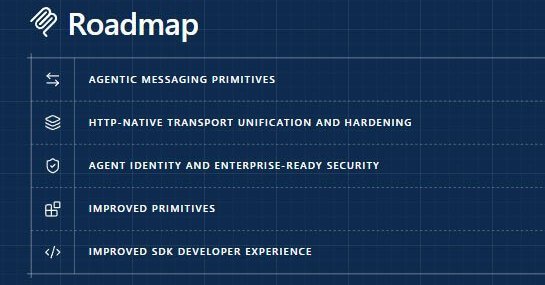
The Agentic AI Foundation (AAIF) under the Linux Foundation has published a roadmap outlining five priority ar…
A Semafor analysis found that over the past month, 10 out of 310 guest submissions to The Wall Street Journal…

OpenAI revealed benchmark results for its custom inference chip Jalapeño, claiming 1.5–1.9× more work per watt…

Z.ai Co. released the code for GLM-5.3-Flash, an LLM with 320 billion parameters that activates 18 billion per…