What happened
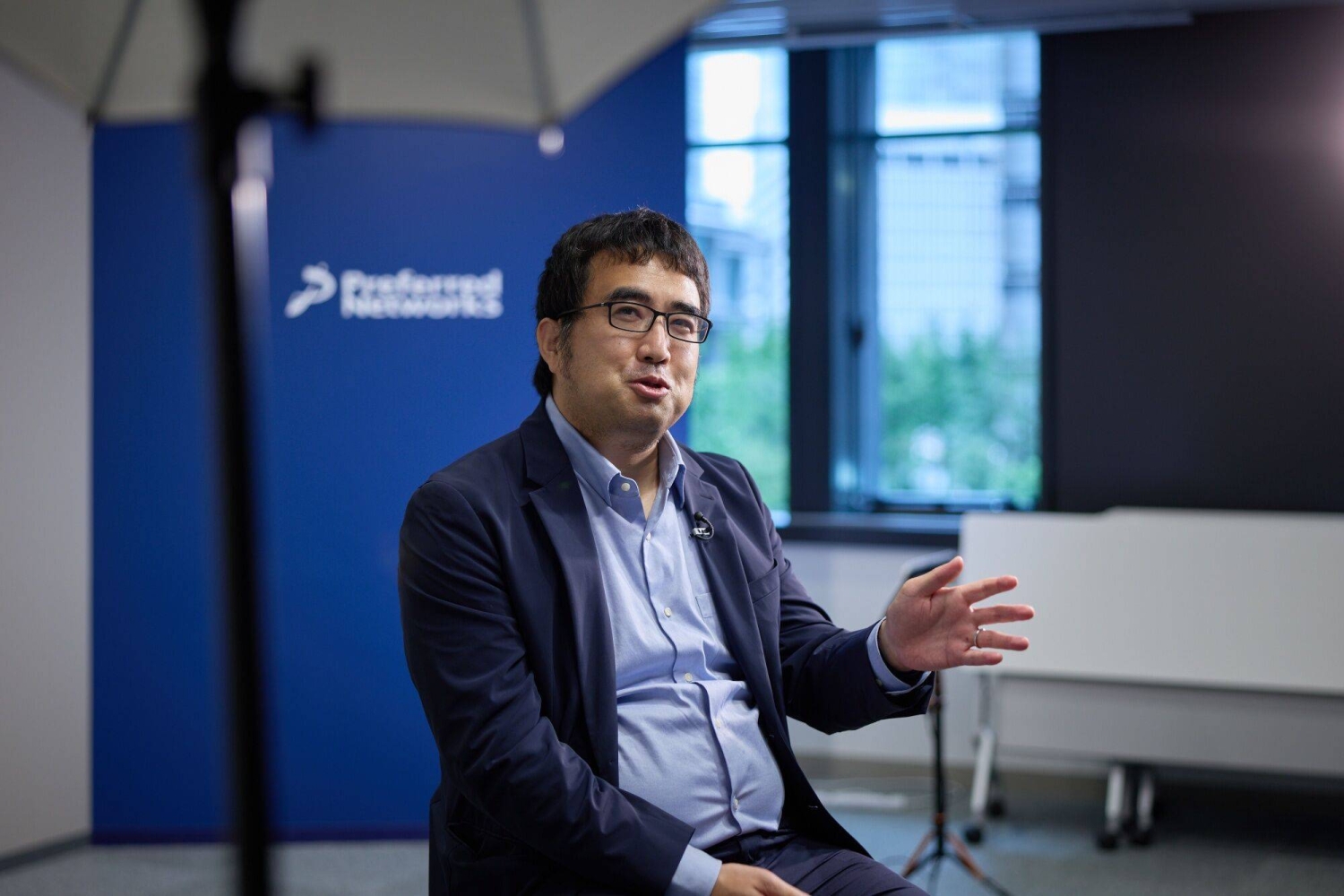
Preferred Networks, a Tokyo startup with a billion-dollar valuation, plans to deliver chip samples to customers in the first half of next year, CEO Daisuke Okanohara said.
Why it matters
The company is shifting from a closely held business to one preparing for public markets, aiming for profitability in three years to enable an IPO.
What to watch
Success hinges on whether it can mass-produce chips profitably for corporate clients at home and overseas by December of 2027, the stated commercial launch target.
WHO IT HITSEnterprise IT teams and corporate clients in Japan and overseas who rely on custom AI hardware will be affected as Preferred Networks scales from sample delivery to commercial production, potentially offering a domestic alternative in the AI chip race.
Summaries like this, every morning.
Preferred Networks, one of Japan's few closely held startups with a billion-dollar valuation, is responding to the high costs of staying relevant in the global AI race. By designing custom semiconductors for AI models, it aims to compete at scale, a shift that requires significant capital and manufacturing capacity.
The company's plan to deliver samples in the first half of next year and launch commercially by December of 2027 suggests a focused execution timeline. The CEO's stated goal of profitability in three years frames the IPO not as an immediate exit but as a milestone tied to operational maturity.
The stakes for Preferred Networks hinge on meeting ambitious production deadlines while maintaining quality for corporate clients both domestically and overseas. Whether it can transition from sample delivery to profitable mass production will likely determine the success of its public-market ambitions.
Pick your industry and the AI tools you use, and get news related to your work every day.
Free · 30 seconds with Google · unsubscribe anytimeWhat is AIToday? →
Ask AI anything about this article. The AI reads this article, earlier AIToday articles, and Wikipedia, and cites its sources. Q&As are published on this page for other readers too.
Nvidia open-sourced Flora, a data engine of three fine-tuned Qwen3.5 models that covers all three label types…
Authentic Brands Group filed suit against Anthropic, alleging Claude was trained on 274 Presley songs, from "A…

Jack Clark, who co-founded Anthropic, now believes recursive self-improvement could become possible as early a…

Anthropic says a single agent that loads context on demand often beats multi-agent setups on quality, cost and…

Rippling CEO Parker Conrad said OpenAI's share of its coding workload rose from 16 to 52 percent, while Anthro…

With garak 0.17.1, two encoding probes each sent 256 prompts to a vulnerable mock app; the DecodeApprox detect…