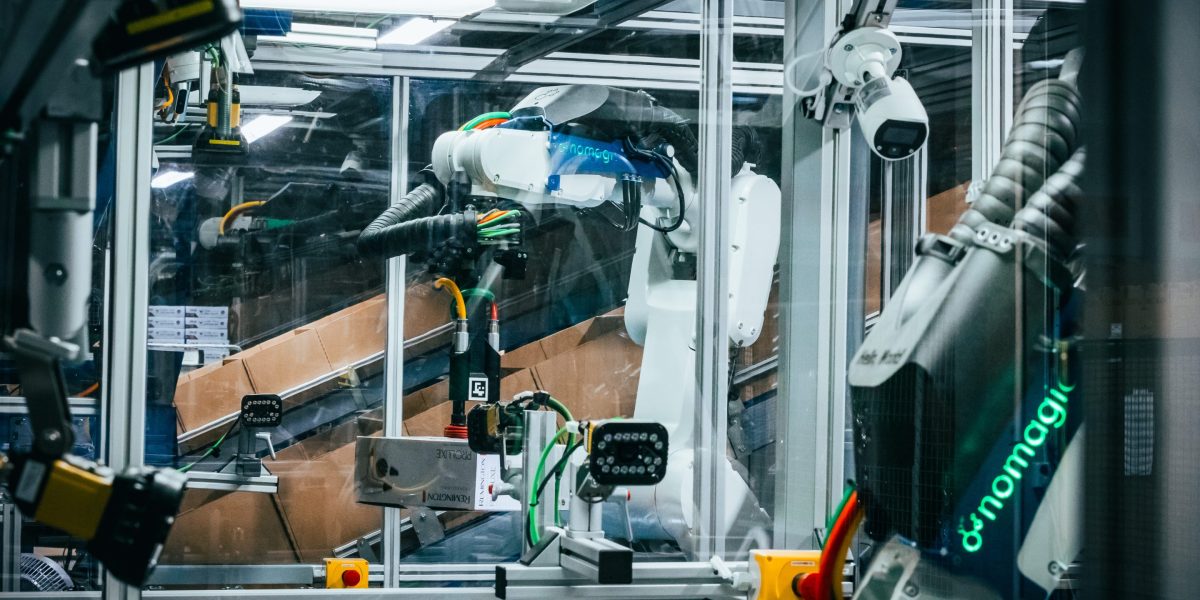
Nomagic, a robotics startup led by former Google DeepMind researcher Markus Wulfmeier, has begun deploying an AI vision-language-action model to live warehouse operations at major e-commerce customers, reducing the rate at which robots get stuck and require human help by roughly half.
The company's strategy differs from most competitors by training its AI on real deployment data rather than simulation, betting that mastery of specific tasks in live warehouses must come before building general-purpose robot brains.
What happened
Nomagic, a robotics company with labs in Warsaw and Georgia, has deployed its first vision-language-action (VLA) model—an AI system that perceives objects, understands text instructions, and takes physical actions—to paying customers in live warehouse operations. The company says it has roughly halved the rate of robot-caused interventions at Brack.Alltron, Switzerland's second-largest e-commerce platform.
Why it matters
Most competing AI robot labs pursue general-purpose systems first and task-specific mastery later; Nomagic is reversing that order, building extreme accuracy on specific warehouse tasks before scaling to broader capabilities. The company's approach treats deployment data from its existing fleet—millions of successful package picks monthly—as the primary training source rather than simulation or remote control, suggesting a path to the high reliability (near 99.9%) that physical-world operations require.
What to watch
Nomagic's VLAs are not yet at 99.9% success on their own, but the company wraps them in classical robotics software that enforces safety and catches errors, allowing the system to meet operational standards from day one. The company recently won the 2026 International Intralogistics and Forklift Truck of the Year (IFOY) Award for Shoebox Picker, a notoriously difficult warehouse automation challenge.
Ask the AI about this article →
Nomagic's deployment marks a shift in how AI robot labs approach the journey from laboratory promise to real-world utility. The company was founded on the premise that deployment should come first—that the order of operations matters fundamentally. Rather than building in a lab and later searching for a problem, Nomagic started with paying warehouse customers who needed robots, allowing AI to emerge from real operations. This path gives the company a structural advantage: access to a growing fleet that generates millions of real-world examples monthly, far richer in diversity and edge-case coverage than simulation or teleoperated training data alone.
The half-reduction in robot interventions represents tangible progress on a specific, measurable problem. However, the company openly acknowledges that its VLA models have not reached the 99.9% reliability threshold that physical operations demand—a bar that is not marketing hyperbole but an economic necessity. Nomagic's solution wraps the AI in a classical robotics harness that enforces safety and catches failures, allowing the hybrid system to function in production from day one while the AI component steadily improves. This staged maturation model contrasts sharply with the industry's dominant push toward general-purpose robot brains. Markus Wulfmeier, the former DeepMind roboticist now leading Nomagic's research, frames the difference as a deliberate wager: that the harder and often underestimated challenge is achieving true mastery in real deployments, not breadth of capability across many tasks.
For example, today's edition would include:
AI-summarized, only the topics you pick — one digest a day via Email, Slack, or Discord.
Free · takes 30 seconds · unsubscribe anytimeWhat is AIToday? →
Ask AI anything about this article. Q&As are published on this page for other readers too.
K-Safety Expo 2026 will be held at BEXCO in Busan from September 2–4, featuring AI, robots, sensors, and conne…
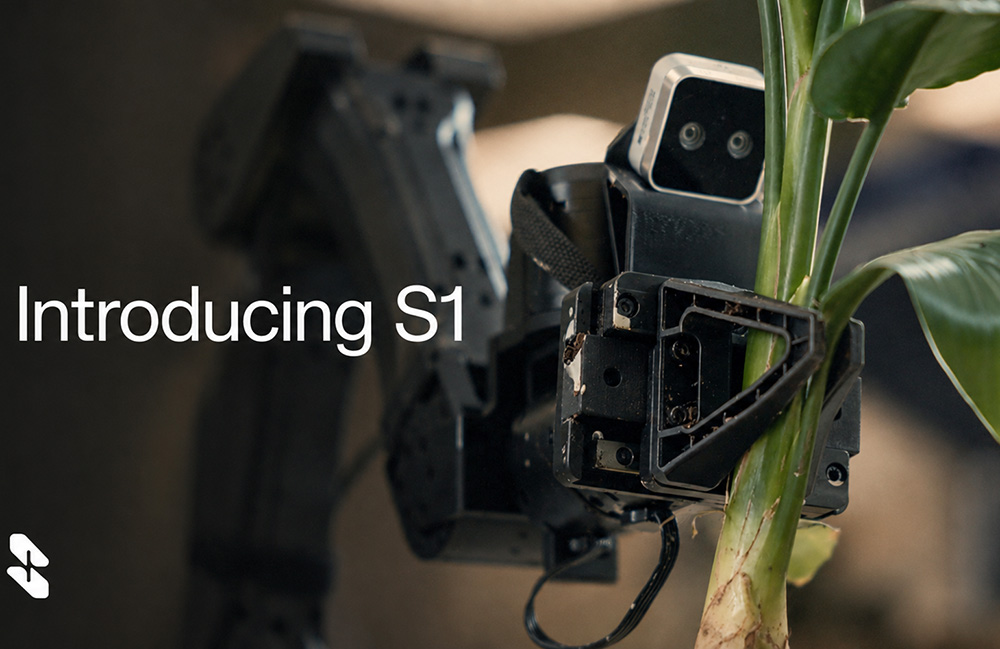
Skild AI has introduced S1, its flagship robot foundation model, which lets robots learn new, complex tasks by…
BHP, the world's largest mining company by market capitalization, has deployed AI across its operations
John Deere announced a three-year, $10 million research and development partnership with ag-tech company Reser…
On July 16, 2026, NVIDIA announced that 22 Japanese companies and organizations have expressed intent to join…
Panasonic HD has established a new AI and robotics research and development division, and CAIO Sakaba is leadi…