What happened
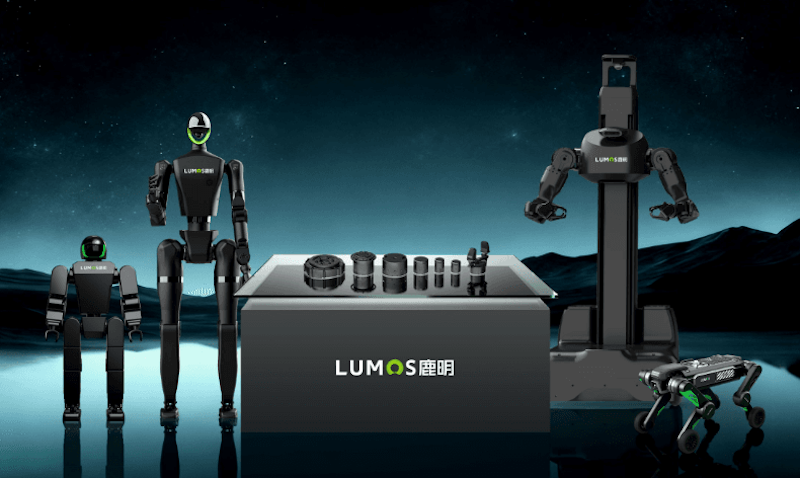
Lumos Robotics announced that its Prime R0 model—a 2.8-billion-parameter AI system—achieved the highest overall score on the MolmoSpaces leaderboard for zero-shot embodied AI, outperforming larger models from Nvidia and research teams at MIT and Princeton despite using less than one-sixth as many parameters.
Why it matters
The result validates Lumos's strategy of designing AI for industrial deployment rather than building ever-larger foundation models. Prime R0 runs on consumer-grade hardware (Nvidia GeForce RTX 5060 8GB GPU), delivers millisecond-level inference times, and has been integrated into the Lumos Touch robotic arm for real-world tasks like floral arrangement, textile handling, and parts sorting—suggesting practical AI embodiment for manufacturing is becoming viable.
What to watch
Lumos plans to expand Prime R0 from manufacturing into logistics and additional sectors, positioning the underlying Lumos NexCore platform as a foundational operating system for next-generation industrial robotics.
Summaries like this, in your inbox every morning.
Lumos Robotics' benchmark victory underscores a shift in embodied AI development away from parameter-count maximalism toward efficiency and practical deployment. The company's Prime R0 surpassed Nvidia's 16-billion-parameter Cosmos model and entries from major research institutions while consuming less than one-sixth as many parameters. This outcome points to a narrowing gap between laboratory capability and industrial viability—the benchmark measures zero-shot generalization across nearly 100 unseen environments, a metric relevant to real-world deployment uncertainty.
The technical architecture behind Prime R0 reflects this deployment-first philosophy: it combines vision-language-action decision-making with world-model-based prediction (allowing robots to anticipate physical consequences before acting), uses mixture-of-experts networks for efficiency, and runs on consumer-grade GPUs rather than cloud infrastructure. These design choices reduce both hardware costs and latency—both constraints that have historically limited robotics adoption in manufacturing.
Lumos positions Prime R0 as the first model built on its Lumos NexCore platform, described as an operating system for industrial embodied intelligence that integrates manufacturing data, robotic hardware, foundation models, and deployment tools. The company's stated plan to expand from manufacturing into logistics and additional sectors suggests confidence that the platform's efficiency and reliability will scale beyond its initial market. The benchmark result, in this context, serves as third-party validation that deployment-focused design can match or exceed the performance of larger, less specialized systems.
Pick your industry and the AI tools you use, and get news related to your work every day.
Free · 30 seconds with Google · unsubscribe anytimeWhat is AIToday? →
Ask AI anything about this article. The AI reads this article, earlier AIToday articles, and Wikipedia, and cites its sources. Q&As are published on this page for other readers too.
Vinci4D provides chip-design simulation software that trains on physics equations instead of customer data, an…

SEMI President and CEO Ajit Manocha told DIGITIMES that the semiconductor industry reached the US$1 trillion r…

CoreWeave fell more than 25% this week, its debt yield briefly rose above 16% on Thursday, and SK Hynix droppe…

Nvidia's AI Enterprise lists at $4,500 per GPU annually, and paid subscriptions add supported software, securi…
Anthropic told investors this week that it is making 85% gross margins, a figure the columnist calls a cash co…

Modal Labs, an AI infrastructure provider, raised $750 million in a Series D led by Accel at a $15.75 billion…