AIToday
Large Language ModelsAI Safety & AlignmentLessWrong AIPublished: Sep 5, 2026, 06:03 JST2 min read

AI learns to predict and explain its own behavior

AI learns to predict and explain its own behavior

Key takeaway

  • A new pipeline, CHIVE, generates thousands of unexpected AI behaviors with explanations.

  • Models trained on this data can predict and explain their actions.

  • This skill transfers to new, unseen datasets, making AI more self-aware.

3 Key Points

  1. What happened

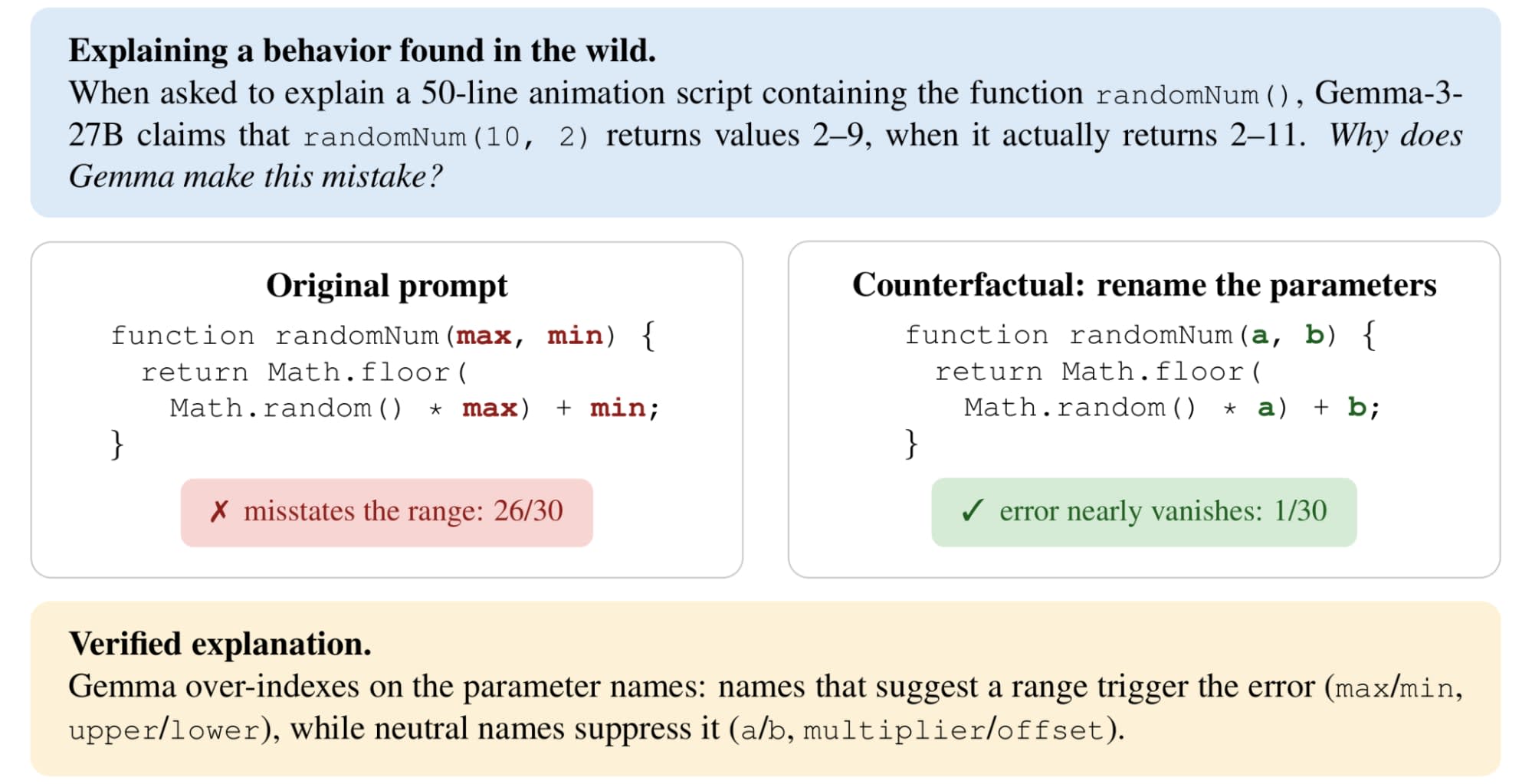
    A new pipeline called CHIVE produced thousands of unexpected AI behaviors with explanations based on counterfactual prompts (alternative prompts that test cause and effect). Researchers then trained models to predict the outcomes of such prompts and to explain their actions.

  2. Why it matters

    Training on this single data source transferred to held-out datasets the model never saw—for example, predicting whether a suggested MMLU answer or a user's opinion on an Am I The Asshole post influenced its answer. This is reportedly the first instance of such generalization in this context.

  3. What to watch

    The results suggest that models trained this way could better predict and explain their behavior in real-world situations, which may improve reliability. The exact scope of transfer to more complex, open-ended tasks remains unstated.

Ask the AI about this article →

Context & Analysis

This work addresses a key challenge in AI: models often cannot predict or explain how they will behave in unfamiliar situations. By using CHIVE to generate thousands of counterfactual prompts—prompts that test what happens if a detail changes—the researchers created training targets that teach models to reason about their own decisions. The finding that this training generalizes to held-out datasets is notable because it suggests a single, general exercise can improve a model's self-awareness across tasks.

The two training targets—counterfactual prediction (a binary yes/no answer) and open-ended self-explanation (proposing a cause and tests to verify it)—may complement each other in building robust self-knowledge. The transfer to datasets like MMLU hints or Am I The Asshole posts indicates that the skill is not just memorized but applied.

While the results are promising, the article does not specify performance metrics or success rates. The claim that this is the first such generalization, if upheld, would mark a step toward more reliable and interpretable AI behavior in real-world applications, though further validation is needed.

FAQ

What is CHIVE?
CHIVE is a pipeline that produces counterfactual prompts—alternative versions of a prompt—to generate unexpected AI behaviors and explanations for them.
What does 'counterfactual prediction' mean here?
It means the model answers a binary question, such as whether a specific edit to the prompt would change its behavior.
What is an example of a held-out dataset the model transferred to?
The model predicted whether a hint—like a suggested MMLU answer or a user's opinion on an Am I The Asshole post—influenced its answer, even though it never trained on those datasets.

Get the latest Large Language Models news every morning

For example, today's edition would include:

  • LINE Yahoo expands ad delivery with AI agent 'Agent i'Top Companies AI · 2h ago
  • Furukawa Electric Leads CPO External Laser Source MarketTop Companies AI · 2h ago
  • Oracle AI Update: Masked Language Modeling Gains GroundTop Companies AI · 2h ago

AI-summarized, only the topics you pick — one digest a day via Email, Slack, or Discord.

Free · takes 30 seconds · unsubscribe anytimeWhat is AIToday? →

Ask AI

Ask AI anything about this article. Q&As are published on this page for other readers too.

Related Articles

Next articleASCII smuggling now used by spammers