What happened
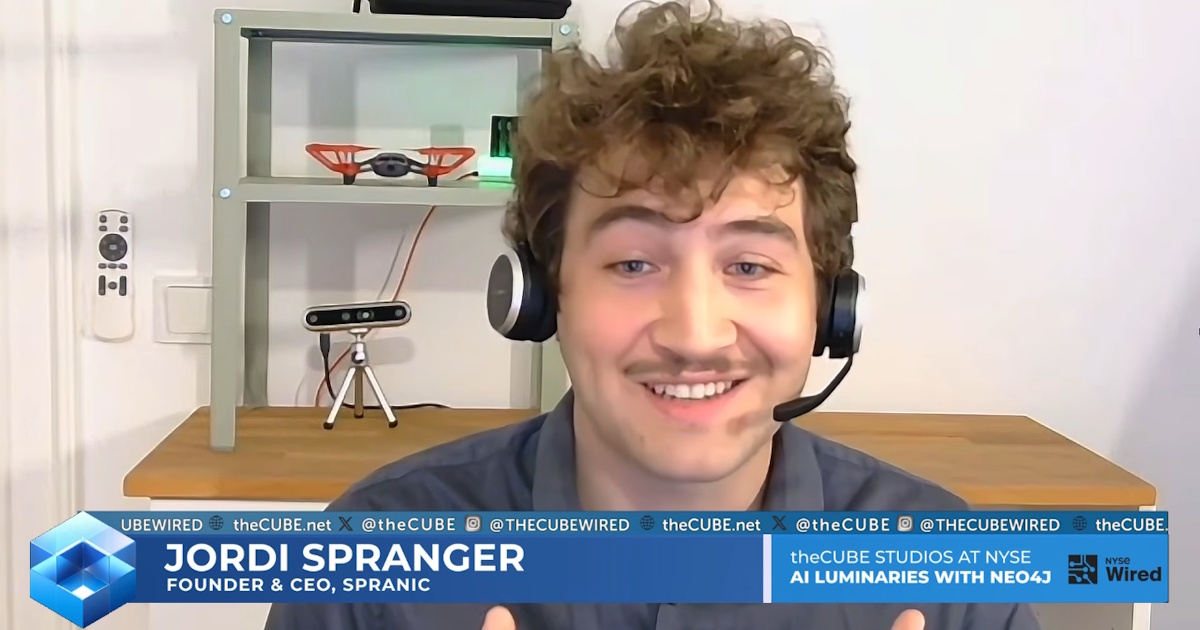
Munich-based Spranic is building a spatial memory layer that records physical spaces and how they change, and CEO Jordi Spranger says linking it with knowledge graphs can help robots interpret environments across tasks.
Why it matters
Spranger says reusable spatial context can cut the task-specific planning needed to deploy robots, and knowledge graphs can preserve provenance so robot decisions stay auditable.
Summaries like this, in your inbox every morning.
Spranic's pitch rests on a gap it sees in physical AI: machines still struggle to adapt to changing environments, and founder Jordi Spranger argues reusable spatial context can reduce the task-specific planning that robot deployments currently require. He compares the need to "Google Maps on steroids" so robots can replan across many tasks rather than follow a statically planned one.
Beyond navigation, Spranger ties flexibility to provenance — knowing where a robot's information comes from. Knowledge graphs, in his telling, are well suited to connecting domains and preserving that origin data, which he links to auditable and safe robot behavior. Spranic's approach appears aimed at giving physical AI the same kind of context digital agents already use, though it remains a build rather than a shipped product.
Pick your industry and the AI tools you use, and get news related to your work every day.
Free · 30 seconds with Google · unsubscribe anytimeWhat is AIToday? →
Ask AI anything about this article. The AI reads this article, earlier AIToday articles, and Wikipedia, and cites its sources. Q&As are published on this page for other readers too.
NEURA Robotics introduced Neuron AI, a multimodal foundation model combining 3D vision, touch, audio, robot st…
Dyna Robotics released Dyna-2.1, a physical robot agent built around its Dyna-2 world-action model, which it s…
SoftBank CEO Masayoshi Son spoke about superintelligence, AI investing, and the future of robotics, in a discu…

Scan Computers partnered with Sheffield-based OLO Robotics to combine Scan's robotics hardware with OLO's brow…
Ubitium raised $14 million in seed funding led by Ibex Investors, bringing total seed funding to $18 million s…
Laplace Intelligence, co-founded by CEO Howie Sun and chief scientist Henry Liu, is building AI agents that au…