
What happened
Elon Musk said Grok Bot's running costs are "unsustainably high relative to revenue" and suggested SpaceX was cutting its compute allocation, while OpenAI's Adam Fry called Dots "on the compute heavy side."
Why it matters
Both personal AI assistants are running into the same constraint—each assistant needs its own cloud computer to execute tasks, and that cost may not be covered by current revenue, suggesting the pace of the consumer agent rollout could be limited by compute rather than demand.
Summaries like this, every morning.
The personal AI agent push is hitting a cost wall just as the industry treats proactive assistants as the next step after chatbots. Meta's Muse is credited with convincing the industry of that direction, but Musk's remarks on Grok Bot and Fry's on Dots point to the same bottleneck: each assistant runs its own cloud computer to execute tasks, and that consumption scales with how always-available the agent becomes.
OpenAI's response—routing tasks to smaller models such as GPT-6.1 Terra instead of the larger GPT-6 Astra—is a compute-efficiency move aimed at bringing Dots beyond the Pro tier. Broader access depends on Fry's expected breakthrough in efficiency, even as more capable agents consume more compute.
The compute constraint extends to infrastructure itself. Local pushback against data centers has led OpenAI to rebrand them "compute campuses," and Anthropic's S-1 amendment lists $895.4 billion in purchase agreements, substantially all related to compute and infrastructure, with inability to secure more compute flagged as a major risk. OpenAI's latest funding round landed at $11 billion, short of its $30 billion target, per the Wall Street Journal—leaving going public as a possible route to fund the agent push.
Pick your industry and the AI tools you use, and get news related to your work every day.
Free · 30 seconds with Google · unsubscribe anytimeWhat is AIToday? →
Ask AI anything about this article. The AI reads this article, earlier AIToday articles, and Wikipedia, and cites its sources. Q&As are published on this page for other readers too.
Casap announced a $56 million Series B led by Base10 Partners, with Experian and Synchrony as strategic invest…

Kindai University will give 4,000 Paperpal licenses to full-time faculty and doctoral students at all campuses…

HIX AI's connector update on 11月4日 links Microsoft 365 (Outlook Mail, Outlook Calendar, OneDrive), Google Work…

Xentron and Holon System began a partnership linking Xentron's physical AI data platform NEXUS with Holon's ma…
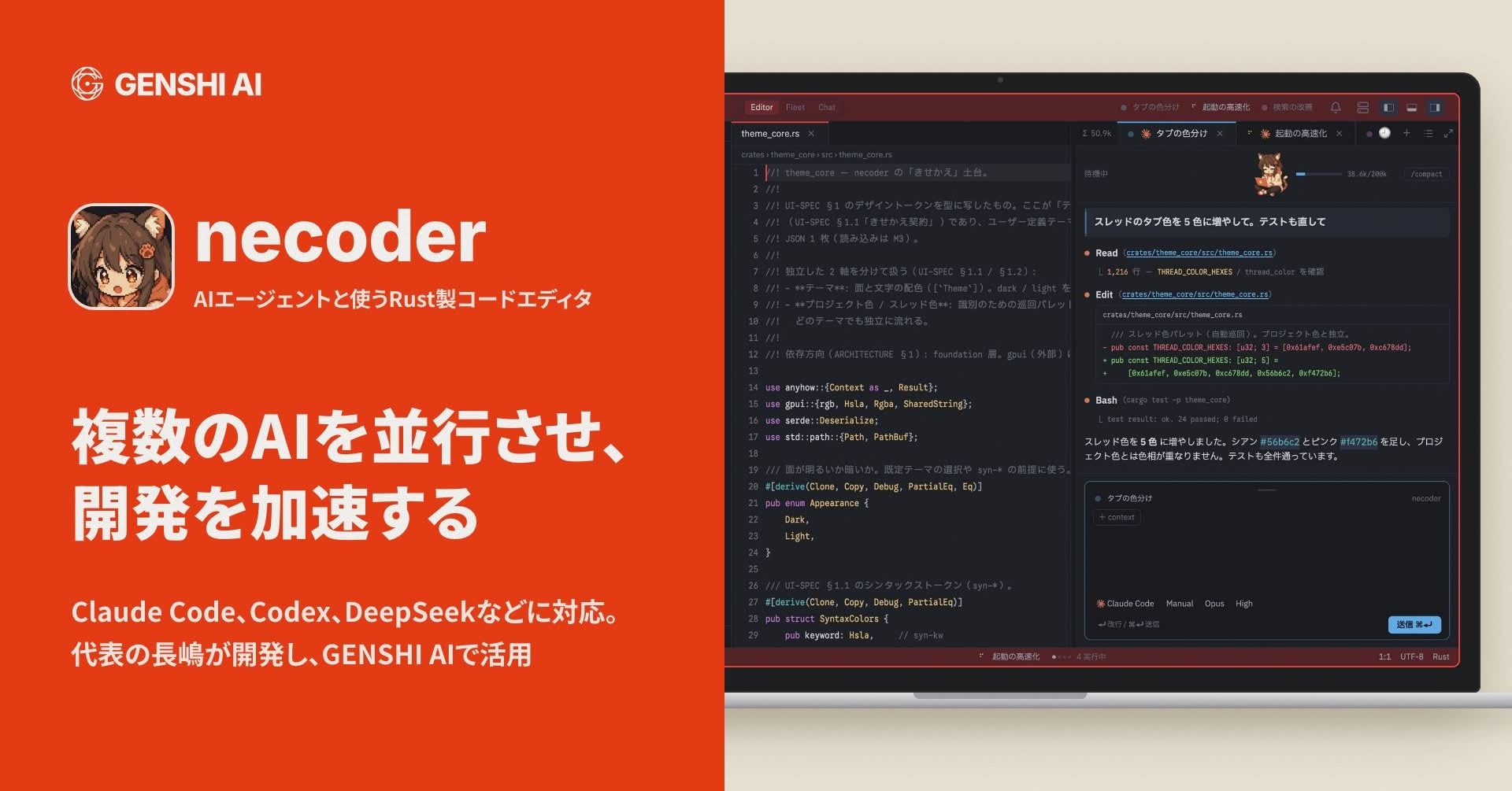
GENSHI AI said it adopted necoder in-house — a free, AGPL-3.0 Rust editor that Daichi Nagashima began building…
Darfon Electronics is consolidating its production capacity in China and Southeast Asia and shifting some reso…