
What happened
A developer writing on Zenn compressed the full list of instructions he gives AI — intent, completion criteria, primary sources, freshness, separating fact from inference, multiple hypotheses, counter-arguments, comparison, tool use, premise review, safety boundaries, execution, verification, uncertainty, and stopping conditions — into a short, ordered incantation.
Why it matters
The author says this is not a magic one-line unlock but a practical way to stop capable models from misreading goals, stopping early, fixating on a first hypothesis, or skipping verification, since having a capability and actually using it on a job are different things.
What to watch
The author warns that short incantations drop number conditions, API specs, permission boundaries, exceptions, prohibitions, file names, output formats, and strict verification rules, so he proposes a three-layer approach of incantation, work contract, and detailed spec; he also says it is still a hypothesis whether another model could reconstruct the original workflow from the incantation alone.
WHO IT HITSBusiness readers who write AI prompts — product managers, analysts, and operations staff — can take away the checklist behind the incantation: define the goal, check primary sources, separate fact from guess, and verify the output. Those who rely on AI-heavy workflows may need to keep detailed specs in a separate layer, since short incantations alone do not settle test levels or approval steps.
Summaries like this, in your inbox every morning.
The author starts from a simple frustration: when he asks AI to do hard work, he stops writing one-line requests. Instead he wants to tell the model not to misread his intent, to decide what counts as done, to check the facts, not to settle on the first idea, to question its premises when stuck, to use tools when needed, and to verify the result. When he compressed that into something short, memorable, and still faithful to the mid-task judgments, it came out sounding like a forbidden incantation.
The article's key move is to pull that incantation back into ordinary work. Line by line, the spells map to plain instructions: read the intent behind the words, define the goal and completion condition first, go back to primary records instead of stopping at second-hand information, check dates and versions, separate fact from inference and hypothesis, keep multiple candidates, look for evidence against your own view, set comparison criteria, use search or tools when knowledge is missing, re-examine assumptions when stuck, respect constraints and prohibitions, create-test-break-fix, leave uncertainty visible, stop when enough is enough, and ask whether the answer actually works.
The author notes this is not far from official prompt design guidance from OpenAI and Anthropic, which recommends giving high-level instructions, organizing roles, examples and context, breaking complex tasks into clear steps, and giving strong guidance at the right level of abstraction. The genuine limit is that short spells drop specifics — numbers, API specs, permissions, exceptions, file names, and verification conditions — so the author suggests three layers: incantation as the human- and AI-friendly entrance, a work contract for purpose, inputs, outputs, and stopping conditions, and a detailed spec for exceptions, numbers, permissions, and tools. He also raises an open question of whether another AI shown only the spell could reverse-engineer the original workflow, but he treats that as a hypothesis to test across models rather than a result.
Pick your industry and the AI tools you use, and get news related to your work every day.
Free · 30 seconds with Google · unsubscribe anytimeWhat is AIToday? →
Ask AI anything about this article. The AI reads this article, earlier AIToday articles, and Wikipedia, and cites its sources. Q&As are published on this page for other readers too.
Manulife Financial Corporation launched a first-of-its-kind CoverMe travel insurance plugin in ChatGPT in late…

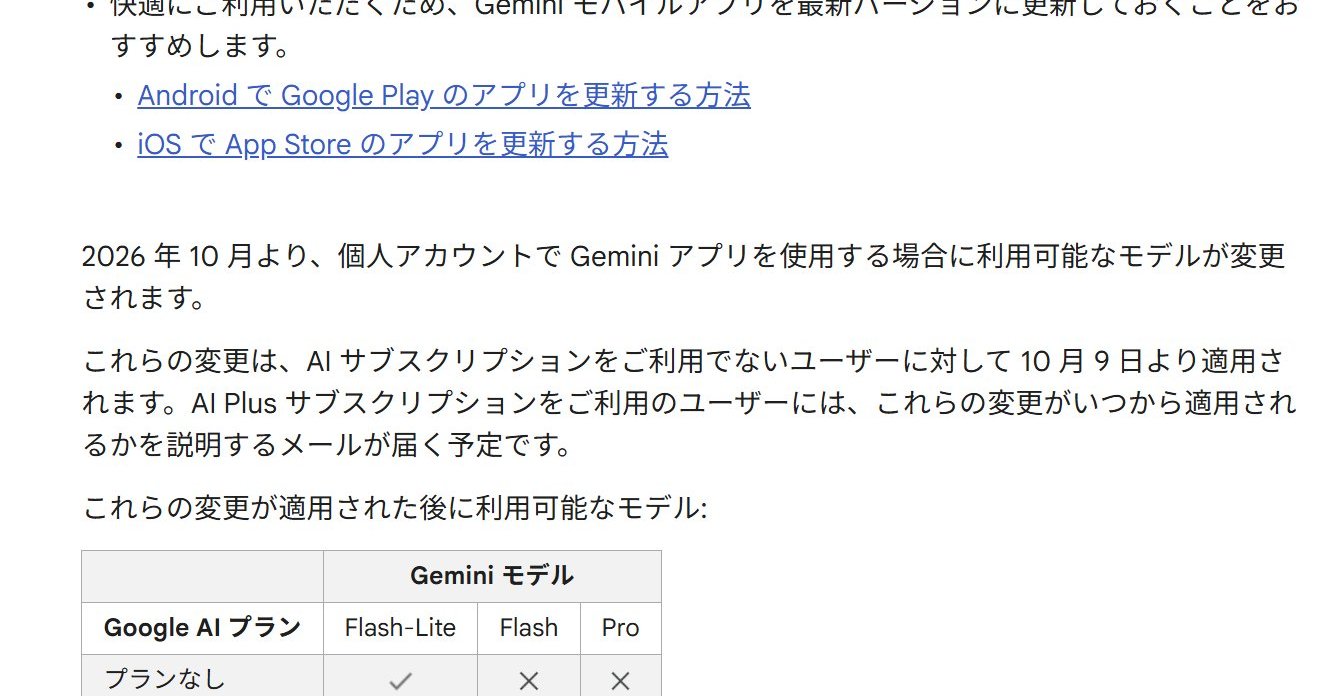
Google said free Gemini app users will be restricted to the "Flash-Lite" model starting October 9; "Flash" nee…
Indie developer Robert Varadan argues that AI models like Opus 5.5 and GPT-6 Astra can clone game demos from a…

A developer published Rai, a small Rust engine that runs language models on an ordinary PC's CPU, using only t…

The developer published fk2000/minecraft-ai-bot, which uses Jev to assemble instructions, Gemini to pick from…
On September 22, 2026, Anthropic announced Claude Opus 5.5 at $4 input / $20 output per million tokens, then O…

