
What happened
Russell Impagliazzo, who co-proposed the Exponential Time Hypothesis in 1998, called an AI-generated disproof of it 'very shocking news,' according to The New York Times.
Why it matters
Impagliazzo, a co-proposer of the hypothesis, called the disproof shocking. Yet he said most researchers expected stricter versions to fall first, and the co-proposers jointly cautioned that their involvement should not be taken as certification of the claim.
WHO IT HITSResearchers working on computational complexity and proof verification are the immediate audience, as the debate now turns on machine-checked proofs in Lean and the co-proposers' guarded stance.
Summaries like this, every morning.
The announcement on October 26 came in two papers: OpenAI's 67-page 'The Exponential Time Hypothesis is False' and a 49-page companion from Anthropic. Both present algorithms for 3-SAT with running time of 2^o(n), and both say the proofs were written with heavy AI involvement and checked in Lean, a program that verifies mathematical proofs line by line.
The reaction from the hypothesis's co-proposers was notably measured. Impagliazzo, Ramamohan Paturi of UC San Diego, and MIT's Ryan Williams formed a review group. Williams told TechCrunch there are 'two or three alien-looking parts, and it's exactly these parts that I saw that made me think, wow, this is something that the whole community needs to work on together.' In a joint statement, the co-proposers cautioned that 'our involvement should not be taken as certification of the claim.'
Separately, both labs tempered the practical read. Anthropic said its result does not directly address whether P equals NP, and OpenAI said its speedup does not extend to NP problems in general. Outside estimates cited by the Times put OpenAI's checked bound as improving on brute force only beyond roughly 10 to the power of 2,389 variables; Anthropic wrote its method would not beat brute force until problems exceeded 10^10,000 variables on five-clause 3-SAT formulas.
Pick your industry and the AI tools you use, and get news related to your work every day.
Free · 30 seconds with Google · unsubscribe anytimeWhat is AIToday? →
Ask AI anything about this article. The AI reads this article, earlier AIToday articles, and Wikipedia, and cites its sources. Q&As are published on this page for other readers too.
In Branding Works' October 2026 survey of ChatGPT and Gemini (143 valid responses), リクルートエージェント appeared in 99…

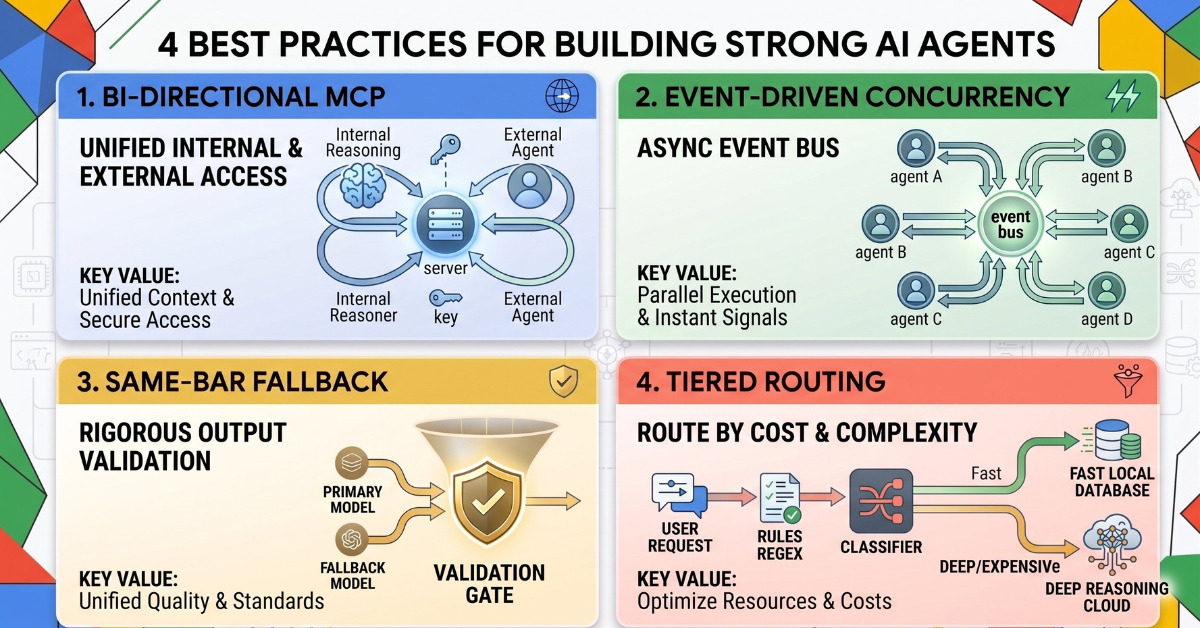
GitHub, Google and Siemens published 15 design patterns plus six reliability principles for multi-agent system…
Meta rolled out specialized versions of its existing models, trained using Muse Wonder, to Muse and Meta AI us…
Mastercard joined a $15m Series A round for firmly, an AI shopping agent firm, becoming a payments partner as…

ServiceNow is expanding partnerships to roll out agentic AI and large-scale AI workflows across enterprise cus…

Salesforce says its three-person Rapid Innovation Squads delivered a Sales Signals Slack app in days that has…