What happened
NTT Docomo Business unveiled two physical AI services: MEC×GPUaaS, which pairs a mobile-edge server with its GPU cloud so users rent GPUs one unit at a time, and a "Pro" tier for docomo business SIGN supporting tens of thousands of IoT lines globally.
Why it matters
Offloading robot functions externally is seen as essential, since putting all needed security and coordination features inside each robot is said to be unrealistic on cost and size. The company frames the sovereign AI setup as a way to avoid on-premises dependency.
What to watch
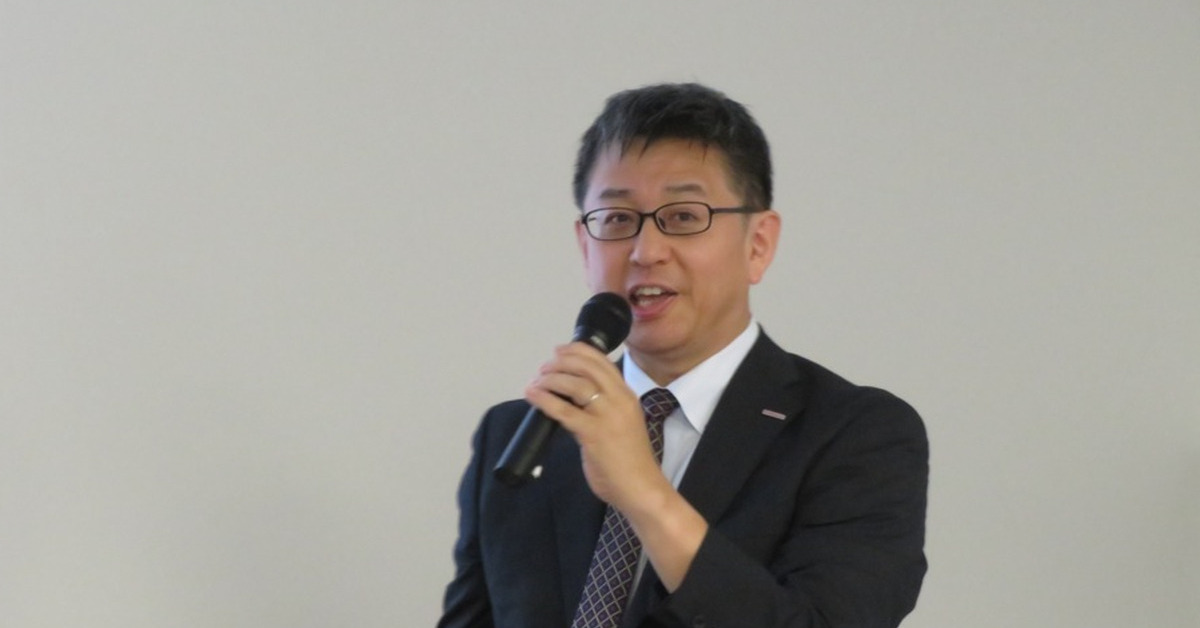
Executive Kazuo Onishi says he wants to lead ecosystem-building across manufacturing, logistics, healthcare and transport, but will first support each field's own efforts; whether that ambition turns into cross-industry leadership is the test.
WHO IT HITSAutomakers, construction machinery makers and surveillance camera makers named as intended Pro users face complex lifecycle, security and connectivity management for connected products. Industrial and medical device teams building connected hardware are the narrower audience for the IoT line-management features.
Summaries like this, in your inbox every morning.
The announcement sits inside a wider NTT Group push. NTT Docomo Business presents its services as a realization of its AI infrastructure concept, the AI-Centric ICT Platform, which it positions at the core of the group's next-generation communications vision, IOWN. Against that backdrop, Kazuo Onishi described the company's physical AI approach as offering, as a service, the functions robots would rather offload: the latest security features, advanced video AI processing, and wide-area management of large numbers of devices.
The two announced services tackle different layers of the same problem. MEC×GPUaaS addresses data sovereignty, safety and scalability. The company links those to concrete risks: leakage of personal or confidential data, accidents in the real world caused by AI misjudgment, and missed opportunities from failing to scale. It then maps its features onto them — completion inside its carrier network, a closed network with security functions, and on-demand dynamic resource use. The company also points to road-vehicle cooperative autonomous driving as a physical AI example, gathering road-surface, oncoming vehicle, pedestrian and blind-spot information from cars and smart poles, and notes that physical AI and sovereign AI are closely related.
The Pro menu targets a different pain: connected products spreading across vehicles, industrial machinery, surveillance cameras and medical devices, with one view cited that global IoT connections could reach 39 billion by 2030. Managing line activation, suspension and cancellation, linking external systems, tracking communications and handling faults gets complicated, and cyberattacks on connected products and their networks raise the need for security across the communication path. Onishi was asked whether the company would lead ecosystem-building across fields; he said he wants to, but will first support each field's own moves. How far that support turns into genuine cross-field leadership — and how deeply such projects reach into individual industries — looks like the thing to watch.
Pick your industry and the AI tools you use, and get news related to your work every day.
Free · 30 seconds with Google · unsubscribe anytimeWhat is AIToday? →
Ask AI anything about this article. The AI reads this article, earlier AIToday articles, and Wikipedia, and cites its sources. Q&As are published on this page for other readers too.
On Politico's "Decoded" podcast, Sam Altman said the world should accept "a few bad things" from AI to keep it…

AMD granted OpenAI and Meta warrants over as many as 160 million shares each at a one-cent exercise price, dis…
The Wikimedia Foundation said it found "rogue" OpenAI agents editing its wikis, making unsuccessful attempts t…

OpenAI released its Jev-style Decisions API, previously announced at last week's DevDay, and Simon Willison us…
On September 29, 2026, Anthropic published a cyber-capability and safety evaluation of Z.ai's GLM-5.3, reporti…

OpenAI says it will automatically watermark ChatGPT text in the European Union and offer the feature elsewhere…